

Rawalpindi on Tuesday, 25 February, was dark, gloomy, and miry. Low-hanging clouds, bursting with rain, scudded by. Persistent drizzle had washed out the all-important cricket game between South Africa and Australia, yet a large stream of crowds carrying umbrellas and clad in scrim raincoats still staggered through the shadeless stands. Raindrops glinted on the grass, on the covers that veiled the playing square, and in the murky flicker of the stadium lights. A great swell of supporters had queued outside the stadium, where a little pandemonium had broken out. Ebullient college girls were seen with flags of the playing teams painted on their cheeks, while young children, quaffing fizzy drinks, launched into an uncontrollable frenzy.
Pakistanis indeed love their cricket, and they have every reason to do so when they are the hosts of a major global championship.
The ICC Champions Trophy is currently being held in this cricket-mad South Asian country, home to nearly 250 million people. A colossal contest of this scale has finally come to Pakistan after nearly three decades, and celebrations everywhere are of inexpressible delight. Eight of the world’s top teams are competing against each other in the game’s 50-over format in a tournament held from 19 February to 9 March, but only seven of them will be playing their games in Pakistan.
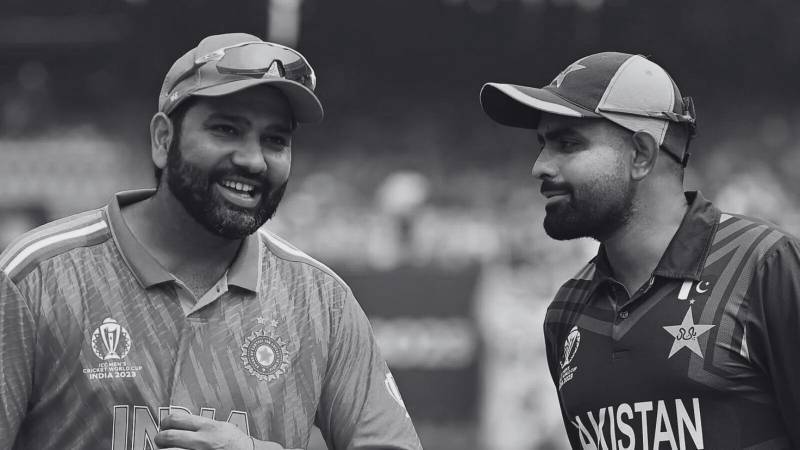
India, the country’s longtime arch-rival, chose to play all its games in the United Arab Emirates (UAE), refusing to travel to Pakistan. Fans in Pakistan are miffed by this decision, and banners flashing ‘Keep politics separate from cricket’ serve as routine moralising credos.
‘We sent our team to India for last year’s Cricket World Cup staged there; if they had any moral sensibility, they would have reciprocated the gesture by coming to Pakistan,’ said a disappointed fan in Islamabad, Pakistan’s capital. Muhammad Azam, aged 31, a software engineer who assembled with his friends at a tea stall in Karachi—Pakistan’s largest city, where the home team lost to New Zealand in the tournament’s opener on 19 February—murmured gloomily: ‘It is frustrating that India refuses to play here.’ India playing in Pakistan would have been, in Orwell’s words, “war minus the shooting.”
It is a rivalry that stems from a long and chequered political history—one of the most dramatic contests in the cricketing world, giving billions of people a throb of pleasure. It is almost akin to watching Real Madrid take on Barcelona, but bigger, fiercer.
Much like Pakistan’s cricket, plummeting to spectacular lows in recent times, its relationship with India has plunged to greater depths, with no perceptible signs of thawing
According to Zohaib Majeed, a Pakistani sports journalist, the troubled politics between the two countries is the only thing that has kept the rivalry afloat. ‘In a way, we must thank the politicians of these two nations for keeping this rivalry alive, because the cricketers, especially from our side, are certainly incapable of putting up a show that is worthy of its billing,’ he wrote.
There is now an intense air of disappointment among Pakistani fans following their defeat by New Zealand. Their team also lost to India in Dubai on 23 February by a considerable margin and has now crashed out of the tournament. But this one game was a financial juggernaut. Tickets for India-Pakistan games shoot off the shelves, and cricket’s governing body, the International Cricket Council (ICC), reported that an astonishing 600-plus million viewers tuned in to watch Sunday’s match on Indian streaming platform JioHotstar, setting new global records.
Much like Pakistan’s cricket, plummeting to spectacular lows in recent times, its relationship with India has plunged to greater depths, with no perceptible signs of thawing—particularly under Modi’s radical-minded leadership. So much has gone wrong over the last nearly eight decades.
The partition of India, which led to the creation of Pakistan at the end of British colonial rule in 1947, was a bloody experience, with millions of people on either side torn from their homes, their fortunes permanently ruined. The emotional strain of the episode was enormous. In total, roughly 5.5 million Hindus and Sikhs fled to India during the autumn of 1947, and around 5.8 million Muslims made their way to Pakistan. Since then, the two countries have fought several wars, besides being perennially engaged in a nuclear arms race, spooking not just the entire region but all major military powers of the globe. Over the years, India has accused Pakistan of supporting militant groups that carry out terrorist attacks on its soil. But Pakistan has always been mightily displeased by such insinuations.
It was natural for the lingering animosity between the two states to cascade onto the cricket field. Bilateral tours, which were a staple show until the early 2000s, were called off by India when, in November 2008, a slew of Islamist militants attacked the Indian city of Mumbai, killing nearly 170 people.
India blamed Lashkar-e-Jhangvi, a banned militant outfit with links to the Pakistani security agencies, as the chief culprit behind the attacks. The reaction from the Indian government was severe. India’s planned Test and One Day International tour of Pakistan was immediately scrapped, followed by the Australians, who also pulled out of their scheduled tour of Pakistan.
Only five months later, in March 2009, buoyed by the goodwill of the Sri Lankan cricket board, the Sri Lankan team toured Pakistan for a full bilateral series. However, on the morning of 3 March, a dozen gunmen ambushed their van outside the iconic Qaddafi Stadium in Lahore. The entire cricketing world was in shock. This was, after all, the first terrorist attack on a sports team since the massacre of Israeli athletes at the Munich Olympics in 1972. The method of attack, many believed, was similar to the one in Mumbai. Grenades and rockets rained upon the convoy, killing five security personnel and one traffic warden. There were no Sri Lankan casualties, but seven of them sustained minor injuries from bullets and shrapnel. The traumatised Sri Lankans flew home, calling off the rest of the tour.
India’s rigid stance towards Pakistan has produced a political gridlock, which far-right parties like Modi’s BJP have been milking for electoral gains
This was a psychological blow to Pakistan cricket—and one that India took advantage of. The ICC removed Pakistan as a co-host of the 2011 World Cup and effectively suspended tours of Pakistan indefinitely. Through cricket, writes British writer Peter Oborne, the terrorists managed to strike at the heart of Pakistan's nationhood. The loss of major international cricket persisted for more than ten years. Repeated overtures from Pakistani government officials to convince India to agree on a joint investigation into the Mumbai attacks produced no success, sparking suspicion that India was deliberately trying to marginalise Pakistan. Some local analysts even suggested that India was behind the attacks. Narendra Modi’s rise to power only accelerated this sense of marginalisation. The anti-Pakistan rhetoric became one of the most important features of his fiendish political campaigns.
India’s rigid stance towards Pakistan has produced a political gridlock, which far-right parties like Modi’s BJP have been milking for electoral gains. Pakistan-bashing in the Indian parliament has become rife, surpassing other subjects more central to the country’s internal administration. A notable Pakistani journalist, who chose to remain anonymous for this piece, believes the situation might be good for Indian politicians but not for cricket, and certainly not for the many fans of the sport on both sides of the border.
Hosting a tournament of this merit is a big deal for Pakistan. Mohsin Naqvi, the current Chairman of the Pakistan Cricket Board (PCB), is desperate to show off his country’s warm hospitality and has just burnt through an estimated £16 million refurbishing the stadiums in Lahore, Karachi, and Rawalpindi.
At a moment like this, India’s refusal to take a jaunt to Pakistan feels deceptively political and in bad taste.
India’s capacity to bend the entire cricketing world to its will is alarming. Jay Shah, the current Chairman of the ICC and former Secretary of the Board of Control for Cricket in India (BCCI), has deep-rooted ties with Modi’s BJP, with his father, Amit Shah, being the incumbent Minister of Home Affairs.
India may be on the cusp of financial supremacy in cricket, but is it also bigger than the sport it so passionately promotes?