

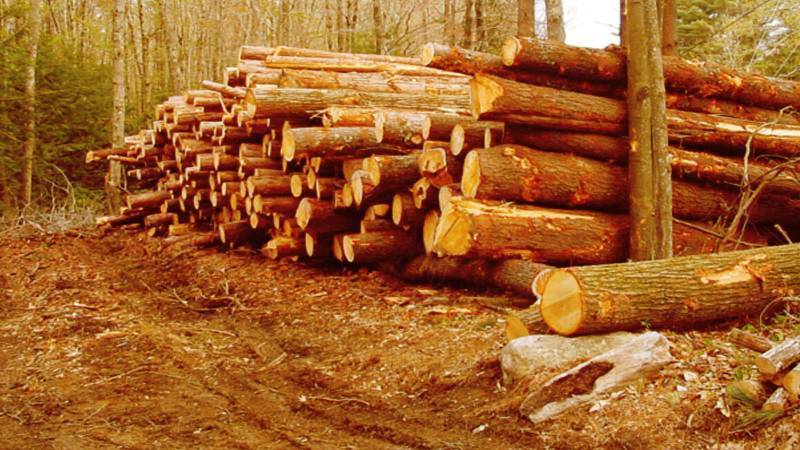
The story begins in Birir Valley, in the Kalash region of Chitral, where the mountains once stood clothed in deep green cover, carrying with the wind the whisper of ancient forests. Today, that cover is vanishing. In places like Grambat Gol, fresh markings on mature trees tell a different story of ruthless cutting. Trees are selected, marked, and cut down with remarkable ease, without any fear. This valley, recently placed on the tentative list of UNESCO World Heritage Sites, should have been entering a phase of protection and pride, yet it remains largely unattended.
What is unfolding in Birir is not an isolated incident; it is a window into a wider pattern that has spread across Khyber Pakhtunkhwa over the past several years. From the forests of Swat and Dir to the remote belts of Kohistan and the fragile landscapes of Chitral, reports of aggressive tree felling have become increasingly frequent.
Alongside this, repeated incidents of forest fires have further accelerated environmental destruction. In many areas, local communities have watched hillsides burn season after season, often with little accountability or effective response. Whether caused by negligence, natural conditions, or deliberate human activity, the result has been the same: shrinking forests, damaged ecosystems, and growing public distrust.
The pace of destruction, according to local observers and independent monitoring platforms such as Global Forest Watch, suggests not subsistence use but organised extraction. Forests are not merely disappearing; they are being converted into profit, and that profit is not entering the public treasury. It is widely believed that a significant portion of this wealth is captured by networks of timber mafias, often operating in collusion with elements within the administrative structure.
Even a conservative estimate reveals the staggering scale of this loss. A single mature tree, depending on species and quality, carries considerable market value. When multiplied by the thousands of trees reportedly cut across multiple districts, the figure rises into millions—if not billions—of rupees annually. This is not only ecological destruction; it is a quiet economic transfer, where public natural wealth is diverted into private pockets.
The real loss, however, goes far beyond timber value. These forests, if preserved, would continue to sustain water systems, protect soil, support biodiversity, and strengthen local economies through agriculture and tourism. What is being lost, therefore, is both immediate revenue and long-term ecological stability.
The seriousness of the situation has begun to surface even within formal political spaces. A recent and heated debate in the Khyber Pakhtunkhwa Assembly highlighted ruthless tree felling in South Waziristan, where concerns were raised by Asif Khan Mehsud.
If the forests continue to fall, the skies above these mountains may one day fall silent, and with them, the rhythms of life that have sustained this region for generations
Through a call-to-attention notice, he warned of widespread deforestation across the province and urged immediate government intervention and an inquiry. When such voices emerge from within the system itself, they underline the depth of the crisis and the urgency of addressing it.
Yet the most alarming dimension lies not only in what is happening now, but in what lies ahead if this trend continues unchecked. Forests in mountainous regions act as natural barriers and regulators. Their removal weakens the land, making it more prone to landslides and erosion.
Rainwater, instead of being absorbed and released gradually, rushes down slopes with destructive force, increasing the risk and intensity of floods. Khyber Pakhtunkhwa has already experienced devastating floods in recent years, and continued deforestation will only amplify these disasters.
At the same time, water scarcity is likely to worsen. Forests help maintain groundwater levels and regulate seasonal water flow. Without them, the balance is disturbed, leading to an uncertain cycle where floods occur during heavy rains while water shortages dominate dry periods. For farming communities, this imbalance can be devastating. Soil fertility declines, crops suffer, and livelihoods are placed at risk. The agricultural backbone of the region begins to weaken, adding economic stress to environmental decline.
The ecological damage will extend further into the loss of biodiversity and the disruption of entire ecosystems. Species that depend on these forests will lose their habitats, and some may disappear altogether. Local climates may shift, becoming harsher and less predictable. Cultural landscapes, particularly in sensitive regions like the Kalash and Bamburet valleys, will also suffer, as traditions closely tied to nature lose their foundation. What is being eroded is not just forest cover, but a complete system that sustains life, culture, and identity.
Beyond timber, these forests are also repositories of valuable non-timber resources, including medicinal plants and wild edible species such as mushrooms. Their loss represents not only an ecological setback but also an economic one, as local communities depend on these resources for traditional medicine, seasonal income, and food security. The disappearance of such species quietly erodes both livelihoods and indigenous knowledge systems that have evolved over generations.
In this context, engagement with the United Nations Development Programme becomes particularly relevant, especially as its field presence has already been engaged in consultations with district administrations in Swat regarding flood impacts and recovery planning. However, unless the issue of upstream deforestation is directly integrated into these resilience and disaster-response frameworks, efforts risk addressing only the consequences rather than the root causes.
The ongoing loss of forest cover in upper catchments such as Chitral, Swat, and Dir is directly linked to increased flood intensity and downstream water imbalance. Therefore, what is now required is a coordinated technical assessment that connects environmental degradation with disaster-risk planning and long-term governance reform.
At the same time, increasing concerns are being raised about the implementation of Scientific Forest Management practices in the province. While such approaches are designed for the sustainable use of forest resources, questions remain as to whether, in the absence of transparent monitoring and strong accountability, they may allow excessive or poorly regulated tree extraction. If not carefully implemented, such frameworks risk being perceived not as tools of conservation, but as mechanisms that weaken forest protection and undermine climate resilience.
In this light, the crisis of deforestation in Khyber Pakhtunkhwa cannot be left to the same systems that appear either unable or unwilling to control it. When reports from the ground, satellite evidence, recurring forest fires, and even voices within the Khyber Pakhtunkhwa Assembly all point in the same direction, it becomes difficult to rely solely on internal mechanisms for correction.
In such a situation, reaching out to international institutions such as UN-Habitat, the United Nations Environment Programme, and UNESCO is not about interference but about transparency and the protection of shared environmental heritage. These forests are not just a local resource; their loss affects climate, biodiversity, and human life beyond borders. If local accountability remains weak, then broader oversight becomes necessary to prevent further damage.
The story that begins in Birir Valley is therefore not just about one valley; it is a warning of what may come. If the forests continue to fall, the skies above these mountains may one day fall silent, and with them, the rhythms of life that have sustained this region for generations. The choice remains ours: act now with honesty and responsibility, or move steadily towards a future where even the sky no longer responds.