

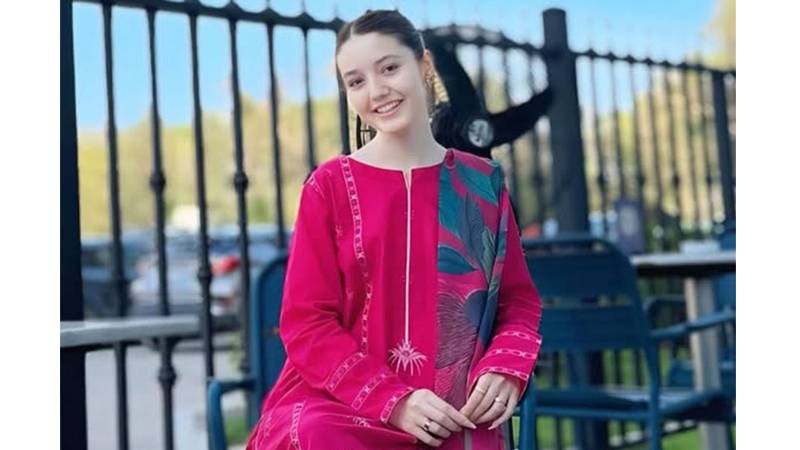
I do not know where to begin as so much has been written about the young angel Sana Yousaf since her shocking murder a few sectors from my home. May Allah SWT bless her soul.
In this patriarchal society, where public space and opinion is male-dominated and women participants are considered either too bold, too liberal, too emancipated, too spoilt, downright immoral or a lesser creation at best, daylight murders continue with impunity.
Parents who raise daughters with so much love and care, years after years, are left in utter heartbreak and mourning after losing their most precious child to a monster, who may be either a jealous husband or a jilted lover or a highly obsessed stalker to name some categories. Figuring out what is unique about this violent disposition – about males globally or Pakistani society in particular – is a challenge, I suggest, for social scientists, be they anthropologists, psychologists or sociologists.
Young girls who have found a voice through social media, often paradoxically amassing more male followers, are subsequently perceived as a threat to the "ethos" of society
I simply observe that this "one-upmanship" for lack of a better term, stems perhaps from years of negative media influence propping up the male ego at the expense of female dignity. Additionally, males falling behind in school and college performance and ceding space in research and corporate sectors or as sole bread earners may lead to some men viewing women erroneously as antagonist forces rather than complementary ones.
Another sphere of influence is the space occupied—both in media and religious gatherings—by half-baked orators or so-called scholars who persist in misinterpreting Islam and advocating for the confinement of women, beginning with barriers to education and eventually extending to exclusion from the workplace.
Young girls who have found a voice through social media, often paradoxically amassing more male followers, are subsequently perceived as a threat to the "ethos" of society. Some, like Sana, are cruelly silenced in their infancy, with their suppression horrifyingly justified by a pseudo-religious, judgmental social media brigade. Others are swiftly imprisoned for expressing their opinions, while still more are forcibly removed from educational institutions and the workforce.
The disintegration of family dynamics—from relationships rooted in mutual tolerance to ones marred by unhealthy competitiveness, alongside the familiar in-law/outlaw tropes perpetuated in television and film—demands counter-narratives. These narratives must emphasize that the highest honor should be bestowed on the basis of dignity, hard work, and mutual respect, rather than on the distinction of XY versus XX chromosomes or, more critically, the manifestations of these differences (the outwardly visible form).
Islam grants the highest honors to the dignity of humankind. Gender distinctions hold no bearing on this principle.
Rest in eternal peace, dear Sana! We have failed you, your heartbroken parents, and your visibly distraught brother. Forgive us!