

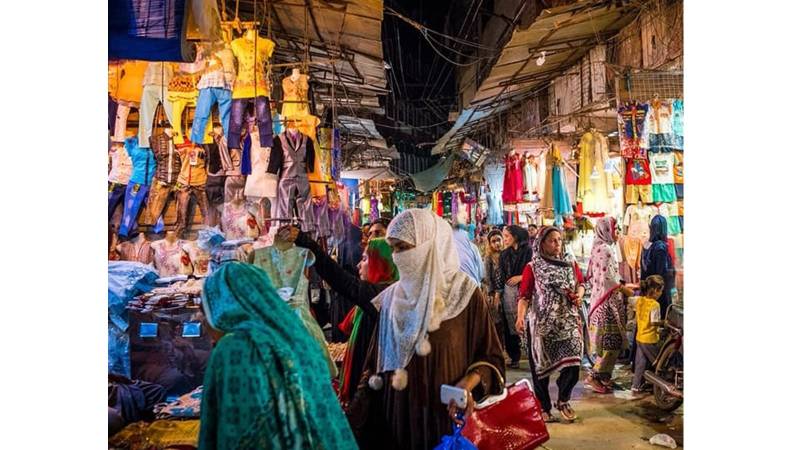
There is something deeply troubling about the way Islam is practised and debated in Pakistan. A woman’s hijab can become a matter of national concern, her clothing a subject of public scrutiny, and her choices an occasion for unsolicited religious instruction. Yet the same society often struggles to have an equally serious conversation about the men who make women uncomfortable in public spaces, objectify them online, or invoke religion to justify their own desires.
We have become remarkably selective about the Islam we remember. For some patriarchal religious voices, religion has become a convenient instrument for regulating women while preserving the privileges of men. We are quick to discuss what women must wear and what men are permitted to do, but far less enthusiastic about discussing how men are expected to behave.
Why has Islam, in the imagination of so many Pakistani men, become a woman’s hijab and a man’s right to marry again?
Consider polygamy. Surah An-Nisa, verse 3, permits a man to marry two, three, or four women, but immediately qualifies that permission: “But if you fear that you will not be just, then [marry only] one” [Qur’an 4:3].
The permission is frequently quoted; the condition deserves considerably more attention. The Qur’an does permit polygamy, and it would be intellectually dishonest to suggest otherwise. But it is equally dishonest to celebrate the permission while overlooking the responsibility that accompanies it.
Marriage is not simply the exercise of a legal entitlement. It involves the emotional security, dignity, and lives of other human beings. A second marriage can fundamentally alter the circumstances of an existing wife and an entire family. Yet in our society, a man’s desire to marry again can receive more religious sympathy than his existing wife’s distress. Her concerns are dismissed as jealousy, while his entitlement is defended as though invoking a verse settles every moral question.
Surah An-Nisa, verse 129, further acknowledges the difficulty of achieving perfect equality in feelings between wives while warning against favouring one so completely that another is left suspended. Islamic jurisprudence distinguishes between equality in feelings and the obligations of fair treatment. The point, therefore, is not that polygamy is categorically forbidden, but that its permission cannot be separated from the question of justice.
Human beings are fallible. We are capable of selfishness, inconsistency, and favouritism. No man should presume that his desire to marry again automatically establishes his ability to fulfil the responsibilities involved. The Prophet Muhammad (peace be upon him) is the moral example Muslims aspire to follow; that example should inspire humility and accountability, not an inflated sense of entitlement.
If a man can quote the Qur’an to defend another marriage, he must also confront the Qur’an’s demands of justice.
The Double Standard of Modesty
The same selective interpretation becomes even more apparent when we discuss women’s modesty. In Surah An-Nur, verse 30, Allah explicitly instructs believing men to lower their gaze and guard their chastity. The following verse addresses believing women with corresponding instructions concerning modesty. Men, therefore, are not spectators standing outside Islam’s moral obligations. They are among its direct addressees.
Yet every weekend, as young people gather at cafés and public spaces across Lahore and Islamabad, we must ask why some women continue to experience unwanted staring, intrusive attention, and behaviour that makes them uncomfortable. Places such as Double Shot in Phase 6, Lahore, are simply part of the city’s social landscape; women have every right to enjoy these spaces without being made to feel that their presence invites scrutiny or unwanted advances.
Her concerns are dismissed as jealousy, while his entitlement is defended
The problem is not that men and women share public spaces. It is the conduct of men who treat a woman’s presence as an invitation to stare, objectify, or intrude. Why are we so quick to question what a woman is wearing, but so slow to question why a man believes he is entitled to make her uncomfortable?
A woman’s hijab does not absolve a man of his responsibility to lower his gaze. Her clothing does not make him less accountable for his behaviour.
This is not an argument against modesty. It is an argument against hypocrisy. If Islam is to guide our public and private lives, its moral demands must apply to men as seriously as they apply to women.
The Failure of Social Conditioning
We often speak of protecting our mothers, wives, sisters, and daughters, but this language exposes another problem: women’s safety is too frequently understood through their relationships with men. A woman deserves dignity not because she belongs to somebody, but because she is a human being.
Would we tolerate someone following our sister through a market, making our mother uncomfortable in a public space, or circulating an intimate image of our daughter without her consent? If not, why do we remain silent when the woman experiencing the same treatment is a stranger? The true test of our character is not how fiercely we defend the women we love, but whether we challenge the mistreatment of women we have never met.
Our failure to make women feel safe in their own country is not merely a policing problem. It is also a problem of social conditioning, education, and the attitudes we allow boys to develop without challenge.
Children are increasingly exposed to social media, sexualised content, and pornography at young ages, often before they possess the emotional maturity to understand what they are seeing. Such exposure does not automatically turn a child into an aggressor, but without proper guidance, it can distort their understanding of intimacy, consent, and relationships. When sexual gratification is presented repeatedly without meaningful education about mutual respect, we cannot expect children to work out the difference between online fantasy and real human relationships entirely on their own.
We cannot shut children out of the digital world, nor can we pretend it does not exist. We must prepare them for it. Boys need to learn from an early age that attraction does not create entitlement, that consent is indispensable, and that a woman’s body is not public property. They must understand that masculinity is not measured by sexual conquests or the ability to dominate others, but by responsibility, discipline, and respect.
A Curriculum for Respect
This is where Pakistan’s education system must confront its priorities. A student can spend an entire academic year memorising lengthy interpretations of poetry for an Urdu examination, yet receive little or no structured education about consent, sexual harassment, digital exploitation, or personal boundaries. There is nothing wrong with studying Urdu poetry; the problem is an examination-driven system that can prioritise reproducing a three-page tashreeh over teaching children skills that are essential to navigating the world they actually inhabit.
Our national curriculum must include age-appropriate education about consent, online safety, sexual harassment, personal boundaries, and respect for others. Schools need trained teachers, clear reporting mechanisms, and practical anti-harassment programmes that evolve as students mature. Children must learn not only what constitutes unacceptable behaviour, but also how to recognise it, seek help, and respond when someone else is being harmed.
We cannot leave children connected to a digital world while leaving them unprepared to navigate it. Women’s safety is not a peripheral social concern to be addressed when convenient. It is a national responsibility, and prevention must begin long before a crime is committed.
The Punjab government has an opportunity to demonstrate what meaningful public service looks like. If provincial authorities can devote public attention to portraits of the chief minister in government schools, they should be equally capable of investing in the education, safety, and wellbeing of the children studying in those schools. A portrait cannot teach a boy to respect a girl; a publicity exercise cannot equip a teacher to recognise harassment. Trained educators, effective safeguarding policies, and sustained investment can.
I would be among the first to applaud a Punjab government that made age-appropriate consent education, digital safety, and anti-harassment training a meaningful part of public schooling. That would be an achievement worth celebrating.
A Shared Responsibility
Ultimately, this responsibility belongs to all of us, particularly the younger generation of Pakistani men. We must challenge our friends when they objectify women, refuse to normalise harassment as humour, and stop treating respect as a favour men bestow upon women. Before making a joke about a woman, approaching her, commenting on her appearance, or sharing something about her online, we should ask ourselves whether we would consider the same conduct acceptable if directed at someone we love. But even that is only a starting point: women deserve respect whether or not we have any personal connection to them.
If we can invoke the Qur’an to discuss a woman’s hijab, we must also invoke it when discussing a man’s gaze. If we can cite religious permission to defend another marriage, we must also discuss the justice and responsibility that accompany it. Religion must not become a collection of convenient permissions for men and burdensome restrictions for women.
Pakistan does not need another endless debate about what women should wear while the everyday realities of their safety remain an afterthought. It needs an honest conversation about male entitlement, digital exploitation, public harassment, and the education of the next generation.
If our religion teaches modesty, let it begin with the man who lowers his gaze. If it teaches justice, let it begin with the man who considers the consequences of his desires. And if it teaches dignity, let it be reflected in how we treat every woman, not merely the women we call our own.
A society that teaches women how to avoid men’s misconduct but fails to teach men not to commit it has misunderstood the problem entirely.