

A major political reshuffle appears imminent in Pakistan-administered Jammu & Kashmir, also known as Azad Jammu & Kashmir (AJK). But will it effectively revive the legitimacy of the prevailing political settlement among the people of AJK? Prima facie, this seems unlikely, as the current crisis reflects deeper underlying structural and institutional issues that are often overlooked. As a development economist studying AJK, I identify two major structural challenges that have shaped the region’s socioeconomic development. First, the issue of ‘symbolic autonomy’ and second, the systemic exclusion of the working and middle classes, particularly young people, from meaningful participation in economic processes. These issues are deeply interconnected and reinforce each other through a persistent feedback loop in AJK.
In this article, I explain that unless these underlying issues are addressed, the crisis in AJK is likely to deepen further. In recent years, soaring prices of essential goods and utilities have fuelled widespread frustration, sparking protests across every district of AJK. Although inflation has been a nationwide issue across Pakistan, why has mass mobilisation occurred only in AJK? This can be partly explained by the convergence of these two underlying factors: symbolic autonomy and economic exclusion.
The issue of ‘symbolic autonomy’ arises from AJK’s unique legal status, shaped by the ongoing Jammu and Kashmir dispute. Technically speaking, AJK is not a province of Pakistan, nor is it recognised as a constitutionally defined region under Pakistan’s 1973 Constitution. Instead, it is a self-governing administrative territory with its own president, prime minister, and legislative assembly. This is generally seen in a positive light by the people of AJK, as they hold their local autonomy and distinct identity in high regard. But there is a flip side: AJK’s autonomy is highly constrained and regulated by the Ministry of Kashmir Affairs in Islamabad. It is important to note that, unlike Punjab, Sindh, Khyber Pakhtunkhwa, and Balochistan, the people of AJK have no direct say in who gets elected in Islamabad (the federal government of Pakistan, including the Ministry of Kashmir Affairs) or in the National Assembly or the Senate of Pakistan.
In other terms, the lived experience of being a resident of AJK is mediated by a dialectic of being neither fully autonomous nor fully integrated. This dialectic has produced a unique sociopolitical consciousness among the people of AJK, centred on pride in its symbolic autonomy but frustration over its structural and institutional limitations. Therefore, a large number of people in AJK, including young people, are deeply invested in both abstract and concrete questions of autonomy and recognition.
Rather than relying on state-directed, top-down approaches, which have historically failed to revive AJK’s economy, community-led, bottom-up strategies should be promoted
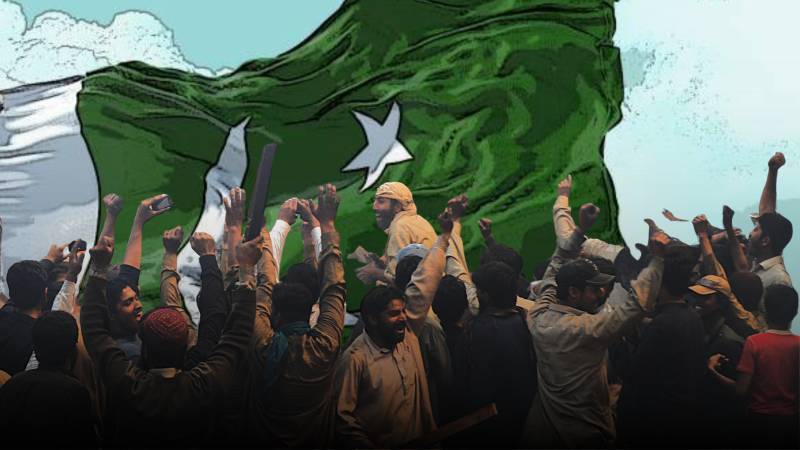
While the people of AJK express aspirations for greater autonomy and improved governance, the ruling elites of AJK appear primarily concerned with preserving their political dominance by embedding themselves within established patronage networks. As a result, the perception that the existing political elites of AJK are simply compliant clients of Islamabad has become pervasive in AJK’s polity. The recent wave of mass protests is, in effect, a public vote of no confidence in all mainstream political parties of AJK, whose politics of convenience and inability to imagine alternatives to neoliberal policies and patronage politics have eroded their legitimacy.
Second, AJK has been largely excluded from processes of economic development. While some socioeconomic and educational indicators in AJK are better than those in mainland Pakistan, it is rarely mentioned why they are better. They are better because of the unique sacrifice people of AJK are making, i.e., a mass exodus of men from AJK in search of employment opportunities. To illustrate this point, consider a simple statistic: the male-to-female ratio reported in the population census. According to the recent census data, this ratio is 95.22 in AJK. This means that there are 95 males for every 100 females in AJK. In comparison, the average male-to-female ratio in Pakistan is 105. Further, in some districts of AJK, such as Kotli, Bagh, and Poonch, these ratios are 90, 91, and 92, respectively. What does this mean?
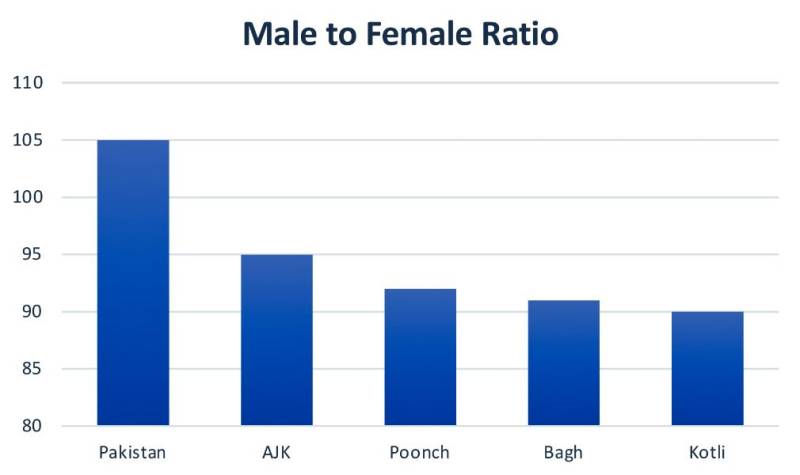
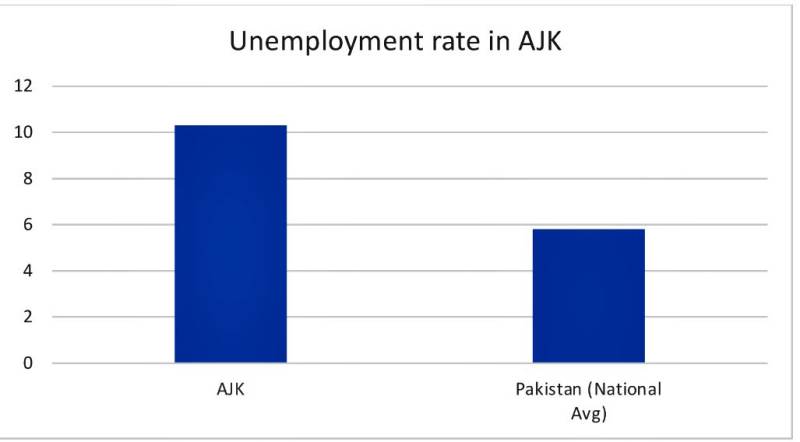
Men in AJK, mostly from working-class backgrounds, have no option but to leave AJK for economic survival. In other words, these are the ‘missing’ men of AJK—men not abducted or disappeared, but rather victims of economic exclusion, underdevelopment, and patriarchal norms and values. Consequently, women are overburdened with subsistence farming work, alongside unpaid household and care work. AJK is experiencing an exceptionally high unemployment rate of 11%, significantly above the national average of 5% across Pakistan. More strikingly, youth unemployment (ages 15–29) in AJK stands as high as 27%. Thus, I argue that the lack of employment opportunities within AJK is one of the defining aspects of its economic exclusion.
Now, the pressing question is: what can be done? This leads us to the notion of a ‘New Progressive Vision’ (NPV) for socioeconomic development in AJK that addresses the underlying structural issues related to autonomy and economic exclusion. On the issue of autonomy, an NPV must promote democratisation of the bureaucratic structures of the state, alongside performance optimisation, to facilitate improved public service delivery for the residents of AJK. People in AJK are frustrated by the perks and privileges enjoyed by political and state elites. To address this issue, transparent, participatory, and performance-based budgeting processes should be implemented to align public spending with the priorities of local communities.
Similarly, this new progressive vision must address the underlying causes of economic exclusion. For example, more than 80% of the population of AJK lives in rural areas. Mountainous geography isolates rural communities and restricts access to basic public goods. Overcoming geographic exclusion is a prerequisite for economic participation. Under the NPV, Islamabad must prioritise universal access to basic public goods in AJK. This can be achieved through public works programmes that develop sustainable infrastructure such as roads, bridges, and digital connectivity, to better integrate rural communities into the region’s economic development. This will directly contribute to strengthening the productive capacity of AJK’s local economy.
Rather than relying on state-directed, top-down approaches, which have historically failed to revive AJK’s economy, community-led, bottom-up strategies should be promoted. For example, community-driven cooperative farming initiatives where local communities pool their land and labour can enhance agricultural productivity and improve economic outcomes for everyone in the community. Access to credit is often cited as one of the biggest challenges faced by residents of AJK when starting new business ventures. This issue can be addressed if the State Bank of Pakistan mandates banks in AJK to expand access to affordable credit for small-scale processing units and eco-friendly industries, including those in the tourism sector. Together, these initiatives have the potential to stimulate economic growth and generate localised employment opportunities for both men and women in AJK.
One thing is clear: a business-as-usual approach, such as the ongoing political carousel, which merely papers over the cracks, will not appease the people of AJK. The pressing question for Islamabad, therefore, is whether it will continue to side with AJK’s entrenched elites or respond to the genuine needs and aspirations of the people of AJK.