

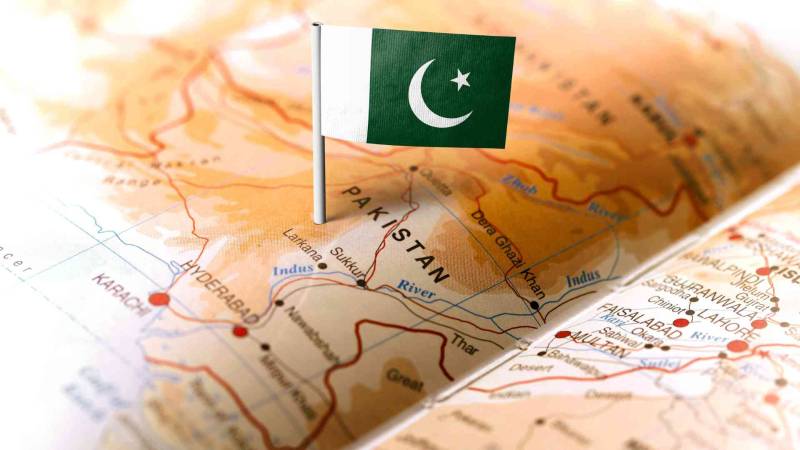
The idea of balkanising Pakistan—splitting it into smaller ethnic or regional states—has periodically resurfaced in public discourse, often fuelled by ethnic grievances, economic disparities, and political centralisation. But while these concerns are real and must be addressed through democratic reform and inclusive governance, the notion of dismembering Pakistan is a dangerous and counterproductive fantasy.
Balkanisation would not solve existing problems; it would almost certainly multiply them. Far from bringing justice or stability, it would plunge the region into deeper conflict, economic uncertainty, and geopolitical vulnerability.
The term “balkanisation” originates from the violent fragmentation of the Balkan Peninsula in the early 20th century, resulting in a patchwork of weak, mutually hostile states. It is a historical warning, not a model to emulate.
As Dr Ayesha Jalal argues in The Struggle for Pakistan: A Muslim Homeland and Global Politics, “Fragmentation is rarely the natural outcome of ethnic difference alone; it is shaped by political manipulation, state failures, and a lack of imagination in governance.” The dismemberment of Pakistan would similarly reflect not the strength of nationalist movements but the failure of the state to accommodate pluralism and regional autonomy.
Advocates of balkanisation often cite the 1971 secession of East Pakistan (now Bangladesh) as precedent. However, this comparison is misleading. Bangladesh emerged after years of systematic economic marginalisation, political exclusion, and a brutal military crackdown. Even then, the war resulted in the deaths of nearly 3 million people, the displacement of millions more, and long-term destabilisation in South Asia.
As historian Srinath Raghavan notes in 1971: A Global History of the Creation of Bangladesh, the outcome was not a peaceful exercise in self-determination but a tragedy born of “deep-rooted institutional dysfunction and authoritarianism.” The lesson of 1971 is not that Pakistan should fragment further, but that national unity depends on justice, decentralisation, and democratic inclusion.
Far from resolving the so-called “national questions” of Pakistan’s ethnic groups—Baloch, Sindhi, Pashtun, Seraiki, and Muhajir—balkanisation would simply reframe and multiply them. Any new ethnic state would face internal diversity and contradictions. A “Pashtunistan,” for example, would face divisions between Hazara people, tribal areas, and urban populations; between northern and southern Pashtuns; and between religious conservatives and secular nationalists.
A fragmented Pakistan would be a dream come true for hostile neighbours and a nightmare for regional stability
Likewise, a “Sindhudesh” would still have to contend with the large Urdu-speaking Muhajir population concentrated in Karachi and Hyderabad.
As political scientist Benedict Anderson famously argued in Imagined Communities, all nations are, to some extent, imagined constructions. This includes ethnic ones. The myth that ethnically homogeneous states are automatically more just or peaceful is deeply flawed. Ethnic states are no less susceptible to authoritarianism or internal exclusion than multiethnic ones—perhaps even more so.
Economically, the consequences of balkanisation would be catastrophic. Pakistan's inter-provincial and regional economies are deeply integrated, despite their uneven development. Punjab relies on gas from Sindh and Balochistan; Karachi depends on food and water from interior Sindh and Punjab; Balochistan needs access to ports and federal investment. Fragmentation would lead to a breakdown of this interdependence, exacerbating poverty, unemployment, and inflation.
As Moeed Yusuf writes in Brokering Peace in Nuclear Environments, “The Pakistani state may be weak in capacity, but it still offers the minimum institutional framework necessary for managing regional disparities and inter-group tensions. Remove that, and you risk turning local grievances into transnational conflicts.” New mini-states would likely be unable to maintain trade, security, or currency stability. They would be vulnerable to foreign influence, blackmail, and even proxy warfare.
Furthermore, competition over resources like water from the Indus River system—already a source of tension among provinces—could spiral into open conflict between new states. The Indus Waters Treaty, already under strain due to climate change and Indian hydro-projects, would become irrelevant in a fractured landscape.
According to a 2023 report by the International Crisis Group, “Pakistan's water insecurity is not just an environmental issue—it is a driver of conflict. Fragmenting the federation would only escalate water disputes into war.”
Geopolitically, a fragmented Pakistan would be a dream come true for hostile neighbours and a nightmare for regional stability. A weakened, internally divided Pakistan would become a playground for external powers, including India, China, Iran, and non-state actors such as the Islamic State and Tehrik-i-Taliban Pakistan (TTP).
Pakistan already faces persistent low-intensity conflict in Balochistan and the former tribal areas. Imagine this amplified across multiple, uncoordinated statelets with no centralised security apparatus.
Former U.S. Defence Secretary Robert Gates once warned that “a failed Pakistan would be a far more dangerous place for the world than a strong one.” This remains true today. The country’s nuclear arsenal, if left under contested control or weakened oversight, could become a flashpoint for global concern. Strategic deterrence, once fragmented, cannot be reassembled.
The appropriate response to Pakistan’s legitimate grievances is not secession but reform. The 18th Amendment to the Constitution was a step in the right direction, devolving power to the provinces and recognising the need for a more equitable federation. However, its implementation has been patchy. Provincial governments often replicate the same authoritarian and extractive practices they criticise at the federal level.
What Pakistan needs is not fewer provinces, but more inclusive governance, better fiscal federalism, and genuine recognition of cultural and linguistic diversity. As political economist Akbar Zaidi has emphasised, “The centre must learn to listen without the periphery threatening to leave, and the periphery must learn to govern without aspiring to replace Islamabad with a miniature version of itself.”
Pakistan also needs robust local governments, the revitalisation of political parties beyond ethnic lines, and a state apparatus that is transparent, just, and accountable to its citizens. Balkanisation would destroy any chance of achieving these goals.
Pakistan, like many post-colonial states, is a nation still in the making. Its diversity is not a liability but a strength—if embraced through democratic federalism. The balkanisation of Pakistan would not liberate its people; it would enslave them to new conflicts, new exclusions, and new vulnerabilities.
Disintegration is not destiny. Though the state’s current trajectory may be pushing us toward that cliff, the path remains a choice—and I believe it is the wrong one.