

Politicians and political parties employ a wide range of tactics—both legitimate and otherwise—to win elections. In many developing countries, elections are often marred by ballot-box stuffing, vote-count manipulation, and other forms of electoral fraud. In Western democracies, however, the influence of money has become one of the defining features of modern election campaigns. Nowhere is this more evident than in the United States, where elections are becoming increasingly expensive, raising important questions about fairness, democratic participation, and the influence of money on public policy.
In the United States, candidates running in competitive statewide primaries must do far more than persuade voters. They must build statewide campaign organisations, advertise across multiple media markets, conduct polling, travel extensively, and maintain large campaign staffs. These activities require enormous financial resources long before the general election begins.
Running for statewide office in the United States has always been costly. However, campaign expenditures have risen dramatically in recent decades. Competitive Senate races now routinely cost tens or even hundreds of millions of dollars when candidate spending, political action committees (PACs), and independent expenditure groups are taken into account.
The need for large campaign budgets creates significant barriers for candidates who lack access to wealthy donors, extensive fundraising networks, or personal wealth. Candidates who can self-finance their campaigns or attract major donors often enjoy substantial advantages in advertising, staffing, and voter outreach.
A Record-Breaking Primary in Michigan
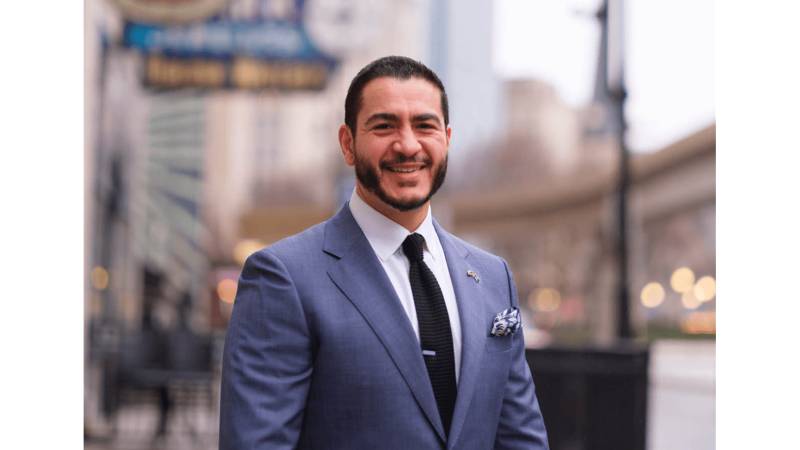
This week's Democratic primary for Michigan's US Senate seat once again drew national attention because of the enormous sums of money spent during the campaign. In this highly competitive and bitterly contested race, former public health official Dr Abdul El-Sayed defeated four-term Congresswoman Haley Stevens by a narrow margin of about one percentage point.
According to the political advertising tracking service AdImpact, more than US30 million, roughly half of the total, came from the American Israel Public Affairs Committee (AIPAC) and its affiliated organisations. AIPAC is a highly influential pro-Israel advocacy organisation that supports Democratic and Republican candidates who favour strengthening the US-Israel relationship.
No Muslim American has advanced this far in the pursuit of high elected office
In contrast, El-Sayed's campaign raised only about US$7 million, most of it from a broad base of individual and small-dollar donors. He was therefore outspent by nearly nine to one.
While Stevens' campaign had the financial resources to mount an extensive advertising campaign, El-Sayed relied primarily on grassroots voter outreach through a large network of volunteers, many of them young people.
Contrasting Visions and the Gaza Conflict
The two candidates also presented sharply contrasting policy platforms. Stevens largely reflected the Democratic Party's mainstream positions on both domestic and foreign policy issues and was widely viewed as the establishment candidate. El-Sayed, by contrast, adopted a more progressive platform. He advocated universal healthcare, measures to address the rising cost of living, and improvements to the education system—issues that resonated with many ordinary voters. Like many progressive Democrats seeking broad economic and political reform, he has also criticised the role of big money in politics, arguing that it distorts the democratic process.
No issue highlighted the differences between the candidates more clearly than US policy towards Israel. Stevens reaffirmed her longstanding support for continued US military, financial, and political assistance to Israel, while also stating that the United States and Israel should work together to rebuild Gaza.
El-Sayed, on the other hand, has called for ending unconditional US military aid and weapons sales to Israel. He has described Israel as a "rogue state" and accused it of committing a "horrific genocide" in Gaza. He argues that American financial support for Israel should instead be invested in improving the lives of Americans at home. At the same time, he has repeatedly emphasised that his criticism is directed at the policies of the Israeli government—not at Jewish people. He has consistently stated that he opposes the killing of civilians, whether they are Israelis, Palestinians, or anyone else. Nevertheless, his critics have accused him of antisemitism. This issue largely explains AIPAC's substantial financial support for his opponent.
The Path to November
El-Sayed's victory is particularly remarkable because the political odds were heavily stacked against him. Stevens was endorsed by much of the Democratic Party establishment, including congressional leaders and Michigan's governor. El-Sayed, meanwhile, received the backing of several labour unions and progressive leaders such as Senator Bernie Sanders of Vermont and Representative Alexandria Ocasio-Cortez of New York.
The next challenge for El-Sayed will be the November general election, where he is expected to face Republican nominee and former Congressman Mike Rogers. AIPAC and other outside groups are expected to spend significant sums supporting Rogers in an effort to defeat El-Sayed. All indications suggest that the race will be highly competitive.
To succeed, El-Sayed must reunite a Democratic Party divided by a bitter primary campaign, consolidate Democratic support, and attract enough independent and moderate Republican voters to secure victory.
A Milestone for Representation
Abdulrahman Mohamed El-Sayed was born in Michigan to Egyptian immigrant parents. He earned his medical degree from Columbia University and later became a Rhodes Scholar, obtaining a Doctor of Philosophy (DPhil) in Public Health from Oriel College, University of Oxford. An epidemiologist by training, he has held several leadership positions in Michigan's public health system.
Whatever the outcome of the November election, El-Sayed's primary victory represents a significant milestone for many young Muslim Americans. No Muslim American has advanced this far in the pursuit of high elected office. Following Zohran Mamdani's mayoral victory in New York City last year, El-Sayed's success is likely to inspire a new generation of Muslim Americans to pursue careers in public service and seek elected office.
El-Sayed’s victory also demonstrates that, despite the enormous sums of money that may be spent against a candidate, it is still possible to stand up against oligarchs and special interest groups and compete successfully through grassroots organising, volunteer engagement, and a campaign built around a positive and progressive vision.