


The Lahore Fort is a magnificent symbol of Lahore’s rich cultural heritage, whose intriguing history and opulence have captivated public imagination for centuries, reflected in cinema, art, literature, and television. This majestic complex of ornate palaces, museums, pavilions, halls, and quadrangles remains a cherished reminder of the Mughal Empire, drawing throngs of visitors year after year. Each monument tells a story, shaped over centuries by successive dynasties that brought varied cultural influences.
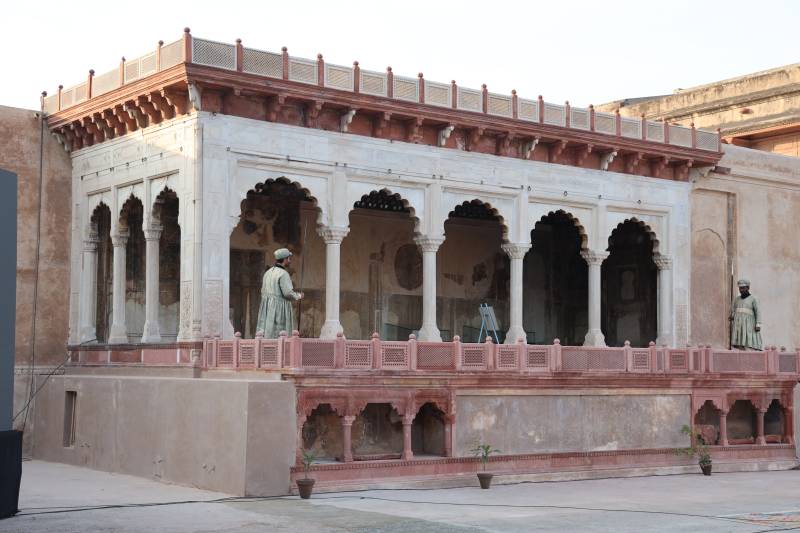
Three culturally significant monuments of the Lahore Fort were inaugurated recently: the Loh Temple, the Athdara Pavilion, and the Sikh Hammam. As per Hindu tradition, the Loh Temple is associated with Loh, the son of Lord Rama, making it an important religious site for Hindu devotees. Historical accounts further suggest that the name of Lahore may have been derived from Loh, lending the monument particular significance to the city. The Athdara Pavilion, on the other hand, was constructed during the reign of Maharaja Ranjit Singh and served as his royal court. Behind the Athdara Pavilion lies a site originally constructed as a pavilion during the Mughal era and later converted into a hammam (traditional bathhouse) under Sikh rule, featuring intricate artwork on its walls.
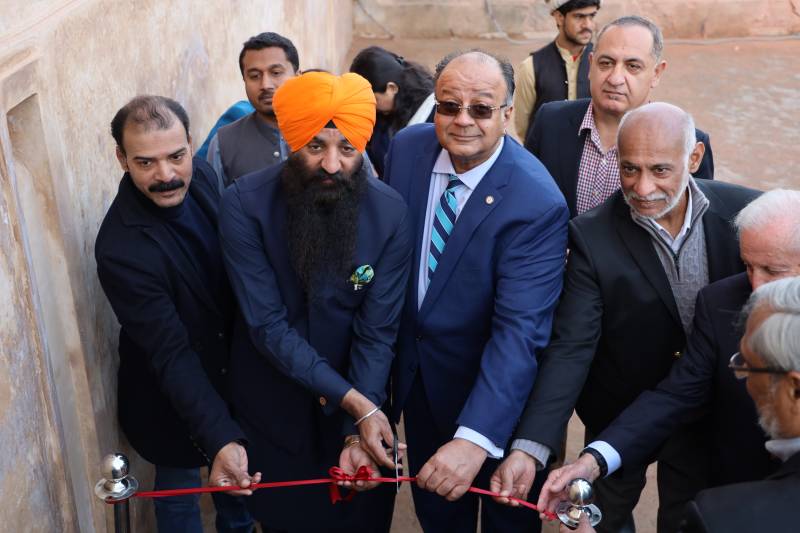
The conservation of these monuments is part of a broader initiative. Funded by the U.S. Ambassadors Fund for Cultural Preservation (AFCP), the project ‘Preservation and Promotion of Cross-Culture Edifices of Lahore Fort’ seeks to conserve and celebrate the plethora of cultures and faiths represented by seven monuments within the Fort. Launched in October 2022, it has since enabled the restoration of historic sites that reflect Muslim, Sikh, Hindu, and Christian traditions.
Many youths from Lahore’s Walled City actively participated in the project, with girls making up a significant portion; they are now contributing to the restoration of the Sheesh Mahal
Under this program, a Sikh-Era Temple and the Imperial Zenana Mosque were restored last year. The two structures, situated close together, stand as hallmarks of multiculturalism and tolerance — values deeply rooted in the Subcontinent’s culture. Speaking at the inauguration of the Loh Temple, Athdara Pavilion, and Sikh-Era Hammam last week, Wajahat Ali, Director of Conservation and Design at Aga Khan Cultural Service – Pakistan (AKCS-P), said, ‘The Lahore Fort captures the diversity of the past. We have mosques, a Hindu temple, a Sikh temple, and Christian paintings from Emperor Jahangir’s time.’ Echoing a similar sentiment, CEO AKCS-P Tausif Khawaja explained that the site’s cultural significance resonates not only in Pakistan but across the Subcontinent. ‘The monuments conserved through this important initiative exemplify cross-cultural harmony. The Loh Temple, being inaugurated today, is not only historically significant but also a sacred site that attracts visitors from across the border, he said.
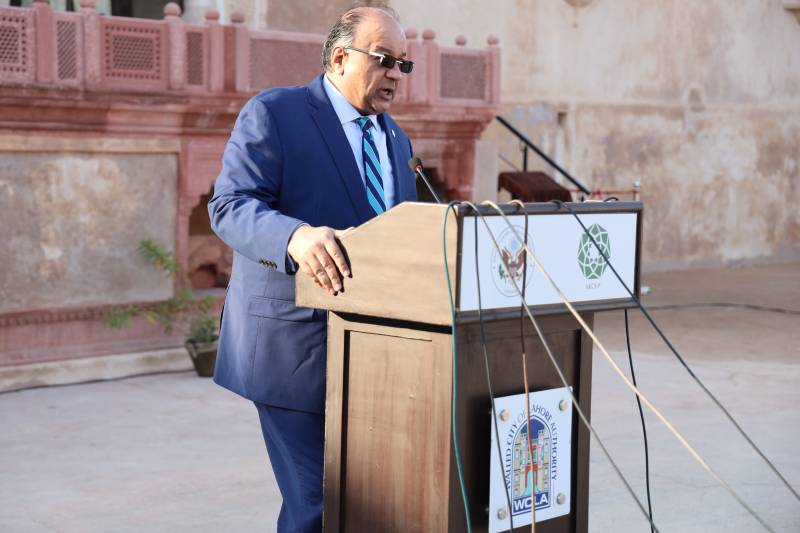
Also in attendance, Sardar Ramesh Singh Arora, Minister for Minorities Affairs, Government of the Punjab, highlighted that these monuments foster inclusivity for posterity. ‘This project is significant not only for the conservation of historic structures but for the recognition and protection of Punjab’s pluralistic heritage. Lahore has been a shared civilizational space for people of different faiths and cultures. Preserving these sites will strengthen historical continuity and ensure that future generations understand and respect the diverse roots that have shaped this region,’ he observed.
The Minister emphasized that the government of Punjab remains fully committed to the protection of cross-cultural heritage and the promotion of interfaith harmony. He added that the government has prioritized the conservation of minority heritage sites as living symbols of coexistence, tolerance, and shared identity.
Najamus Saqib, Director General of the Walled City of Lahore Authority (WCLA), highlighted the layered history of the restored monuments, built during the pre-Mughal era and further shaped during the Mughal period and British rule. Each site, he noted, tells its own story, embodying the distinctive character of a different historical era. ‘The sites bear the historical footprints of various rulers, including Emperors Shah Jahan, Akbar, and Jahangir, the Sikh rulers, and the British. Every ruler had a distinct aesthetic manifesting in different styles, materials, and designs. We, along with our partners, are working to preserve the unique historical legacy of each era,’ he underscored.
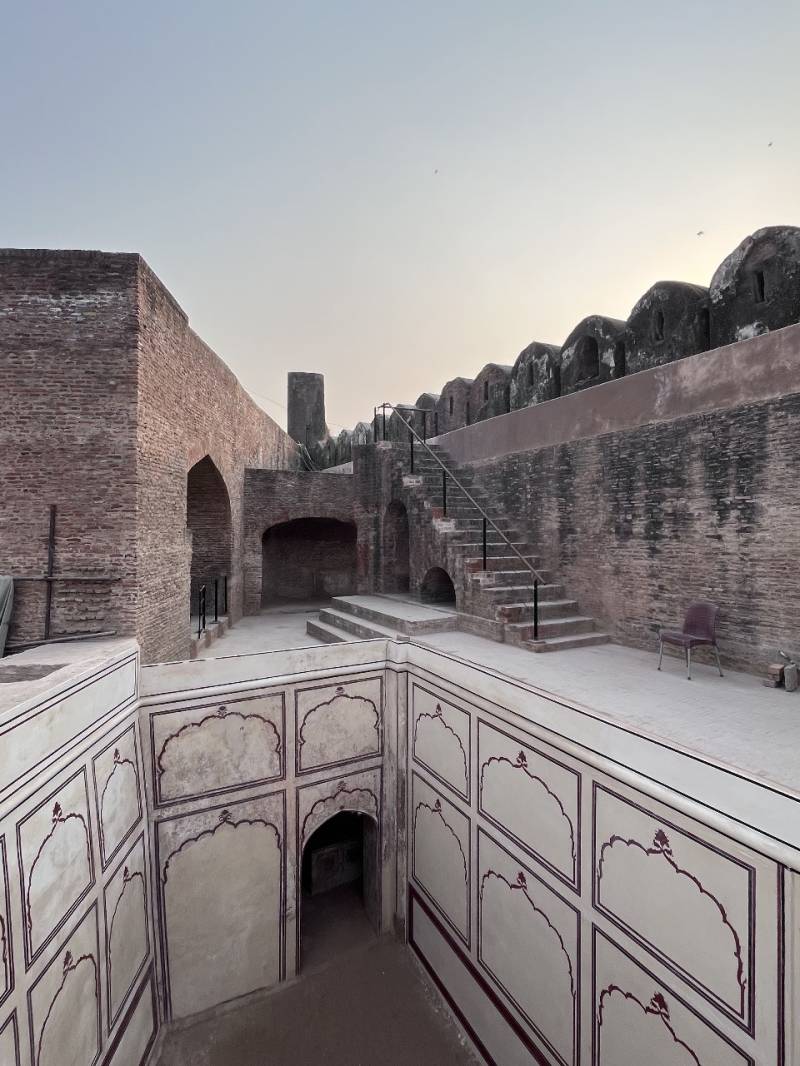
The conservation of these monuments, led by AKCS-P in partnership with WCLA, has unveiled hidden elements of historic importance. Many sections of the sites were found in a dilapidated state: ceilings had crumbled, and rooms were overtaken by grass and mud. As the conservation work progressed, concealed features began to emerge. Clearing cultural fill exposed hidden chambers, while the removal of later interventions, such as additional layers of paint, uncovered previously existing floral patterns. The sites were carefully rehabilitated to reveal their original designs, honouring their historic integrity. In the Sikh-era Hammam, for example, fine artwork was conserved by subtly restoring missing paint, guided by evidence gathered onsite and from archival sources.
The conservation work integrates indigenous knowledge with international best practices. Through the use of traditional crafts, the project has revived and preserved specialized skills, including glass fabrication, fresco techniques, and Mughal-era tilework. Capacity building was also a key component of the initiative. According to AKCS-P’s Director of Conservation and Design, transferring skills to budding professionals empowered them. ‘We have trained dozens of young graduates to become heritage professionals, equipping them with expertise in areas such as fine arts and architecture. Some have even gone on to pursue higher studies overseas,’ he said. ‘Many youths from Lahore’s Walled City, surrounding the Fort, actively participated in the project, with girls making up a significant portion; they are now contributing to the restoration of the Sheesh Mahal and Picture Wall.’
Reflecting on the project’s tangible benefits for the community and economy, Sandeep Paul, Public Affairs Officer of the U.S. Consulate in Lahore and guest of honour at the opening event, stated: ‘This project has supported local jobs and skilled artisans, strengthened technical cooperation and capacity, and preserved sites that will continue to contribute to tourism, education, and most importantly, economic growth.’
The conserved monuments offer a fascinating glimpse into the artistic and architectural splendour of the past, forging a tangible connection to a glorious history. Our heritage, steeped in cultural pluralism, carries a valuable lesson: differences need not result in conflict or polarization; instead, they can become a source of enrichment when diverse values coexist in harmony.