

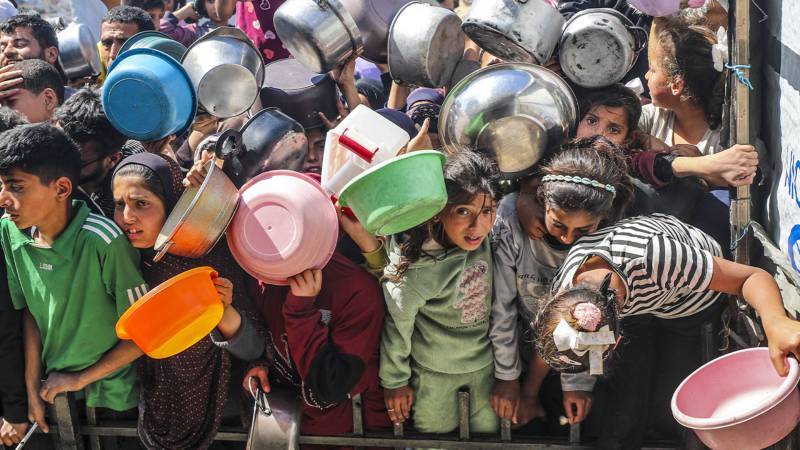
"We must learn to regard people less in light of what they do or omit to do, and more in the light of what they suffer." — Dietrich Bonhoeffer
In May 2025, Spain, Ireland, and Norway formally recognised the State of Palestine. It was a moment rippling with moral symbolism and overdue diplomatic awakening. More recently, France, Canada, Malta, the United Kingdom and Australia, amongst many more, have planned to recognise Palestine as a state in September 2025 at the 2025 United Nations General Assembly. For many, this move signals a long-sought shift in the ossified dynamics of Middle Eastern geopolitics, isolating Israel and putting due pressure on it to stop its atrocities. Yet, as flags are hoisted and dignitaries speak of sovereignty and justice, the soil of Gaza continues to be bathed in the blood of its children.
This recognition, though welcomed by many, resounds like a whisper amid the deafening silence that has accompanied the mass deaths in Palestine for nearly two years. Over 60,000 civilians, disproportionately women and children, have been killed since October 2023, according to estimates from multiple humanitarian agencies. The numbers are more than sufficient to horrify any human being’s conscience. But they do not seem to move the machinery of international diplomacy or ignite the righteous outrage of legal institutions with the same fervour that casualties in Ukraine or Iran have in recent memory.
The world erupted in condemnation when Russia invaded Ukraine in February 2022. The invasion prompted swift action: sanctions, resolutions, arms, and aid. International Criminal Court (ICC) prosecutors opened investigations in record time, and heads of state routinely invoked the language of the Geneva Conventions, Responsibility to Protect (R2P), and crimes against humanity. When Israel attacked Iran recently, the offensive lasting for less than two weeks and being between parties of more or less equal fighting power, with 900 Iranians and fewer than 50 Israelis dead, the international community responded promptly, with statements of concern and solidarity with Iran, and even the Western capitals who are to varying degrees apathetic towards Palestinian lives buzzed with diplomatic anxiety—the consensus being that civilians of sovereign states should not and must not be subjected to unauthorised military aggression.
And yet when the skies over Rafah fill with phosphorous clouds, when children are pulled from rubble in Khan Younis, the diplomatic machinery shudders and stalls. Lip service is paid. Investigations are slow-walked. Leaders call for "restraint" and the right of Israel to “defend itself” while bombs fall on civilian areas, refugee camps, and aid-awaiting crowds.
Daily violations—mass detentions, sieges, targeted killings, and house demolitions—that would be war crimes in any other context are, in Gaza, normalised through repetition and inaction
This is the moral abyss at the heart of modern international relations: The value of human life is not, in practice, equal. It is conditioned and contoured—by citizenship, geography, and, most insidiously, statehood.
Palestinians are imagined as stateless people. Their national identity is fragmented, denied, contested. Under international law, as codified in the 1933 Montevideo Convention, statehood rests on four pillars: a defined territory, a permanent population, a government, and the capacity to enter into relations with other states. For decades, Palestine has been made to fall just short of these criteria in the eyes of key international actors.
And in that gap between recognition and denial lies impunity.
International Humanitarian Law (IHL), as embodied in the Geneva Conventions and their Additional Protocols, guarantees protection to civilians in armed conflict. International Criminal Law (ICL) builds on this foundation through prosecutorial frameworks like the Rome Statute of the ICC. Yet, legal accountability is political. The ICC opened investigations into the situation in Palestine in 2021, but progress has been glacial. Contrast this with the rapidity of action on Ukraine, where arrest warrants for Russian officials, including President Vladimir Putin, were issued within months.
While on 21 November 2024, following an investigation of war crimes and crimes against humanity, the ICC issued arrest warrants for two senior Israeli officials, Benjamin Netanyahu, the Prime Minister of Israel, and Yoav Gallant, the former Minister of Defence of Israel, little was done to put these warrants into effect and many international leaders such as the government of Hungary as well as the USA flouted the authority of international courts by outrightly refusing to comply in barefaced defiance.
This disparity reflects not merely the inertia of institutions but the structural bias embedded within them. In his dissenting opinion in the Advisory Opinion on the Legal Consequences of the Construction of a Wall in the Occupied Palestinian Territory (ICJ, 2004), Judge Buergenthal wrote: "The wall is but one manifestation of a larger policy that violates human rights daily."
Daily violations—mass detentions, sieges, targeted killings, and house demolitions—that would be war crimes in any other context are, in Gaza, normalised through repetition and inaction.
Is it because, somewhere in our collective subconscious, we have accepted that Palestinians are meant to die? That violence is their birthright, their burden?
From Ghassan Kanafani’s Men in the Sun to Mahmoud Darwish’s elegiac verses, Palestinian literature has long grappled with the weight of dispossession and erasure. Darwish wrote:
“We suffer from an incurable malady: hope.”
The children of Gaza do not die for lack of law. They die for lack of will
But hope, uncoupled from justice, curdles into resignation. And that is what the international community seems to be feeding on—a quiet, sullen resignation that the Palestinian question is too intractable, too complicated, too dangerous to resolve.
In the words of poet Warsan Shire:
“No one puts their children in a boat unless the water is safer than the land.”
What does it say about the world that Palestinian children have no such choice—land and water both have become theatres of death?
To be a child of a lesser god is not to be forsaken by faith but by fellow humans. The phrase, borrowed from the title of Mark Medoff’s 1979 play about disability and marginalisation, becomes an apt metaphor for the Palestinian condition. For what greater disability exists in global politics than statelessness? What greater marginalisation than dying unheard?
The rhetoric of international law declares universality: that all human beings are born free and equal in dignity and rights (Universal Declaration of Human Rights, Art. 1). But in practice, the applicability of those rights is often constrained by one’s passport—or lack thereof.
This is why the recognition of Palestine matters. Not merely as a geopolitical manoeuvre but as a moral recalibration. To recognise Palestine is to affirm that Palestinian lives are not conditional. That their suffering is not background noise in a larger narrative. That in Camus’ words, the condemned man is not doomed only to hope that the executioner’s machine will be swift and precise.
Recognition is not a panacea. But it is a threshold. A point of entry into the community of nations. With recognition comes legal personality. With legal personality comes the right to seek remedies, to demand accountability, to exist.
Legal scholars such as Antonio Cassese and Cherif Bassiouni have long noted that justice delayed in ICL is justice denied. The international legal order cannot claim legitimacy while allowing a prolonged massacre to unfold with muted response. UN Security Council paralysis, mainly due to the U.S. veto, has rendered enforcement mechanisms inert and fatally futile. But this cannot excuse the inaction of the General Assembly, regional bodies, or the ICC. The ICC’s failure to move decisively on Palestine undermines its own credibility. If international law cannot protect those most in need of its shield, it becomes less a beacon and more a bludgeon.
The children of Gaza do not die for lack of law. They die for lack of will. They die not because international law fails to recognise their rights, but because the world fails to enforce those rights. Because justice, like statehood, has become a privilege rather than a promise.
Judith Butler’s concept of differential allocation of grievability, articulated in Precarious Life, offers a piercing lens through which to view the global response to Palestinian suffering. Butler argues that not all lives are equally grievable; some deaths are publicly mourned and politicised, while others are rendered invisible or routine. In the case of Palestine, the world’s numbness to mass death, its reflexive framing of Palestinian casualties as unfortunate but inevitable, reveals a hierarchy of human worth embedded in international discourse. The failure to extend equal grief is not just a moral lapse; it is a form of structural violence that precedes and enables physical destruction.
In the 20th century, the world said Never Again. But again has come. And it has come not with tanks but with drones, not with declarations but with silence. Let us recall the words of the poet Kahlil Gibran:
“Pity the nation that raises not its voice save when it walks in a funeral, boasts not except among its ruins…”
And pity the world that watches the funeral and turns away.
The recognition of Palestine is a start. But it must be followed by justice—real, enforceable, unapologetic justice. Only then can we say that we have not forsaken the children of a lesser god, but have instead begun to tear down the altars of impunity where their innocence has long been sacrificed.