

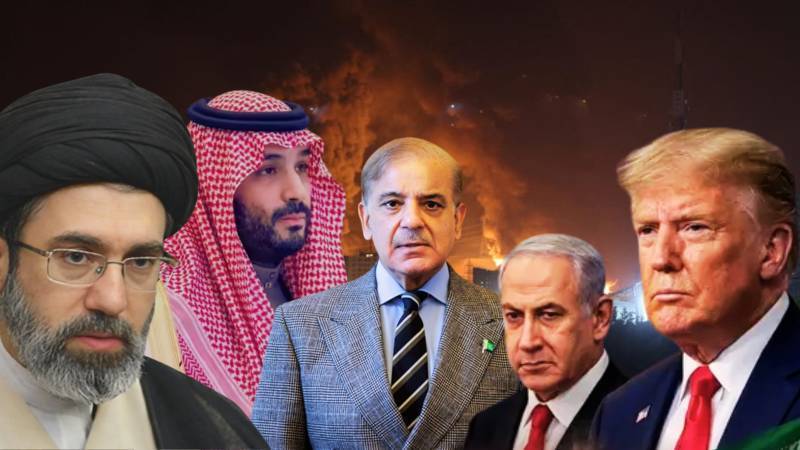
On the seventh of April 2026, the international legal order faced an imminent systemic rupture. The United States military apparatus was mobilised for pre-emptive kinetic strikes against the Islamic Republic of Iran following the expiration of a rigid diplomatic ultimatum.
The Strait of Hormuz remained blockaded, threatening global energy supply chains and fundamentally violating the customary international legal principles of freedom of navigation. Minutes before the kinetic threshold was crossed, the Republic of Pakistan executed a highly sophisticated diplomatic intervention.
The resultant fourteen-day cessation of hostilities stands as a profound doctrinal shift in contemporary conflict resolution. This intervention, universally characterised by regional analysts as a monumental diplomatic triumph, averted a regional conflagration and definitively established Islamabad as a primary anchor of global security governance.
Pakistan initiated its formal mediatory posture in late March 2026, proposing a structured framework initially designed around a forty-five-day cooling-off period. However, as the geopolitical friction accelerated towards a hard American deadline, Islamabad demonstrated remarkable tactical agility.
Working through highly secure and unofficial diplomatic routes, Pakistani officials simultaneously engaged Washington and Tehran. They formally petitioned United States President Donald Trump to delay the impending strikes while extracting a non-negotiable concession from Iranian leadership regarding the immediate reopening of the Strait of Hormuz.
This synchronised dual-track diplomacy yielded the current fourteen-day truce. Formal structural negotiations are now mandated to commence in Islamabad this coming Friday.
To analyse the mediatory success of Pakistan merely as an exercise in diplomatic prestige is to misread the geopolitical calculus of South Asia. Islamabad shares a highly securitised nine-hundred-kilometre border with Iran.
Any military escalation within Iranian territory guarantees an immediate and destabilising spillover effect into the Pakistani province of Balochistan. The consequent refugee influx and inevitable surge in transnational militancy constitute an existential threat to the internal stability of the Pakistani state.
In an era defined by the progressive paralysis of institutional conflict resolution mechanisms and the alarming resurgence of unilateral military brinkmanship, a regional power stepped forward to fill the systemic void
Therefore, conflict prevention is not an abstract policy objective for Islamabad; it is an absolute national security imperative. By transforming its geographic vulnerability into diplomatic leverage, Pakistan demonstrated an advanced application of realist statecraft.
Pakistan occupies a highly unique node within the international system. It sustains deeply entrenched, albeit historically cyclical, military and institutional linkages with the United States.
Simultaneously, it manages a complex but functional relationship with the clerical establishment in Tehran. This bilateral accessibility provides Islamabad with a degree of diplomatic utility unavailable to other actors in the Islamic world.
When Iranian officials elected to transmit their formal negotiating parameters to Washington, they deliberately utilised Pakistani intermediaries. This deliberate transmission confirmed Pakistan as the central operational conduit of this crisis, a reality underscored by financial and political analysts globally.
The doctrinal significance of this mediation is most evident in its maritime dimension. The Strait of Hormuz facilitates the transit of roughly one-fifth of global petroleum and liquefied natural gas.
The Iranian blockade of this chokepoint represented a severe disruption of global macroeconomic stability and a direct challenge to the United Nations Convention on the Law of the Sea, specifically the provisions governing transit passage.
By securing the reopening of the Strait as a prerequisite for the truce, Pakistan effectively enforced a foundational pillar of international maritime law without resorting to kinetic coercion. This immediate de-escalation was thus anchored in tangible legal and economic concessions rather than mere rhetorical promises.
It protected the economies of the Indo-Pacific from catastrophic energy shocks.
Crucially, the Islamabad framework did not operate in a geopolitical vacuum. Pakistan secured the explicit strategic backing of Turkey and Egypt.
This trilateral synchronisation among three formidable Sunni-majority states to mediate a crisis involving a primary Shia power and an external Western hegemon marks a definitive evolution in Middle Eastern diplomacy.
Historically, regional actors deferred to the United Nations Security Council or unilateral American intervention to manage localised conflicts. The current paradigm illustrates a profound transfer of agency.
These middle-tier powers recognise that systemic warfare in the Persian Gulf would indiscriminately shatter trade corridors and domestic stability across the Levant, North Africa, and the Indian subcontinent. Their collective endorsement granted the Pakistani initiative a robust legitimacy that insulated it from accusations of partisan bias.
For decades, the strategic doctrine of Pakistan was rigidly defined by a localised security binary encompassing India to the east and Afghanistan to the west. Its foreign policy apparatus was inherently reactive.
The successful mediation of the current Washington and Tehran crisis signals a categorical departure from this historical limitation. Islamabad has asserted an autonomous and outward-facing diplomatic capacity capable of managing great-power friction.
Global media outlets have subsequently recalibrated their assessments of the Pakistani state, recognising its transition from a regional security participant to a primary architect of global conflict resolution. This recalibration acknowledges that Pakistan possesses the institutional bandwidth to project influence far beyond its immediate territorial periphery.
Scholarly rigour requires a sober assessment of the immediate future. A fourteen-day cessation of kinetic operations is an inherently fragile construct.
The underlying structural drivers of this conflict remain entirely unresolved. The Iranian nuclear programme, the expansive architecture of proxy militias across the Levant, and the maximalist containment doctrines of the United States are deeply entrenched realities.
When delegations convene in the Pakistani capital, they will confront decades of institutionalised hostility. The task of converting a tactical pause into a durable and legally binding political settlement will demand unprecedented diplomatic stamina.
The initial success merely provides the operational space required for these substantive negotiations to occur. It necessitates the establishment of verifiable compliance mechanisms to ensure long-term adherence by all belligerents.
Despite the formidable obstacles that lie ahead, the events of April 2026 constitute a watershed moment in contemporary international relations.
In an era defined by the progressive paralysis of institutional conflict resolution mechanisms and the alarming resurgence of unilateral military brinkmanship, a regional power stepped forward to fill the systemic void.
Pakistan provided the neutral geography, the actionable legal framework, and the strategic persistence required to pull two heavily armed adversaries away from the precipice of total war.
This achievement firmly restructures the geopolitical hierarchy of West Asia. As the international community anticipates the forthcoming negotiations, it is evident that the locus of diplomatic gravity has temporarily shifted to Islamabad.
It proves that the preservation of global stability is increasingly dependent upon the pragmatic statecraft of ascending middle-tier powers.