

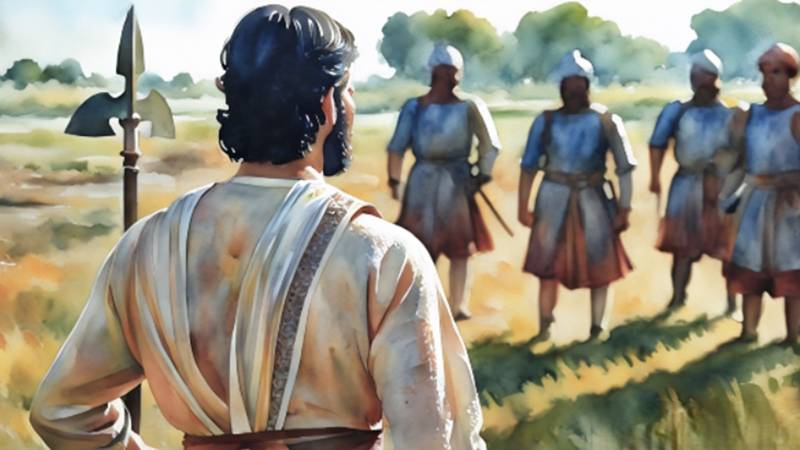
One Friday afternoon, I travelled to Pindi Bhattian (Hafizabad, Punjab) which lies at the crossroads of important highways including the GT Road, and the M-2 Motorway, which connects Lahore and Islamabad.
Beyond its logistical significance, Pindi Bhattian is steeped in culture and heritage. With a history that traces back to conquest of Alexander the Great and Mughal Emperor Akbar, Pindi Bhattian stands as a testament to Punjab’s enduring spirit. A fierce battle took place at Dullay di Bar in which Dulla Bhatti’s army was victorious and Mughal army suffered a heavy defeat.
Mr Muhammad Ilyas Bhatti, a descendant of Abdullah Bhatti (affectionately known as Dulla Bhatti), speaks at length about the righteous and fearless figure.
Passed down through the ages, these anecdotes morph traditions, stories and beliefs, creating a rich tapestry that weaves together the essence of cultures. Dulla Bhatti stands as a testament to the heroic ethos of 16th-century Punjab. His legacy resonated through the mesmerising tunes of Dhadis, the battered singers which preserved his tales. In the rich oral traditions passed down through time, Dulla Bhatti emerged as a legendary figure, embodying the ideals of a righteous hero.”
Mr Muhammad Ilyas Bhatti’s narrative took a riveting turn when he said;
“Dulla Bhatti defiantly opposed the oppressive tax policies of Mughal Emperor Akbar, positioning himself as a revolutionary leader for the disenfranchised working class.”
His audacious stand against exploitation and injustice transformed him into a beacon of hope and resilience among the local community.

Raised alongside Prince Salim (Emperor Akbar’s son), he eschewed the trappings of royal privilege, carving a niche for himself through acts of bravery and an unwavering commitment to social justice. Court historians, perhaps influenced by the lens of power, painted him as a bandit and a rebellion chieftain.
Tax reform posed a threat to the autonomy of zamindars, prompting Dulla to stand against the imperial authority. He targeted Mughal caravans passing through the vital route linking Mughal India to Central Asia
However, his popularity among the local community is a testament to his charismatic leadership, transcended the confines of historical narrations.
Muhammad Ilyas Bhatti continued his passionate story:
“The Muslim Rajput Bhatti chief and his sons, defiantly resisted Mughal rule, ultimately facing defeat and execution. Amongst their descendants one stood out – an individual destined to challenge the Mughal might and in doing so, etched his name into the annals of legend. This was Dulla Bhatti!”
Born in a small village along the banks of the Chenab River in 1547 AD, Dulla displayed extraordinary courage and bravery as a child. His mother reminded him of the tragic fate that had befallen his father and grandfather. She urged him to channel his courage into avenging the death of his forebears. Thus he learned from his mother the heart breaking saga and swore an oath of vengeance.

The socio-political landscape was transforming as Akbar sought to consolidate the Mughal Empire by imposing Zabti taxation system across the empire, including Punjab, curtailing the influence of local chieftains. This tax reform posed a threat to the autonomy of zamindars, prompting Dulla to stand against the imperial authority. He targeted Mughal caravans passing through the vital route linking Mughal India to Central Asia. Dulla Bhatti became a symbol of resistance. He disrupted imperial officials, looting their treasures to distribute among the oppressed peasants, seldom keeping anything for himself.
His leadership and charisma galvanised the beleaguered peasants, turning him into a Punjabi Robin Hood and a folk hero. Legends recount instances where Dulla exhibited audacity, allegedly ‘humbling’ Akbar and Prince Salim, the future Emperor Jehangir, where both were released from his captivity after pleading mercy.
In another Punjabi folktale, a destitute Brahmin was grappling with the plight of his two daughters who were promised in marriage. However, the local landlord harboured intentions of marrying them himself. Dulla Bhatti intervened, earning him the moniker of the girls’ godfather. Demonstrating his commitment to justice and valour, he facilitated the marriage of the Brahmin’s daughters to their respective betrothed grooms. This extraordinary act of benevolence etched Dulla Bhatti’s legends as a guardian of honour and defender of the vulnerable in the annals of Punjabi folklore.
The legacy of this tale lives on through the famous Punjabi folk song, echoing through the festive air during Lohri celebrations. The song and dance resonates with narratives of Dulla Bhatti’s heroism in the lyrics that go by:
“Oh beautiful Mandri.
Who will save you, the poor one
Dulla Bhatti is here for you
The Dulla married off his daughters.”
On Lohri, a festival marking the solstice of the harsh winter, even now the echoes of Dulla Bhati’s bravery and kindness reverberate through the voices of Hindus, Sikh, and Muslim alike. This festival is celebrated in Punjab on both sides of Pakistan’s international border with India, songs are sung in praise of this brave soul, who is said to have saved the honour of young Hindu girls on this day.
Dulla Bhatti was finally captured and taken to Lahore, where he met the same fate as that of his father and grandfather on the 26th March, 1599 AD.

It is said that Punjab’s Sufi poet Shah Hussain was present outside Delhi Darwaza of the Lahore Fort on the day that Dulla Bhatti was hanged on the orders of Emperor Akbar. The poet, an admirer of Dulla Bhatti’s armed struggle, penned down the following line in Dulla’s honour.
“Says this lowly faqir, thrones are not gained by merely asking”
Today, his unassuming grave in Miani Sahib graveyard stands as a quiet testament to the enduring legacy of a man who, in the face of imperial might, became a symbol of unity and valour. Dulla Bhatti remains a poignant chapter in the cultural heritage of Punjab – a chapter that speaks of resilience, justice, and the enduring power of hero’s legacy.
The Punjabi Sufi poet recorded his last words as being “No honourable son of Punjab will ever sell the soil of Punjab.”
The folk song “Sundari-Mundare” during the Lohri celebration refers to the chivalry of Dulla Bhatti. In addition to celebrating the end of winter in the plains of Pindi Bhattian, it also celebrates the man who fought tyranny and also the lecherous eyes of the Zamindar for the self-respect of women. He is described as a fearless and ardent supporter of the less privileged.
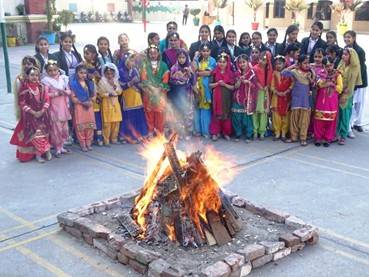
The Lohri Festival, in older times, would bring together Muslims, Hindus, Sikhs and even Christians together. However, with gradual decline of indigenous festivities in West Punjab, the Lohri vibrant celebrations waned and along with it, the prominence of Dulla Bhatti’s legend began to fade.
As I sit back and close my eyes to the thumping ‘dhol’ and ascending musical notes, Dulla Bhatti leaves an indelible mark on my conscience. I wiggle the pen in my hand, wondering and impatiently looking out for the Dulla Bhatti of the modern times.
After over a couple of hours of contemplation, I realise that Dulla Bhatti needs no face, no physical description. He lives in every man who carries humanity as a star on his shoulders, reaching out to the needy from unexpected corners and unknown depths.
Also, his legacy during the pre-Partition era cemented brotherhood amongst Muslims, Hindus and Sikhs.
Can humanity and brotherhood revive and flourish once again in modern times?