

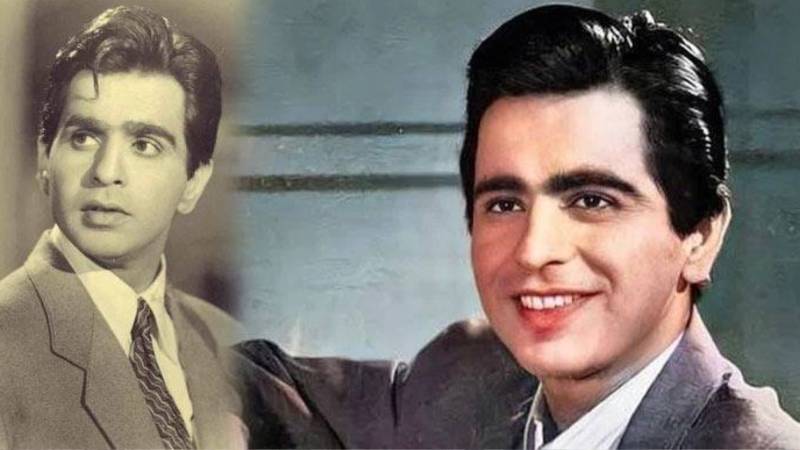
His first film, Jwar Bhata, released in 1944, marked his quiet entry into cinema. The real breakthrough, however, came with Jugnu, where he starred opposite Noor Jehan. Its songs and story swept through audiences, and with one leap, Dilip Kumar was a star. It was 1947. Jugnu had just been released to packed houses. But soon after, Partition tore through the subcontinent. Noor Jehan chose to move to Pakistan. Dilip’s name was rising swiftly but at home, his father, Agha Ji, remained unaware. One day, at a family gathering, guests congratulated him on his son’s success. He was stunned. Returning home, he fell into silence and refused to speak to Yousuf. Distressed, Dilip turned to Raj Kapoor. Raj suggested his father, Prithviraj Kapoor, might help. And he did. Prithviraj spoke to Agha Ji, helping soften the silence. The father relented. But Dilip knew he had far to go. He began watching two films a day, studying every expression, every pause in dialogue. Yet it struck him, success wouldn’t come through mimicry. He needed to find his own voice.
Meanwhile, Bombay Talkies was changing. Devika Rani was preparing to retire, planning to marry a renowned Russian painter. Ashok Kumar and Mukherjee left to form Filmistan. They invited Dilip to join them. He agreed. Under the Filmistan banner, Shaheed was released in 1948 and became a box office hit. Kamini Kaushal played his leading lady. They would appear together again in Shabnam. Kamini, an alumna of Kinnaird College in Lahore, shared an unusual intellectual bond with him. By now, Dilip’s fortunes had turned. He bought a Fiat car and a bungalow in the quiet, green lanes of Pali Hill.
One afternoon, while watching a cricket match, he ran into music director Naushad and filmmaker Mehboob Khan. That casual meeting blossomed into deep friendships. His next film, Andaz (1949), directed by Mehboob, featured Raj Kapoor and Nargis. It did well. Then, in 1951, came Tarana, introducing Madhubala as his co-star. Meeting her felt like rediscovering something long lost. After Tarana, they starred together in Sangdil, Amar, and eventually Mughal-e-Azam. Their connection was sincere and deep. They wanted to marry. But rumours began to swirl.
He would write backstories for his characters, rehearse their world until it lived inside him
Madhubala’s father, Ataullah Khan, intervened. He invited Dilip to his home, agreeing to the marriage but only if Dilip would act in films produced by his company. The proposal felt transactional. Marriage, Dilip felt, shouldn’t be a business arrangement. He declined. Slowly, a distance formed. By the time Mughal-e-Azam was filming, they had stopped speaking. Yet their on-screen chemistry never faltered. Audiences saw passion; behind the scenes, there was only silence. Though they never married, Dilip quietly carried that affection throughout his life, something he later acknowledged in his memoir.
Repeated tragic roles began to shape his soul. The sorrow of his characters started seeping in. During a visit to England, he met a psychiatrist, Dr Nicholas, who advised him to break away from tragedy and try comedy. It was a risk; audiences knew him for his anguish. But in 1955, Azaad was released, and Dilip made them laugh. The gamble worked. Then came Mughal-e-Azam in 1960. A cinematic epic, it shattered box office records and held its crown for fifteen years. Around the same time, Naya Daur faced a casting crisis, originally meant to star Madhubala. Her father objected to outdoor shooting, and she stepped away. Vyjayanthimala replaced her, and the film still became a commercial success.
Gunga Jumna came with its own demands. While shooting Mughal-e-Azam, Dilip would fly back and forth to manage both films. In Gunga Jumna, he had to speak the Purbi dialect he practised relentlessly. For the climactic death scene, he told the cameraman, “No retakes.” He walked, gasping, into the scene and collapsed with a final cry: “Hai Ram.” The crew broke into applause. But when the cameraman admitted to a technical error, Dilip repeated the performance flawlessly. He brought method acting to Hindi cinema. He would write backstories for his characters, rehearse their world until it lived inside him. Amitabh Bachchan once said he had watched Gunga Jumna over forty times.
After Andaz, came Aan (1952), Naya Daur (1957), Insaniyat, Azaad, Madhumati, Paigham, and Kohinoor. Success followed him—but so did a private melancholy. His mother had passed away. His bond with Madhubala had ended. Something inside him was hollow.
He received the Padma Vibhushan, the Dadasaheb Phalke Award, and the Nishan-e-Imtiaz from Pakistan
From afar, many admired him. One of them was Saira Banu, the daughter of actress Naseem Bano. Dilip was her hero. At eighteen, she made a promise to herself—she would marry no one else. It seemed impossible. He was twice her age. But destiny intervened. After returning from studies abroad, Saira quickly found success in the industry. She worked with top stars, Raj Kapoor, Dev Anand, but her dream was to act alongside Dilip. When the opportunity came, he declined, saying she was too young. She was heartbroken.
Then came her birthday. Her mother threw a party and invited Dilip. That evening, something shifted. She was no longer a young girl. She had become a poised, graceful woman. And Dilip remembered a moment long ago during Azaad’s shoot in Tamil Nadu, where a soothsayer had once said: “You will marry someone from the film world, half your age.” The memory returned like an echo. Sitting at her home, watching her move through the room, he felt time folding in. He proposed. Saira and her mother agreed. In 1966, Dilip Kumar, then 44, married Saira Banu, who was 22 at the time. Their marriage endured for the rest of his life.
In 1967, Ram Aur Shyam was released, a hit. In 1970, he starred in Gopi with Saira. But the later films: Sagina (1974), Bairaag (1976), flopped. For the first time, three films (Dastaan, Sagina, Bairaag) failed back-to-back. He stepped away from the screen. For nearly five years, he disappeared from the silver frame. Then in 1981, he returned with Kranti, directed by Manoj Kumar. The film was a success.
That same year, in a private ceremony, he married Asma Hassan. The marriage lasted three years and ended quietly in divorce. In 1982, he starred in Shakti with Amitabh Bachchan, Rakhee, and Smita Patil. It won the Filmfare for Best Film. Then came Mashaal (1984), where he played a fiery union leader; audiences and critics applauded alike. Saudagar (1991), with Raaj Kumar and Manisha Koirala, was his last major hit. In Qila (1998), he played both father and son. Even then, he earned a nomination for Best Actor.
After Qila, he announced his retirement. The curtain had closed on one of Indian cinema’s greatest journeys. He received the Padma Vibhushan, the Dadasaheb Phalke Award, and the Nishan-e-Imtiaz from Pakistan. Honours filled his shelves, but his heart often wandered to Peshawar. At night, the alleys of his childhood returned. He would close his eyes and walk through the rose-lined lanes, the cool mornings, the dusky evenings. He would hear his mother call out, “Yousuf, don’t stay out after sunset.” And he would run home.
Years later, he visited Pakistan twice. He stood once more at the house in Kissa Khwani Bazaar where he was born. And back in Bombay, in his Pali Hill home, he would often sit on the terrace, watching the sun fall behind the sea. Eyes closed, he would slip back to those faraway streets, laughing with childhood friends. Then a gust of wind would bring him back. He would open his eyes. The sun would have set. And in the growing darkness, the home of his boyhood would vanish once more.