

On the Statue of Liberty in New York, the following words are inscribed:
"Give me your tired, your poor,
Your huddled masses yearning to breathe free,
The wretched refuse of your teeming shore.
Send these, the homeless, tempest-tossed to me,
I lift my lamp beside the golden door!"
On the statue’s left hand, a tablet memorialises America’s independence from imperial Britain: JULY IV MDCCLXXVI (July 4, 1776).
Every year, the 4th of July is celebrated with much fanfare across the length and breadth of the US. In the morning, parades are held in cities and towns. In the afternoon, households fire up their barbecues in their backyards. In the evening, there are community picnics in parks. The day is capped off with fireworks at night, preceded in some locations with jet fighters flying overhead.
I first observed this in 1975, nine months after arriving at the University of California, Davis from Karachi. The Watergate scandal had consumed Nixon’s presidency, forcing his resignation on the 8th of August 1974. The Vietnam War was reaching its conclusion. There were some tensions on campus, but they were dissipating fast.
In the years that followed, I participated in numerous 4th of July celebrations. Then the charm began to wear off. At county fairs, I would see people walking around with semi-automatic rifles, wearing T-shirts that proclaimed their constitutional right to bear arms. Violence would often break out between people with opposing views or who had drunk too much alcohol.
Even then, America came across as a nation where people of all ethnicities coexisted. US universities attracted people from all over the globe. It had the most modern cities, the best architecture, the best infrastructure, the best airports, the best restaurants, and the best hospitals.
This façade began to fall apart as I began travelling on business to the far corners of the US, from the Northwest to the Southwest, from the Northeast to the Southeast, from the Midwest to the South, from urban areas to rural areas. I realised that the racial divide that had precipitated the Civil War of 1861–1865 was still very much there.
I was always interested in history but did not have a deep understanding of American history. One day, on the sidelines of a business trip, I visited a library in Chattanooga, Tennessee. I asked the librarian where the Civil War section was located. She smiled, pointed me towards a few shelves, and said that’s where you will find books on the "War of Northern Aggression." I was stunned.
While defense spending consumes nearly half of the discretionary budget, 40 million Americans live in abject poverty at home, trapped in a paradox of global supremacy and domestic decay
Later, I had similar encounters in states such as Georgia, South Carolina, and Texas. In a Midwestern state, I was called "exotic" by a client. Wow. I thought that term was reserved for exotic animals in a zoo or dancers in a nightclub. Later, I learned it just meant non-white.
On the surface, the country appeared to be united. However, there were deep divisions between the states, and even between urban and rural areas, even in California where I lived. Maybe the divisions had always been there, and I had just noticed them. But they became hard to ignore after the 2016 elections. Anyone with brown skin could be insulted on the streets. A friend’s son was called a "Sand Nigger" at a gas station. The stalls in a high school restroom were spray-painted "whites" and "non-whites."
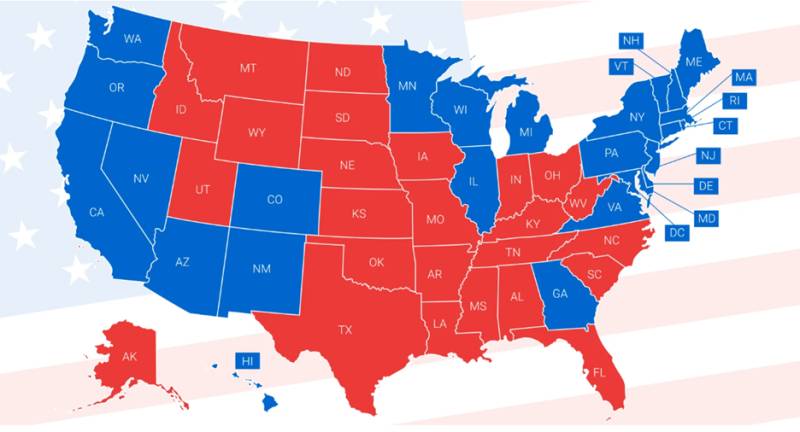
Today, the division between the red states and the blue states is so stark that one would be forgiven for thinking the U in the USA is incorrect. It should be replaced with a D.
In 2022, I was walking along the "Freedom Trail" in Boston. It took us past a statue of Paul Revere on a horse. He was a torchbearer of the American revolution.
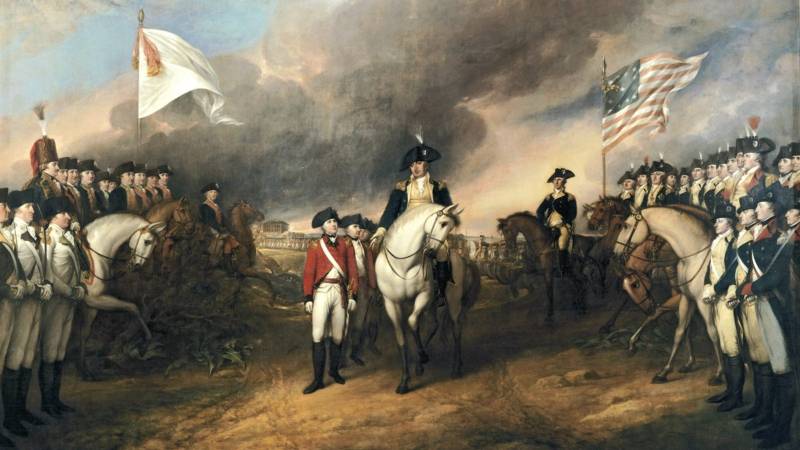
My mind flashed back to how the US was born. America’s land was occupied and colonised by the UK for years. Earlier it was occupied by invaders from Spain and France. On the 4th of July, unable to cope with the indignity of being an imperial colony, the 13 colonies broke away from the UK. The final blow was the Stamp Act of 1765.
What was forgotten was that the land had once belonged to someone else, the Native Americans who had lived there for centuries. The Americans defeated them militarily, one tribe at a time, and incarcerated them in "Reservations." The conquest of the Wild West was glorified in a series of Hollywood westerns starring the likes of John Wayne. Millions flocked to see the cowboys defeat the "Indians," who were given that name because the original conqueror, Christopher Columbus, got his geography messed up.
This narrative was challenged in Dee Brown’s book, Bury My Heart at Wounded Knee, published in 1970. Brown exposed the violent reality of westward expansion, challenging the traditional patriotic narrative. He documented the systematic destruction, forced relocation, and cultural annihilation of Native American tribes by the US government between 1860 and 1890.
He highlighted the struggles of Indigenous leaders such as Geronimo, Sitting Bull, Crazy Horse, and Red Cloud, allowing them to detail the broken treaties, betrayals, and massacres in their own words. His narrative turned conventional history on its head, illustrating that the expansion of the American West was achieved through the subjugation and displacement of Indigenous peoples, notably culminating in the infamous 1890 slaughter of 300 Sioux men, women, and children on the banks of South Dakota’s Wounded Knee creek.
In addition to seizing land from the Native Americans, the US seized Mexican land in California and the Southwest. It acquired Alaska through negotiations with Russia and Hawaii through conquest. In 1893, a group of sugar planters and descendants of missionaries, most of them of American stock, worked with US officials to overthrow the queen of Hawaii and take power for themselves. Five years later, they brought Hawaii into the United States. This action destroyed a culture and has led to lingering bitterness, expressed today in a "sovereignty" movement that seeks special rights for native Hawaiians.
Today, the US has 50 states, a capital located in the District of Columbia, and several territories under its command, notably Puerto Rico and the US Virgin Islands in the Caribbean Sea, Guam, and American Samoa in the Pacific Ocean.
Even though America kicked out Britain from the North American continent on the 4th of July 1776, it soon adopted all of its imperial traits. Today, the US is undeniably the world’s only superpower, a global hegemon. It has the world’s largest economy. Its navies patrol all the oceans of the world, following the tradition of the navies of the British Empire. Its air and naval bases are spread throughout the world, and its Airborne Division and Special Operations Forces can carry out missions anywhere on the globe.
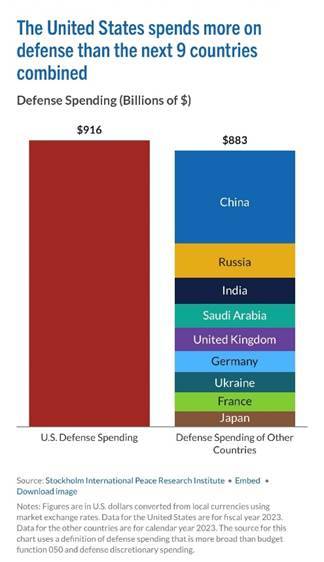
It spends more on defence than the next nine nations combined. Defence spending takes up almost half of the discretionary spending budget. This comes at great cost. Today, nearly 40 million people live in abject poverty at home, unable to eat even two meals a day. Of these, nearly a million are homeless. Millions are sick but unable to seek medical assistance. Millions don’t have the money to put their kids through college. America’s physical infrastructure, including roads, freeways, bridges, and airports, is decaying. Traffic jams are common. Urban crime is on the rise. And yet the US claims to be the greatest nation on earth.
Not much has changed since Martin Luther King Jr gave his 1961 commencement address at Lincoln University. He declared, "America is essentially a dream, a dream as yet unfulfilled." He pointed to the stark paradox between America’s technological and scientific progress and its lagging moral and spiritual progress. He argued that the American Dream of equality, opportunity, and privilege for all remained entirely unrealised. Today, inequalities have reached an extreme, where the billionaires thrive—many don’t even pay taxes—while millions suffer in silence.
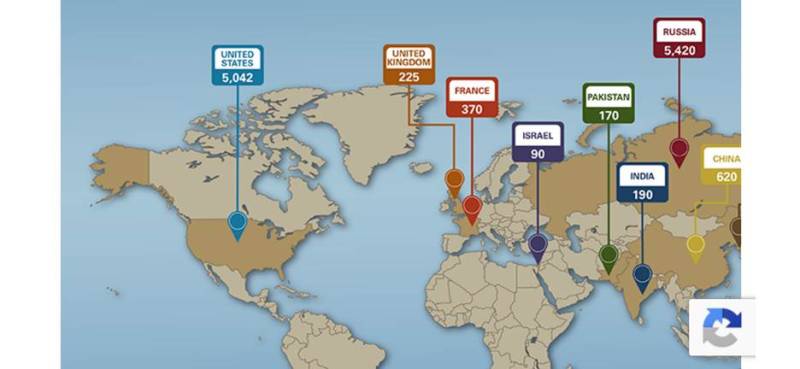
At the same time, the US has more than 5,000 nuclear warheads in its arsenal. Is that necessary? No country can think of attacking the US, not even Russia. The US could wipe out any country in the world in minutes if it wanted to.
President Dwight D Eisenhower, who had served as a general during the Second World War, had warned in his farewell address in 1960 about the danger that the military-industrial complex posed to America’s future. His advice fell on deaf ears.
Since then, the US has waged wars against several countries including Vietnam, Afghanistan, Iraq, Libya, Syria, and now in Iran. Oliver Stone and Peter Kuznick have laid out the truth about these wars in their book, The Untold History of the United States. They also discuss the coups the US instigated in Iran, Chile, and other countries to impose its influence on them. The US simply did not care that because of its operations, democracy was being upended and dictatorship was being imposed, which Henry Kissinger justified by calling it American Exceptionalism.
All along, the American public has grown up thinking that the US has been a force for good for the planet. This benevolence hypothesis has been challenged by several prominent US academics, notably John Mearsheimer of Chicago and Jeffrey Sachs of Columbia.
In his analysis, Mearsheimer, a political scientist, argues that the US is not inherently evil or altruistic; it behaves exactly as structural realism dictates. While it secured its own survival, its ambitions later expanded.
Mearsheimer strongly criticises the post-Cold War foreign policy establishment ("The Deep State"). He argues that by attempting to police the world and promote liberal hegemony (e.g., in Ukraine and the Middle East), the US has wasted vital resources, ignored the balance of power, and engaged in unnecessary conflicts that do not serve core American security interests.
Sachs, an economist, analyses the moral, economic, and legal costs of US militarism and unilateralism. In his view, the US has been a negative force in global affairs, especially over the last several decades. He argues that American foreign policy has been defined by neocolonialism, relentless interventionism, and economic sanctions that have caused catastrophic human suffering and massive loss of life in the Middle East and globally.
He accuses the US of subverting international law. Rather than acting as a defender of global democracy, he argues that the US acts as an empire that flouts global institutions, prioritises regime-change wars over diplomacy, and relies on an entrenched military-industrial complex that harms both domestic prosperity and international stability.
But this imperial overreach may have hit its ceiling, as it does for most empires in history. The mayor of New York City, Zohran Mamdani, gave a very moving speech on the 3rd of July. He pointed out the challenges that America needs to overcome: "There are some who respond to those who ask for more from America with a simple refrain: ‘Love it or leave it,’ they say. But patriotism has never been about pretending our nation is without flaws. Patriotism is every act of righteous dissent, it is every march led under the heavy sun, it is every protest held a decade before its time. It is precisely because we love this nation that we will not leave it. After all, who loves America more than those who have sacrificed so much to make it free?"
Now that Americans have celebrated the 250th birthday of their nation with much gusto, it behoves them to study the damage misguided US policies have inflicted on millions at home and abroad. They should also think about what needs to change in America’s policies so they can finally make the American dream a reality, not only for the 343 million who live in America but for the 8,000 million who inhabit the earth. Only then shall Lincoln’s dream, immortalised in the closing words of his Gettysburg Address, be realised: "That this nation, under God, shall have a new birth of freedom."