

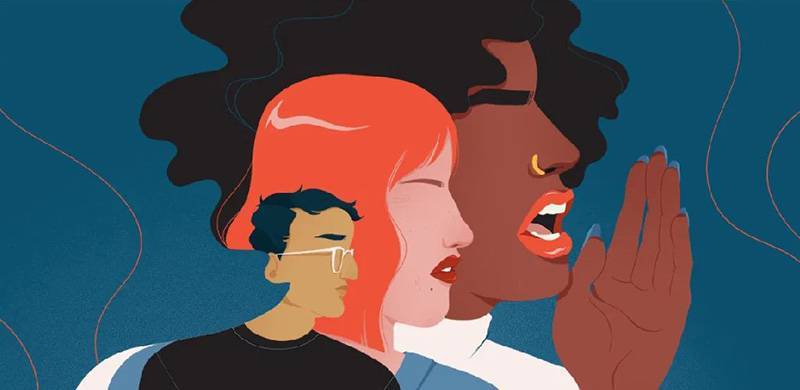
“You are from Karachi? So am I!” The soft, sing-song voice belonged to Saima, a tall person with a gentle quality about her. Her accent was Pakistani, but she spoke quite good English, hinting she had a basic education.
Saima (name changed for privacy) relocated to the capital in 2023 after living in Karachi for over a decade. Now, she lives around G7 in Islamabad. She left Karachi because she was fed up with the street crimes and harassment of the people. She didn’t like that young boys would harass her and ridicule her in Karachi.
She has craved respect since she was young. But it had evaded her. Originally from Multan, she attended school until the 10th grade.
“I can speak some English, Urdu, and Punjabi, but I couldn’t continue my studies after leaving my hometown, as I couldn’t afford it. It was tough getting food, let alone support my studies. There was nowhere for me except to find my “people” and join them.”
When she turned 15she couldn’t cope with the pressure. She felt alienated in an all-boys school and realised early she was different. The bullying was a small part of her frustration; she felt uneasy in her body and tried as she could, but she couldn’t conform to act like her brother and classmates.
“I couldn’t understand why my brother didn’t like me and was always angry. I couldn’t do anything right,” Saima said, her voice sad and her sad eyes holding on to tears, probably as her past flashed through her mind. “I realised early I was never going to be accepted by them. I was being punished for things that were beyond my control. Home was not safe for me, and so I left when I turned fifteen and never looked back.”
Pakistan is experiencing a rise in violence against women and girls (VAWGs), with over 32,000 cases reported in 2024 – which is the tip of the crimes committed
Saima insisted she was also human but was alienated for her gender, which God had given her. She shouldn’t be punished, but rather expected, as her Creator made her this way.
She added transgender people may be different in one way; they still had human bodies and were capable of doing what others did.
“No one wants to be exploited, but when you are hungry, all ethics and morals become secondary. No one wants to be exploited, and many from my community want to live a respectful life with a respectable income. But would you hire me to cook, drive, or do anything else in your house? It is easy to speak about it and criticise us, but we are not encouraged to do so.”
She said that although many exemplary examples are doing well, this is still an anomaly, mainly due to financial issues.
“No one wants to hire us, and if we are, we are constantly ridiculed and harassed by the males around us. No one has an idea how much harassment we face. But the sad thing is that no one will help us, even when we are the victim. Aren’t we humans? We have brains, we can think like others, and we can work; we don’t have the opportunities to improve our lives.”
Adding, “When people think about us, they automatically think we dance and indulge in immoral acts, but they never see us as potential employees. Many have excelled and are raising their voices for our community, but that is not enough. Until we are accepted as vital parts of society, we will be forced to live as we do on the fringe of society.”
“All we want is respect!”
Calling on the government, Saima said she is a Pakistani and deserves the rights like any other citizen, but thousands like her are ignored for their gender. She reiterated laws are also applicable to her and that the government should ensure this, but this sadly does not happen. If a transgender citizen is murdered, the authorities unfortunately ignore this crime. Crime is a crime and not determined based on the victim’s gender.
The government should consider Saima’s suggestions and develop a plan to use this tremendous potential human resource that is being wasted. The transgender community can be employed in various sectors beyond those already designated.
Pakistan is experiencing a rise in violence against women and girls (VAWGs), with over 32,000 cases reported in 2024 – which is the tip of the crimes committed. Similarly, violent crimes against children – which get reported - are pretty high, and it is time the authorities look for workable solutions.
It is time society develops an inclusive attitude toward the transgender community and the government harnesses this untapped human resource. Jobs can be created in women's hostels, women's education institutions, hospitals, and other departments where women are in the majority.
Transgender citizens can be employed in various roles, such as security guards, van drivers, and teachers in different departments – both private and public – that deal with women, and more police personnel might help mitigate the issue.