

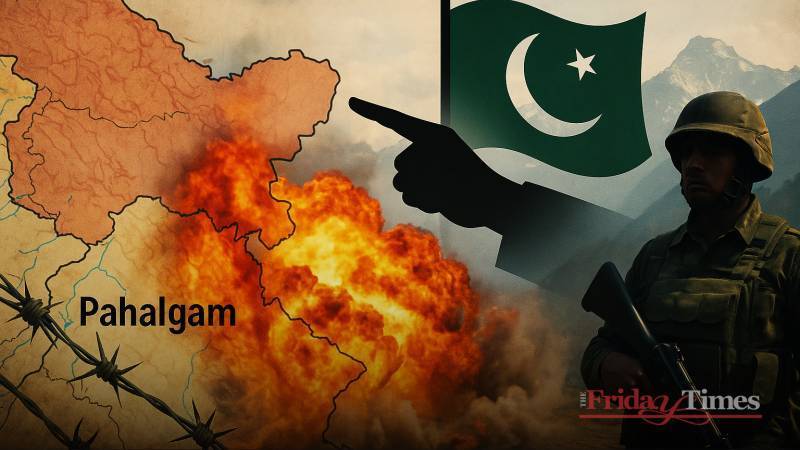
The recent escalation between India and Pakistan has brought both nations perilously close to a potential conflict, with the specter of nuclear warfare casting a long shadow. The deadly terrorist attack in Pahalgam, Kashmir, on April 22, which resulted in the tragic loss of 26 innocent lives, has intensified tensions.
In response to the attack, India has taken several retaliatory measures, including suspending the Indus Waters Treaty and closing airspace to each other's airlines. Both countries have engaged in nightly exchanges of gunfire along the Line of Control, and Pakistan has evacuated tourists from border areas, raising concerns of a potential military confrontation.
The tragic incident in Pahalgam has unfortunately become a focal point for blame games and inflammatory rhetoric between India and Pakistan. India swiftly, without any evidence, accused Pakistan of involvement, linking the attack to Lashkar-e-Taiba and the Inter-Services Intelligence (ISI). Conversely, Pakistan condemned the terrorist attack on innocent citizens but denied these allegations, offering to participate in a neutral, transparent, and credible investigation to ascertain the facts. Like India, Pakistan has also levelled the allegation of a False Flag operation without any substantiation.
The potential consequences of a conflict between two nuclear-armed nations are dire. Even a limited exchange could lead to catastrophic loss of life and have far-reaching environmental and economic impacts. It is imperative that both countries should prioritise dialogue over confrontation to prevent a disaster that could have global ramifications.
The international community has expressed deep concern over the escalating tensions. The United States, along with Middle Eastern countries and China, has urged both nations to exercise restraint and resolve their differences through dialogue and diplomacy. However, domestic pressures in India have led to a more aggressive stance, complicating efforts to de-escalate the situation.
South Asia remains one of the least economically integrated regions globally, primarily due to the persistent territorial and political disputes between India and Pakistan
It is essential to reflect on the lessons imparted by the region's tumultuous history. Regrettably, both India and Pakistan seem unwilling to heed these lessons. A poignant example is the Kalinga War fought by Emperor Ashoka in 261 BCE. The war resulted in over 100,000 deaths and the deportation of 150,000 individuals. Ashoka's remorse over the immense suffering led him to renounce further conquest and embrace the principles of dharma, promoting peace and non-violence throughout his empire.
Ashoka is remembered not for his conquests but for his remarkable transformation from a warrior king to a compassionate ruler who prioritised the welfare of his people by embracing a policy of of peace and moral governance. His reforms were centered on promoting social justice, religious tolerance, and ethical conduct. He issued edicts that advocated for kindness, respect for all living beings, and moral behavior. These edicts were inscribed on pillars and rocks throughout his empire to ensure they reached a wide audience.
In terms of infrastructure, Ashoka established hospitals and dispensaries for both humans and animals, reflecting his commitment to public health. He also constructed rest houses, dug wells, and planted shade trees along roads to provide comfort and convenience for travelers, these initiatives were part of his broader efforts to enhance the quality of life for his subjects. Furthermore, Ashoka promoted religious tolerance by encouraging respect for all faiths and prohibiting the persecution of religious groups. He also implemented reforms in the judicial system to make it more humane and just.
This historical episode underscores the devastating impact of conflict and the transformative power of introspection and change. Now the question arises what we, in this so called civilisation age, are doing. The current blame games and inflammatory rhetoric between India and Pakistan not only perpetuate animosity but also disregard the hard-earned lessons of the past. Both nations must transcend historical grievances and engage in constructive dialogue, prioritising peace and mutual understanding over divisive narratives.
Pakistan and India have fought at least two full-scale wars and several limited conflicts since their independence. The consequences of these wars have been devastating for both nations. A significant number of individuals from both sides have fallen victim to these conflicts. Billions of dollars have been spent on warfare and military preparations, diverting resources from essential sectors like education, health care, and infrastructure development.
Instead of investing in basic necessities such as clean water, both countries have prioritised military expenditures. This misallocation of resources has led to widespread poverty, illiteracy, and inadequate healthcare services, leaving citizens to endure miserable living conditions.
The ongoing conflicts have also hindered economic integration and cooperation between the two nations. South Asia remains one of the least economically integrated regions globally, primarily due to the persistent territorial and political disputes between India and Pakistan. This lack of cooperation has further exacerbated the economic challenges faced by both countries.
In light of these circumstances, it is imperative for both nations to reconsider their priorities. Redirecting funds from military expenditures to social development can pave the way for a more prosperous and peaceful future. Investing in education, healthcare, and infrastructure will not only improve the quality of life for citizens but also foster long-term stability and growth for both Pakistan and India.
Both states must exercise restraint and should move towards a "responsible solution" and de-escalate the tense situation. The pattern of knee-jerk reactions and preemptive blame undermines the possibility of a constructive dialogue and a peaceful resolution. It is imperative for both nations to move beyond rhetoric and engage in transparent investigations, uphold international norms, and prioritise the welfare of their citizens over political expediency.
I am compelled, through this article, to echo the compassionate and insightful words of Arundhati Roy, a distinguished artist and scholar, who has consistently advocated for peace and condemned the forces that sow discord and hatred among nations. In her writings, Roy emphasises the destructive nature of conflict and the urgent need for dialogue and understanding to resolve the current issue.