

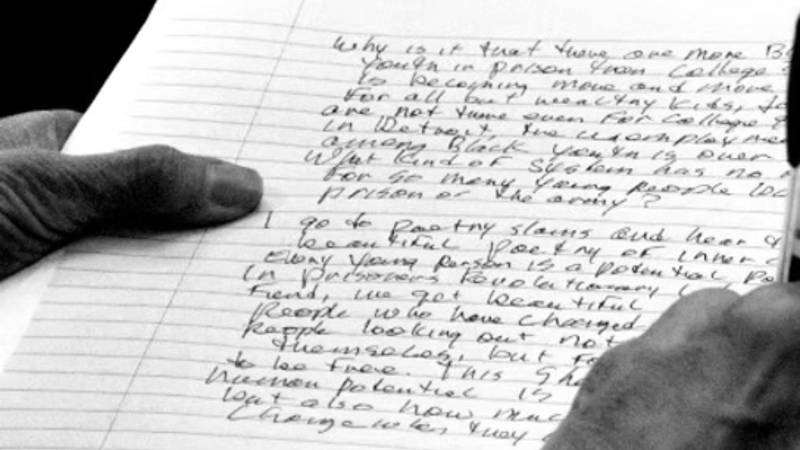
Prisons, long imagined as places of silence, have paradoxically produced some of the most powerful voices in history. From solitary confinement cells and death rows to remote penal colonies and military gaols, human beings—revolutionaries, poets, and politicians—have written their most defiant and intimate words. Their writings from confinement transcend time and geography, becoming chronicles of oppression and testimony to the enduring spirit of resistance. From Pakistan to South Africa, from Soviet gulags to British jails in India, these prison writings have shaped political movements, exposed the machinery of repression, and transformed the authors into enduring symbols of moral courage.
Zulfikar Ali Bhutto’s death cell manuscript, If I Am Assassinated, composed in 1979 in Rawalpindi Central Jail, remains one of the most significant prison texts in Pakistan’s history. Dictated from within the iron walls where he awaited execution, Bhutto’s handwritten manifesto is part legal defence, part political indictment, and part philosophical musing on power and martyrdom. It was smuggled out and circulated globally, revealing not just the cracks in Pakistan’s judicial system under General Zia’s martial law, but also Bhutto’s undying commitment to his version of democracy. In the same cell, he penned deeply personal letters to his daughter, Benazir Bhutto, in which he offered political advice laced with paternal affection, revealing the human cost of state power. These letters, later published, reflect a man both embattled and unbroken, and constitute a unique political literary archive from Pakistan’s tumultuous past.
Faiz Ahmed Faiz, Pakistan’s revolutionary poet, composed some of his most stirring verses behind bars during the Rawalpindi Conspiracy Case of the 1950s. His collections Dast-e-Saba and Zindan Nama were born in prison, brimming with melancholy, hope, and quiet rebellion. Faiz did not write slogans; he wrote history in verse. In his prison poetry, the walls become metaphors for unjust regimes, and the beloved becomes the suffering people. His lyrical defiance breathed life into movements and gave dignity to despair. Even in confinement, Faiz refused bitterness, channelling his pain into poetry that still animates protests and inspires artists across continents.
Globally, prison writing has similarly stood at the intersection of literature and liberation. Antonio Gramsci, the Italian Marxist thinker, wrote his Prison Notebooks from Mussolini’s prisons between 1929 and 1935. Gramsci, riddled with illness and denied adequate care, developed the idea of cultural hegemony—the invisible power of ideology—and imagined a long struggle for consciousness. His reflections, scrawled under watchful eyes, have influenced political thought across the twentieth century and remain relevant in the age of media manipulation and soft authoritarianism.
The world’s prison writers have left us not only with literary treasures but with maps of moral courage—traced in ink, blood, and quiet defiance
Half a century later, another political prisoner, Nelson Mandela, emerged from South Africa’s Robben Island after 27 years. His autobiography Long Walk to Freedom, partly drafted during imprisonment, and his personal reflections in Conversations with Myself are testaments to his grace under pressure. Mandela’s prison writings never descended into hatred; they built a bridge between pain and reconciliation. His words, composed in the narrow confines of a cell, helped dismantle apartheid and became a universal symbol of perseverance.
Similarly, Martin Luther King Jr.’s Letter from Birmingham Jail in 1963 is a moral treatise that cuts across eras. Penned on scraps of paper and the margins of newspapers, King’s letter addresses the silence of moderates, the urgency of justice, and the imperative of civil disobedience. It is not just a response to his critics—it is a lyrical blueprint of nonviolent resistance, now inscribed in global political memory.
From the East, Jawaharlal Nehru’s Discovery of India, written in British colonial prisons, and Mahatma Gandhi’s My Experiments with Truth bear witness to the intellectual ferment behind India’s freedom struggle. Their prison writings merge introspection with political vision, blending the personal and the collective. Nehru’s letters to his daughter, Indira Gandhi, from jail, offering her history lessons, humanise the political process, making it accessible and intimate.
Oscar Wilde’s De Profundis, a long letter from Reading Gaol to his estranged lover, is less political but equally profound. It is a meditation on love, art, suffering, and redemption. Wilde’s wit and pain echo through his prose, offering a glimpse into the emotional wreckage of incarceration and the human capacity for reflection.
In more recent times, Liu Xiaobo, the Chinese Nobel laureate, wrote poems and essays from jail, even as he was denied access to the world. His collection No Enemies, No Hatred expresses a stoic call for democratic values in the face of censorship. His death in custody marked the silencing of a gentle, unwavering voice.
The Soviet Union’s gulags also produced haunting literature. Aleksandr Solzhenitsyn’s The Gulag Archipelago, based on his own experiences and those of fellow inmates, exposed the scale of Stalinist repression and altered the world’s understanding of authoritarian systems. His narrative is not just a chronicle of suffering but an inquiry into human dignity and survival.
In Pakistan, other names like Habib Jalib, whose poetic protests were often forged in the crucible of jails, and Syed Sibte Hassan, detained for his Marxist activism, remind us that prisons are not mere spaces of confinement but crucibles of clarity. Their writings continue to haunt our collective conscience, especially in an era when dissent is again under threat.
Prison writings—whether by poets like Faiz and Wilde, politicians like Bhutto and Mandela, or philosophers like Gramsci—share a defiant commonality. These are words that escaped through the cracks in the walls, reaching readers across borders and generations. They challenge the myth of state omnipotence and assert the enduring power of thought, memory, and resistance.
In times when truth is under siege and dissent is criminalised, these voices from behind bars remind us that cages may confine bodies, but they rarely silence the spirit. The world’s prison writers have left us not only with literary treasures but with maps of moral courage—traced in ink, blood, and quiet defiance.