

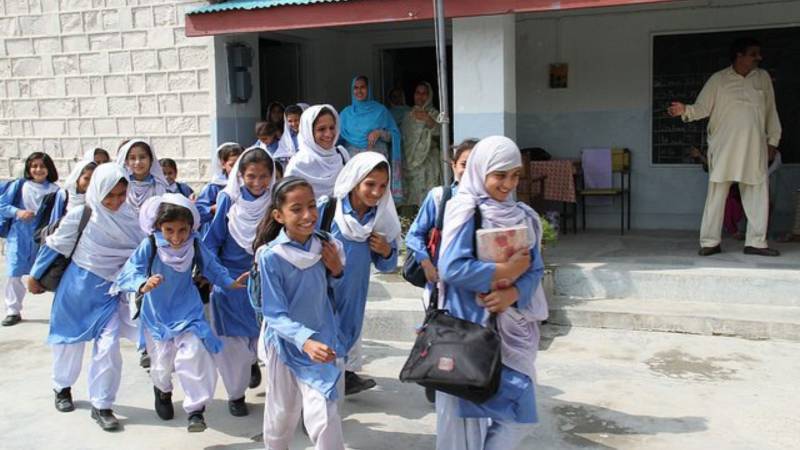
The other day, while passing through Islamabad’s upscale E-11 sector, I noticed yet another private school that had been newly established: shiny walls, polished English names, and banners promising “world-class education.” But drive a few kilometres out to Golra and Meharbadi communities, and you will find government schools with collapsing roofs and teachers managing sixty students per class. Within a short radius, two children can sit in classrooms that might as well be on different planets.
Pakistan does not have one education system. It has at least five distinct systems: elite private schools, low-fee English-medium schools, government schools, army public schools, and madrassahs, each serving a different social class and teaching a different version of reality. Together, they form a deeply fragmented structure that mirrors our inequality and moulds how young Pakistanis see themselves and their society.
As Adil Najam, an international relations professor at Boston University, describes it, Pakistan is living through an “education apartheid,” a country where you can buy whatever quality of education you want, from “absolutely abysmal to absolutely world-class.” This hierarchy is not theoretical; it plays out every morning when children across Pakistan walk into vastly different classrooms. To understand how deep this divide runs, one only needs to look inside these five worlds.
The first category is the elite private schools, Pakistan’s polished bubbles of privilege: Beaconhouse, Roots, Lahore Grammar. These institutions nurture self-assurance, debate culture, and English fluency. Students learn to articulate their views on global warming and women’s rights, their horizons set towards Ivy League universities or multinational careers. Yet, many graduate with little understanding of the society that lies beyond their walls. For the majority of them, Pakistan’s poverty, public hospitals, and broken systems remain distant, theoretical ideas, things to write essays about, not to live through. They grow up global, but rarely national.
Second are the low-fee English-medium schools. This is where Pakistan’s middle and lower-middle classes fight their quiet battles for upward mobility. Parents cut corners and skip meals to pay monthly fees, believing that English is the passport to success. These schools promise an English-medium education, but often without trained teachers or genuine comprehension.
For countless children here, schooling is less about learning and more about survival, a daily act of endurance in a system that has long stopped expecting excellence
Lessons are memorised, grammar rules drilled, accents imitated. Children are punished for speaking Urdu or any mother language, yet rarely become fluent in English. The result is linguistic and psychological dissonance, a generation that can neither fully express itself in English nor take pride in its native tongue. They live suspended between aspiration and alienation, neither at ease in the elite world they imitate nor connected to the roots they leave behind.
Third are the army public schools and colleges: disciplined, semi-privileged, hierarchical, and nationalistic. These schools offer comparatively better infrastructure and teachers than many government schools, and they often feed directly into military institutions. Many students go on to serve in the armed forces or join cadet colleges where a career in the military is seen as a natural progression. Yet their educational philosophy prizes discipline over inquiry. It produces citizens who can follow orders effectively but are rarely encouraged to question them.
Fourth come the government schools, the most widespread yet the most neglected. Numbering in tens of thousands, government schools form the spine of Pakistan’s education system, and its greatest tragedy. Overcrowded classrooms, undertrained teachers, and outdated textbooks define them. The teaching style remains rooted in rote learning, which suppresses curiosity and critical thinking.
Many teachers are dedicated but overburdened, managing classes of fifty to seventy students with minimal support. Attendance fluctuates with harvest seasons, floods, or the simple lack of transport. For countless children here, schooling is less about learning and more about survival, a daily act of endurance in a system that has long stopped expecting excellence. Yet it is from these schools that the majority of Pakistan’s future workforce emerges, underprepared, undernourished, and overlooked.
Until Pakistan ensures that every child, whether in a madrassah or a private school, has the same right to think, question, and dream, our glittering campuses will continue to multiply, and so will the walls between us
Finally, there are the madrassahs. For the poorest families, madrassahs are the only refuge, offering free food, housing, and above all, religious education. Many perform a vital welfare function where the state has failed. Yet their isolation from the modern curriculum keeps students cut off from the skills needed to function in contemporary society. While some madrassahs have introduced basic science or computer courses, others still teach narrow interpretations of faith that discourage questioning or engagement with the modern world. Their students emerge disciplined in ritual but often deprived of the intellectual flexibility that today’s economy demands. The result is another world entirely, one where faith and survival take precedence over critical thought or civic participation.
Taken together, these systems do not simply educate; they socialise children into entirely different worlds. Each of these five classrooms produces a different kind of Pakistani. The elite are fluent and detached; the middle class, anxious and aspirational; the military children, obedient; the public school children, struggling; and the madrassah students, confined. They grow up speaking different languages: English, Urdu, Arabic, and live in separate moral, social, and mental worlds. What we call a nation, in truth, becomes a patchwork of educational islands.
This fragmentation is not just cultural; it has material consequences. The divide between these parallel systems has hollowed out the foundations of national education itself.
This fragmented educational landscape has brought Pakistan to the brink of a crisis. Twenty-six million children, the world’s second-largest out-of-school population after Nigeria, remain completely excluded from all five systems. Of those enrolled, only five per cent receive a quality education, and a mere twelve per cent of the eligible age group progresses to higher education. These gaps are not abstract numbers; they are reflected in Pakistan’s 164th ranking out of 193 countries on the United Nations Human Development Index 2024, a stark measure of how unequal access to education undermines the nation’s development.
These numbers are more than statistics; they are a mirror reflecting the social realities Pakistan has built into its classrooms. Education has become a quiet engine of inequality, shaping not just what children learn, but what they believe they deserve. It decides who will speak and who will remain unheard, who will lead and who will serve. From language and confidence to aspirations and opportunity, the classroom is the first marker of class long before children enter workplaces or politics.
For decades, debates in Pakistan have fixated on curriculum reforms or teacher training, while the deeper crisis, moral, structural, and societal, has gone unaddressed. We are raising generations who live on the same land but inhabit entirely separate worlds. How can a nation forge cohesion when its children grow up unable to speak to, or even understand, one another’s realities?
Education is not merely the transmission of knowledge; it is the foundation of citizenship, the shared space where identity, morality, and critical thinking intersect. Until Pakistan ensures that every child, whether in a madrassah or a private school, has the same right to think, question, and dream, our glittering campuses will continue to multiply, and so will the walls between us.