

Nero, the infamous Emperor of Rome, was known for playing his flute while Rome burned. His soul, it seems, never left this world. It keeps returning in new disguises — every time disaster strikes and the powerful do nothing but tune their instruments.
A few days ago, his ghost reappeared in new attire to remind us he still exists.
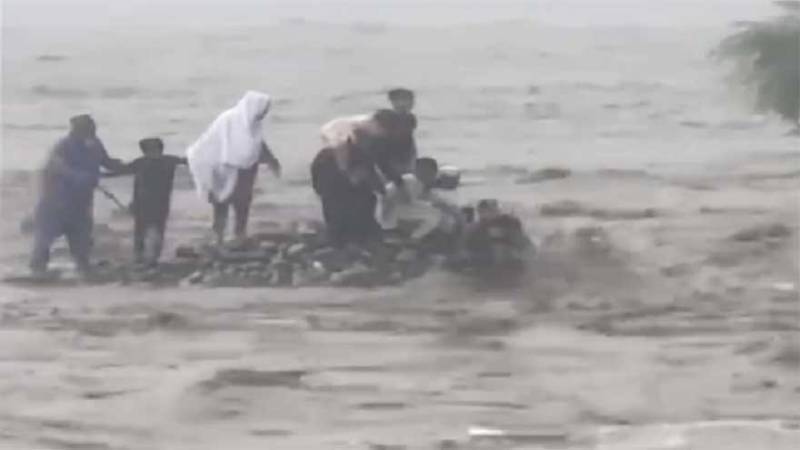
It was Friday, 27th June 2025, around 8:00 a.m., when families from Sialkot and Mardan gathered by the Swat River. Parents and elders brought their children to enjoy the river’s beauty during the school holidays. After some snacks, they stepped closer to the water to take selfies — mementoes of a day they hoped would be joyful.
No one saw the river coming. Not like this.
Heavy rains had lashed the hills for days, and a glacial burst far upstream poured millions of gallons into the river’s veins. Far from the picnic spot, the Swat River gathered strength — fed by a thousand mountain streams and melting ice — rising inch by inch until it became a roaring, brown monster. But that morning on the bank, there were no loudspeakers warning families to stay away. No barriers. No sign that the gentle murmur would soon become a growl.
An NDMA warning had been issued, advising people to stay away from the river’s mainstream. The notice was typed and released. The box was checked. The job was done — on paper, at least. And with that, Nero lifted his flute and began to play. He sank into the soothing tune of his illusions, drifting in a world of comfortable fantasy. Whether the warning would be enforced — or even heard — did not trouble him.
While Nero played his flute, families posed for selfies in the shallows. Silently, the water rose behind them until they found themselves surrounded by a creeping wall of death. It came fast — faster than feet could run, faster than any prayer could rise. The calm surface turned into a swirling mouth, swallowing the rocks where they stood.
Terror struck like lightning. Children were the first to scream — tiny hands clutching mothers’ scarves, fathers’ shirts. A boy wrapped his arms around his father’s leg, sobbing, “Baba! Baba! The river is going to drown us.” The elders, frantic, shouted to people on the bank, pleading for someone to pull them out — not yet realising it was already too late.
A rescue team did appear but soon turned back, admitting helplessness for a situation they weren’t equipped to handle. They assured onlookers they’d return soon — then vanished, leaving the stranded to face the raging water alone. Helplessness and panic swelled as the stranded shouted for help.
Locals gathered on the riverbank, stunned too. Some waded in waist-deep, throwing branches into the current — desperate gestures against a monster. They searched for anything that could float — but there were no life jackets, no boats, no rescue lines. Someone called the Deputy Commissioner’s office: “Send help — people are drowning!”
The reply came cold: “It’s the NDMA’s job.” Nero began to play a new tune — a false calm to silence blame.
The roar of the current grew louder by the minute. The children, clinging to their parents, saw helplessness in their eyes — yet still looked up, expecting a miracle only a parent could bring. Death had never looked so close. Their instinct to fight for life surrendered to the river’s pull. Tiny fingers slipped from shirts and scarves. Suddenly, a splash — then a tiny scream. The boy was gone into the frothing current.
In Peshawar, a helicopter stood ready to rescue those trapped by the river — but it never took off, and no one knows why
His mother lunged after him — and she, too, was swept away. It happened so fast that others could do nothing but leap after them, clutching at empty water. Seventeen stranded souls became fifteen. The rest watched, powerless, as their loved ones vanished — their cries swallowed by the roar. Nero played on.
Seeing the horror worsen, people at the bank called the National Disaster Management office again. “Yes, yes, we know,” they were told. “We’ve asked Peshawar to send a helicopter.” Time ticked on; minutes turned into an hour — but the river was there first. The rescue was not.
The number stranded kept shrinking as the river claimed them, one by one. Some clung to the last dry rocks. Children pressed tear-soaked faces into soaked clothes, whispering, “Mama, will the water stop?” Fathers scanned the banks for a rope, a raft, a saviour. Mothers prayed aloud. Old men lifted trembling hands to the road, hoping for the sound of an engine, a whistle, a helicopter.
There was none.
One hour crawled into two. The rock above water slowly disappeared beneath the rising flood. The stranded clutched each other tighter, whispering verses, crying for help that would never come.
In Peshawar, a helicopter stood ready to rescue those trapped by the river — but it never took off, and no one knows why. Red tape? Confusion? Nero’s shrug?
On national TV, anchors breathlessly replayed the tragedy. Videos went viral — stranded children waving tiny arms, crying Baba! Mama! Uncle! — broadcast live for the nation to witness. For the Chief Minister to see. For the NDMA to see. For the Deputy Commissioner to see. For every powerful official who claimed to care — but did nothing when it mattered most.
Relatives buried the dead who believed until their last breath that their country would protect them when the water came
They saw. But they did not move fast enough. And Nero kept playing his flute.
While all these officials — paid to safeguard lives — failed when it mattered most, two ordinary men stepped forward. With nothing but a handmade raft, they braved the raging river and pulled as many souls as they could from the water’s grip before the current swallowed them whole. A faint light of hope flickered in the darkness of apathy and indifference.
“Hey, look! The rescue team has arrived!” someone shouted. A wave of applause rose from the riverbank as people spotted the raft pushing through the churning water.
“No, that’s not the rescue team — that’s our Hilal Khan, the old man who never backs down!” someone corrected.
“Yes! That’s him — help was right here in our own village while we begged others,” another added.
“Look! Asmat Ali is with him too!” someone pointed, and the crowd erupted: “Our heroes have come! Our heroes have come!”
Far from this desperate scene, Nero sat in his lavish office, surrounded by polished wood and polished men, lulled by the tune of his imaginary flute. But the distant cheers pierced through his illusion like thorns. He glanced at the TV — every channel flashing images of the rafters saving lives. To Nero, the cheers sounded like a storm of angry voices — cursing him, condemning him.
He sank back in his chair, eyes narrowing. Slowly, with a sinister smile curling on his lips, he slipped behind the grand desk and vanished into the stale air — leaving only the ghostly echo of his flute behind.
When the final bodies returned from the river’s grip, the powerful gathered too — but only to stand before the cameras. The Chief Minister appeared, spoke words of sorrow, ordered an inquiry, suspended a few men, tossed a handful of coins to the families of the dead. While this photo show played out on every TV screen, the rafters — the true rescuers — were nowhere to be seen.
Just as in Battagram, when seven schoolchildren hung for fifteen hours in a broken cable car above a canyon. Commandos came and helicopters hovered, but when the blades fell silent, it was villagers — ropes burning their calloused hands — who inched across that swaying wire in the dark to haul the children back, one by one. When dawn broke, the cameras rolled and Nero’s ministers claimed the triumph as their own — while the names of those who risked everything vanished into the same wind that nearly snapped the line, drowned out by Nero’s soft, careless tune.
Around eleven people — men, women, children — were devoured by the river before the rafters saved the few they could. Human lives that slipped away while the powerful played their flutes of excuses.
In Gaza, children die under bombs — victims of an enemy’s wrath. In Swat, children died waiting for help from their own guardians — victims of silence, neglect, and bureaucracy. The bomb and the flood are both killers — but apathy is the quietest killer of all.
Relatives buried the dead who believed until their last breath that their country would protect them when the water came.
And far above, somewhere safe, Nero still plays. His flute is a statement on TV. A promise of an inquiry. A helicopter that never lifts off. A condolence that arrives only when the screams have gone silent. A grim reminder of how dozens suffered — and some froze to death — in Murree a few years ago, stranded overnight in the snow because no hotel would take them in. The local administration failed to foresee the deadly cost of leaving them unaccommodated and without rescue.
Grand villas, clubs, and banquet halls in the area closed their doors while families sat trapped in cars on frozen roads, their breaths fading in the icy dark — unnoticed and unmourned by those safe behind warm walls.
The cycle continues. The river will come again — next monsoon, or the one after. And if the Nero of our time is still playing, the river will carry away more children, women, men, and elders. Not because the flood is cruel — but because those who could have built a bridge, raised a wall, or thrown a rope were too busy tuning their flute.