

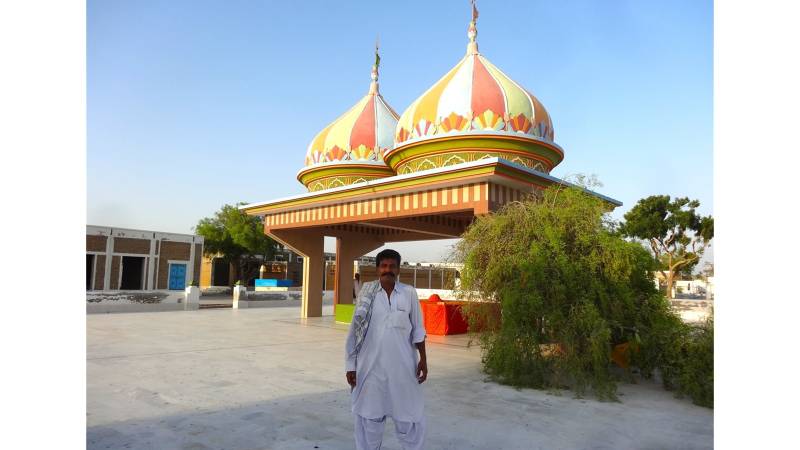
During my fieldwork in Tharparkar, I was fortunate to be assisted by many people who served as key informants, generously sharing their knowledge and introducing me to their communities. My interactions with local people made my research both more accessible and more meaningful. From 1998 to 2025, several individuals were of great help to my ethnographic research in the region. This article is, essentially, a tribute to one of my key informants who connected with me and later became a good friend. In this piece, I will focus on Hari Singh Dohat Rathore Rajput from Vejhiar village in Mithi taluka. He was of immense help, introducing me not only to his own community but also to other individuals and groups who played a key role in my research on religion, society, culture, and heritage in Tharparkar.
Hari Singh Dohat Rathore is a primary teacher at the Government Boys Primary School in Vejhiar, Mithi taluka. I first met him in 2006 when I was conducting research on the cult of sati in Tharparkar. At the time, I had met a few individuals from the Manganhar community, who are also cultural custodians of Tharparkar. Through them, I met several people who knew poetry, sang traditional songs, and narrated stories to interested audiences. One such person was Anwar Manganhar of Gartiari village in Nagarparkar taluka, who travelled with me to a few villages across Mithi and Nagarparkar.
The Cult of Kasuma and the Sati Tradition
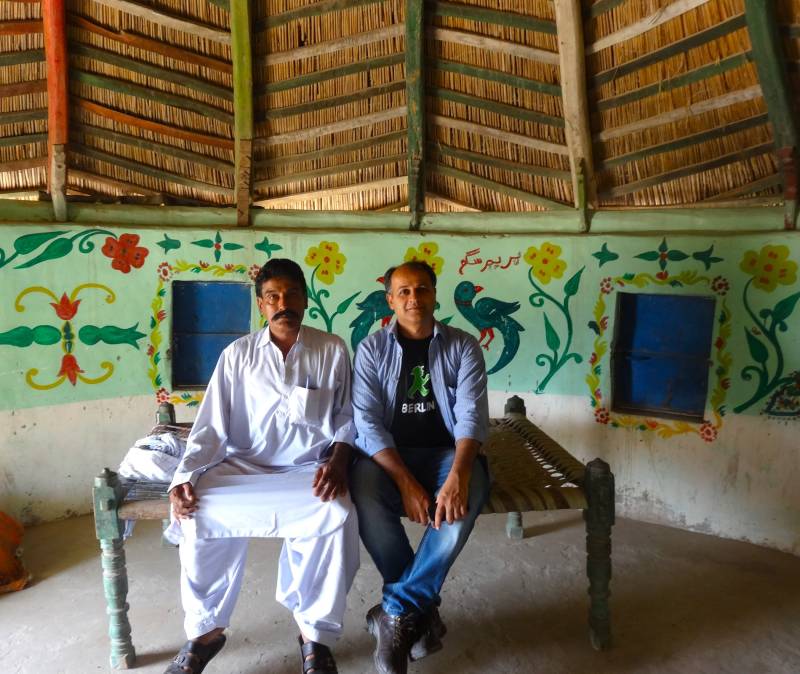
In 2006, I met Hari Singh Dohat Rathore alongside Anwar Manganhar. I needed to visit the temple of Kasuma, a Kulsati of the Dohat Rathores. Her temple is located 5 km northeast of Vejhiar village, where she has acquired the status of a regional cult in Tharparkar. Two of her daughters, Phool Bai and Chanda Bai, also became sati.
Behind every successful ethnographic study stand individuals who generously share their time, knowledge, and lived experiences without expecting recognition or reward
The memorial stone (khambi) of Phool Bai is located in Old Mondarao village in Nagarparkar. Kasuma became sati with her son, Harnath, who died on the battlefield. Hari Singh Dohat Rathore, with whom I visited the shrine of Kasuma sati, told me that when Harnath's dead body was brought back to the village, his wife refused to immolate herself with her deceased husband—an act considered a bad omen.
The practice of sati has been glorified by many bard communities in Tharparkar over the centuries. Today, the thaans (shrines) of Kasuma are found inside the households of Dohat Rathores in several villages across Tharparkar.
Mapping Sacred Spaces and Folk Deities
My first meeting with Hari Singh Dohat Rathore in 2006 marked the beginning of a long and enduring association that played an important role in my research on the religion, society, culture, and heritage of Tharparkar. Over the years, he became far more than a trusted field companion; he was a great guide whose knowledge of Tharparkar opened countless doors for my ethnographic research.
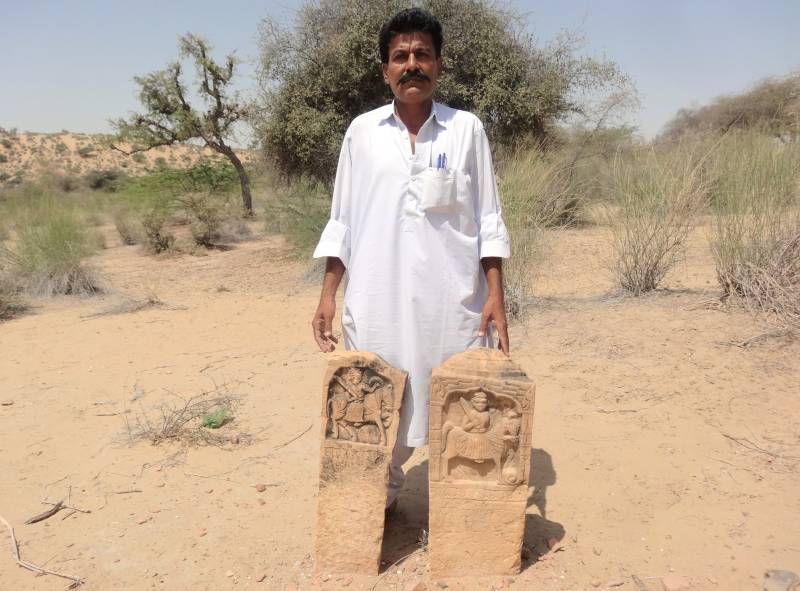
With Hari Singh Dohat Rathore, I explored a wide range of Tharparkar's cultural landscapes and traditions—from sacred spaces associated with satis and memorial stones (such as paliyas, lohartis, and chuchas) to the temples of Hindu folk deities like Pabuji, Gogo Chauhan, Malhan Mata, Deval Mata, Mauji, Pir Pithoro, and Rama Pir, as well as the settlements of the region's indigenous communities. Through these journeys, I documented the histories, beliefs, customs, and cultural practices of the Rabaris, Kolhis, and many other communities whose lives have shaped the rich cultural landscape of the Thar Desert.
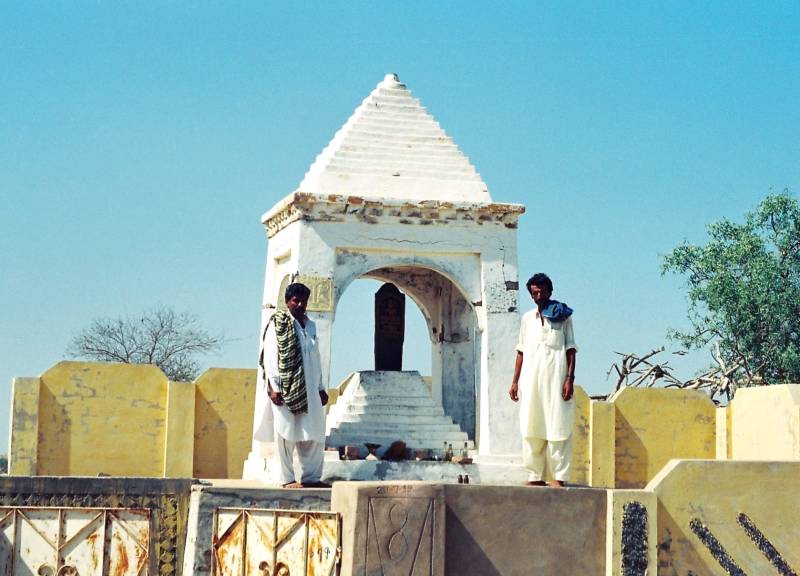
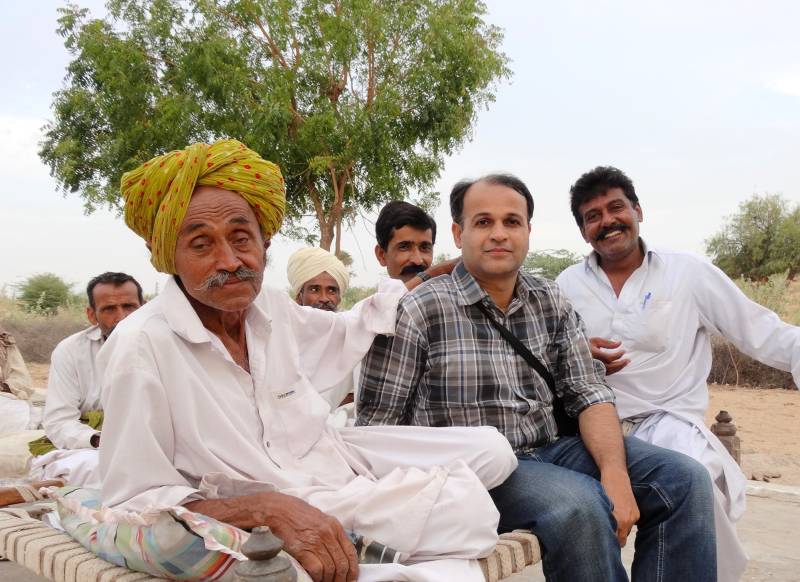
Between 2006 and 2025, Hari Singh Dohat Rathore accompanied me on numerous field visits across the talukas of Mithi, Chachro, and Diplo. We visited Bhope Jo Tar, Kakrario, Rareli, Pabuhar, Veri Jhap, Phularhar, Akheraj Mau, Malhanhor Vena, Daklo, Khanu-Ji Dhani, Loondhar, Jhapio, Doorio, and many other villages. Travelling from one remote village to another, he introduced me to community elders, priests, artisans, local historians, and other knowledgeable individuals whose insights greatly enriched my understanding of Tharparkar's cultural heritage. These field journeys were instrumental in shaping my anthropological understanding of Tharparkar and formed the foundation of much of my work on the region's culture and heritage.
Pabuji, Rani Bhatiyani, and Memorial Stones
I was interested in studying renunciatory orders in Hinduism and visited the most famous sacred spaces associated with Naths—Puris, Bhartis, and Girs—in various villages in Tharparkar. While I was researching Pabuji, Hari Singh accompanied me to some of the temples and thaans (shrines) in Tharparkar. However, I had initially developed my interest in studying the cult of Pabuji in 1998, after reading The Epic of Pabuji by John D Smith (1991).
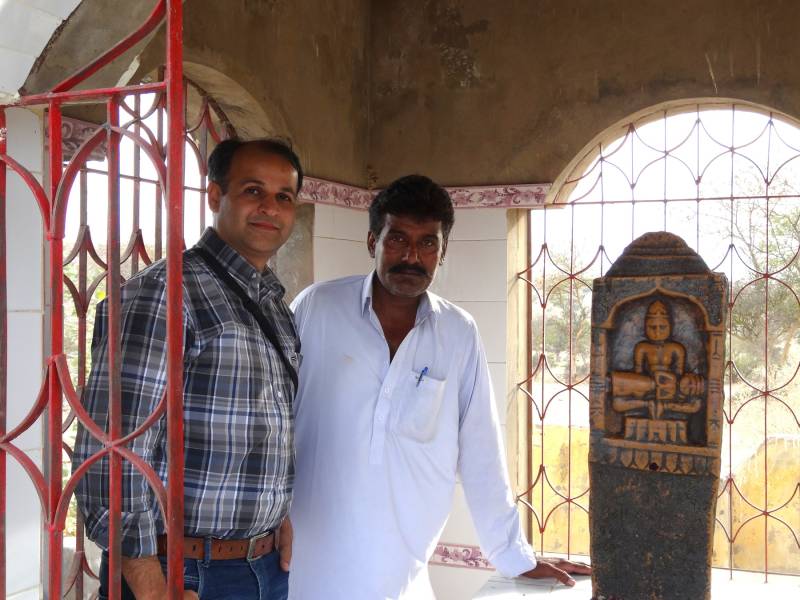
During my frequent visits to Nagarparkar for research on memorial stones, I came across several Thaans of Pabuji. The earliest Thaan of Pabuji is located at Kharerio. Pabuji is mostly worshipped by the Rabari community in Nagarparkar. In other parts of Tharparkar, several other communities, including Rajputs, Bhils, and others, worship Pabuji. One of the famous Thaans of Pabuji is located in Bhope Jo Tar, which I visited with him. I have included a chapter on the cult of Pabuji in my upcoming book, The Folk Deities of the Desert. This book includes chapters on several folk deities and shrines of Tharparkar.
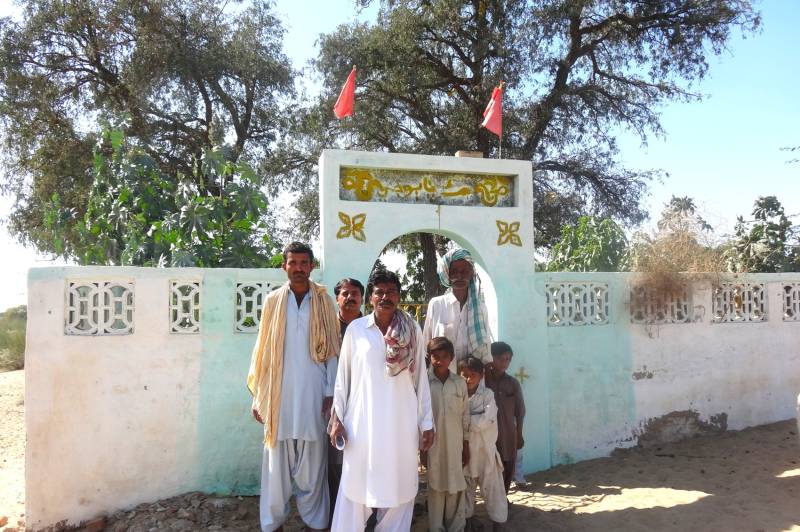
Moreover, I also visited several Thaans of Rani Bhatiyani, popularly known as Mauji. Several communities in Tharparkar worship her, and I have visited all the famous and large Thaans dedicated to her in the region. Her real name was Swarup, and she was a princess from the small kingdom of Jogidas in the Jaisalmer district. Born into a Bhati family, she was consequently called Rani Bhatiyani, and was married to Kalyan Singh Rathore. Rani Bhatiyani of Jasol village in Rajasthan became Sati, not with her husband Kalyan Singh, but with her brother-in-law Sawai Singh. There are many versions of the story. According to one variant, she committed sati by throwing herself onto the funeral pyre when she heard about Sawai Singh’s death in battle. In another version of the narrative, she commits sati by fasting after the death of her son. I have discussed the cult and story of Rani Bhatiyani in detail in my upcoming book, for which I have been collecting data since 1998.
In addition to Rani Bhatiyani’s shrines in various villages, I visited several temples in Diplo and Chachro with Hari Singh Dohat Rathore. Beyond the temples in these towns, we also explored a few hero stone and sati memorial sites in Mithi taluka. In Kakrario, we visited not only memorial stones but also the Thaan of Pabuji. We also documented memorial stones in several other villages across Mithi taluka.
The True Custodians of Cultural Heritage
I believe that behind every successful ethnographic study stand individuals who generously share their time, knowledge, and lived experiences without expecting recognition or reward. Their motivation is not personal gain but a sincere desire to see their history, traditions, and cultural heritage documented and preserved for future generations. In anthropology, such individuals are far more than respondents or interviewees; they are key informants, cultural custodians, and trusted collaborators whose knowledge forms the foundation of meaningful ethnographic inquiry. Through their guidance, anthropologists gain access to communities, build relationships of trust, encounter knowledgeable elders, and collect the rich ethnographic material from which anthropological knowledge is produced.
Hari Singh Dohat Rathore is one such extraordinary individual. During my fieldwork in Tharparkar, he became much more than a guide. He was a trusted companion and an insightful interpreter of local culture. His intimate knowledge of Tharparkar's oral history, social traditions, and cultural landscape enabled me to document aspects of Tharparkar's cultural heritage that might otherwise have remained unrecorded.
Individuals like Hari Singh are the true custodians of local knowledge and the torchbearers of their communities, preserving traditions, memories, and identities that might otherwise disappear with the passage of time.