

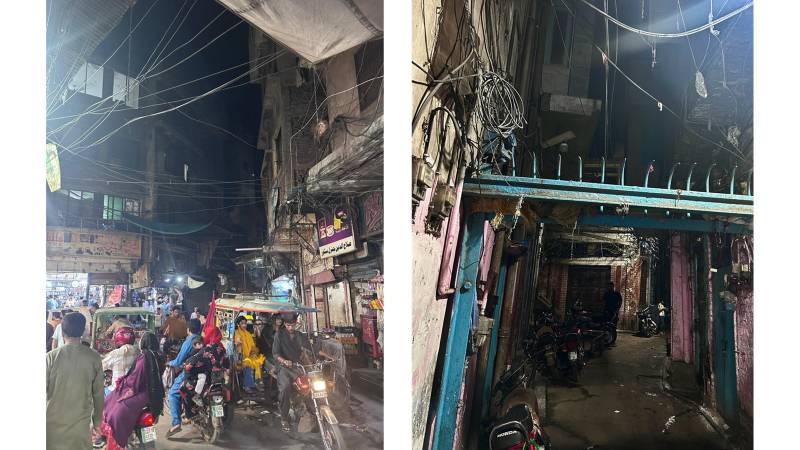
The city of Lahore reminds me of everything that I once held, and still hold, close to my heart. It is a persistent reminder of the good times I spent here. Life in this megalopolis feels less serious, less monotonous and, above all, less cumbersome. Though I had read about “culture shock” during my Master’s degree, I shrugged it off and thought that it was something experienced by others, not knowing that I would find myself grappling with it one day.
My ears are attuned to Punjabi and Urdu, and I can get the gist of any conversation in these languages without much effort. Walking through the city, I often overhear snippets of conversations that I easily understand. Yesterday, after travelling for about seven hours, I was tired and passed through the zigzagging streets of the city to reach my home. Someone sitting outside a tailor’s shop called out to a boy who was walking ahead of me. He said, “Junaid Saab, aj kal taadiyaan toraan badaliyan hoyan ne. Namaz shamaz padna chad ditti je?” (Junaid Sahib, there is a change in your gait these days. Have you stopped offering prayers?) At this frivolous remark, I forgot my tiredness then and there and smiled to myself, thinking how one’s own culture and language affect one in ways one cannot ignore.
It pleases me no end to be within the now invisible and non-existent walls of the Old City. Last time, my cousin and I, while exploring Lohari Gate, could make it only to the first crossroads or chowk that comes shortly after one enters the gate from Circular Road. We were so overwhelmed by the sense of community and connection among the residents of the vicinity that we could not continue our walk beyond the aforementioned chowk. This time, we entered Lohari Gate and went straight towards the crossroads sans stopping anywhere in between. The night had fallen, and there was the usual rush of people, with men standing at dairy and vegetable shops and discussing work and politics. Women went in and out of jewellery and cosmetics stores with a nonchalant and confident air.
The awnings of the shops, rolled out even during the night, were so close to one another that they appeared to be embracing, hiding the sky from view in toto
This spot has been given the pious name of Chowk Bukhari, which was previously known as Chowk Chakla, the place where nautch, tawaif culture, and prostitution once existed. From here, one lane leads to Bukhari Bazaar and the other to Lohari Mandi Bazaar, a narrow and congested historic market. Qingqi rickshaws, carrying mostly women, went towards Bukhari Bazaar, and some were coming out of it too, indicating that the width of the lane inside this particular market might be favourable for such vehicles. However, those going inside Lohari Mandi Bazaar were either on foot or on motorbikes.
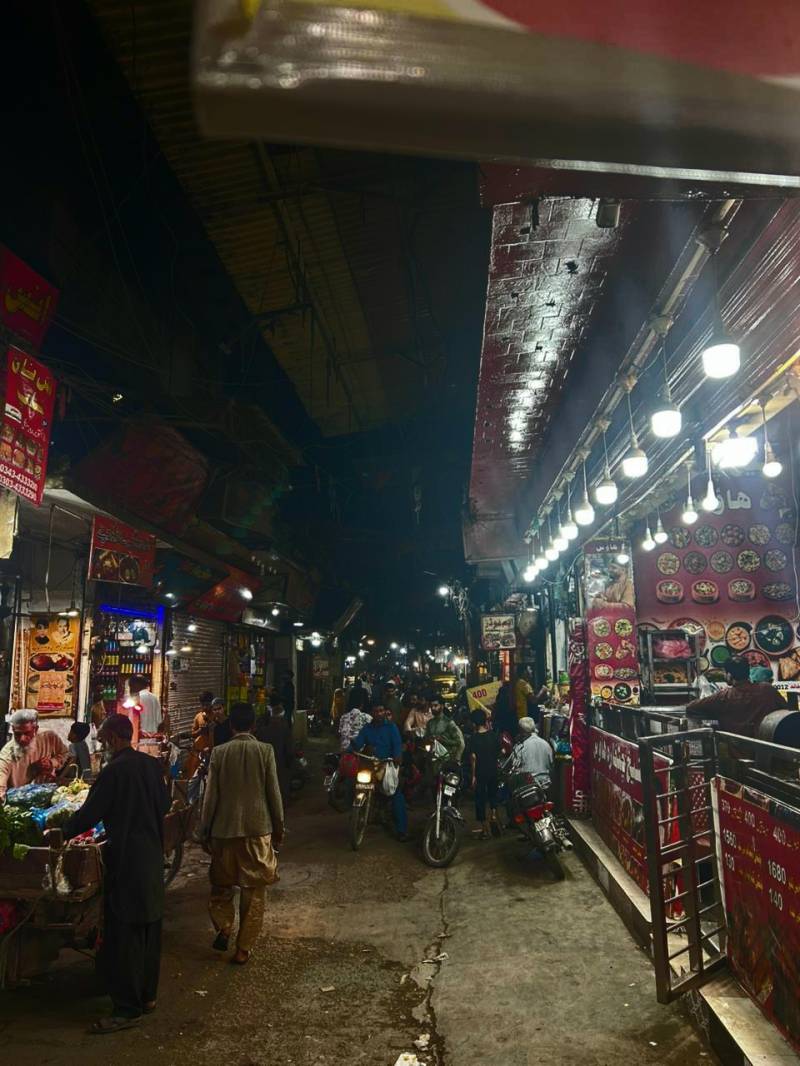
When we entered Lohari Mandi Bazaar, we realised that the walking space of this market was too narrow to allow two heavily built men to pass at a time. The awnings of the shops, rolled out even during the night, were so close to one another that they appeared to be embracing, hiding the sky from view in toto. The whole bazaar is marked by narrowness and filled with fruit, vegetable, grocery, and meat shops. One thing I could not ignore was the proliferation of both raw and cooked chicken shops. The sound of a cleaver falling on the butcher’s wooden block could almost be heard after every ten to fifteen shops, while the malodorous stench of raw chicken overpowered one’s olfactory senses. Cats, however, could be seen having a field day, munching on bones and giving the passers-by contented looks.
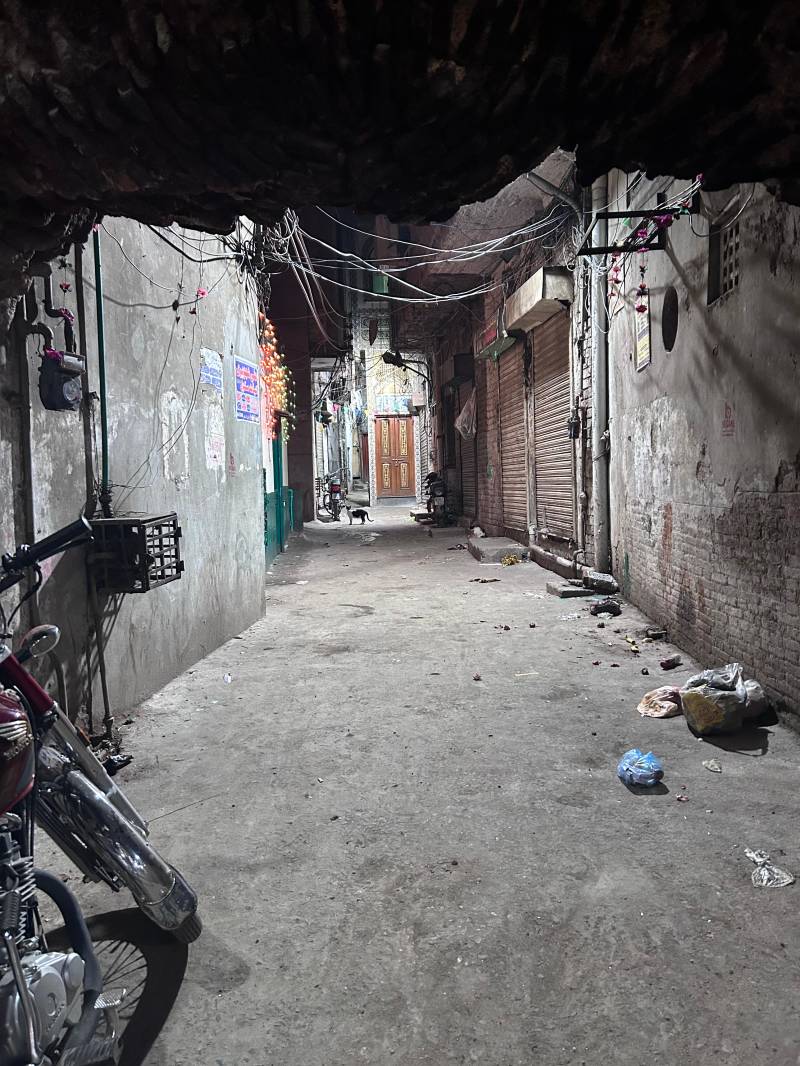
We kept walking, looking at the traditional, medium-sized residential buildings that reflect a mix of Mughal, Sikh, and British architecture. Some older buildings have apparently undergone alterations over time. By the time we reached Chowk Jhanda, from where we had to turn towards Said Mitha Bazaar, we saw a trio of old men sitting together, wearing immaculate white kurtas paired with white dhotis, their heads covered with white pagris (turbans). They were well into their 80s and looked as graceful as swans. They were talking to each other and lost in a world of their own. Their baithak (sitting) resembled the gathering of old villagers under the shade of a tree, which is sometimes much older than those sitting under its sprawling shade.
Standing at a distance where the old men’s peace could not be disturbed, my cousin and I remained there for a long while and discussed how such scenes were fast fading from the lives of modern city dwellers. In posh societies and other parts of the city, old men still met, but only on the premises of mosques and at prayer times. Beyond that, they knew nothing of one another, nor did they care to know. However, exceptions are always there.
Perhaps these bitter realities of modern life were the reason why such an ordinary gathering of three old men in the heart of Lahore felt extraordinary!