

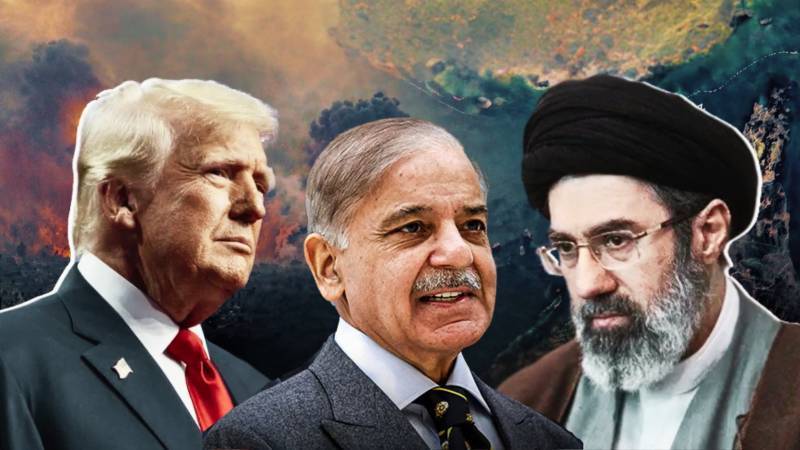
On February 28, the United States and Israel launched coordinated military strikes against Iran, initiating one of the most consequential armed conflicts in the Middle East. Sustained bombardment throughout March and into early May inflicted devastating losses on Iran, including the killing of its Supreme Leader, Ali Khamenei.
Contrary to the expectations of Israeli and American war planners, however, the Iranian state did not collapse. It devised a strategy of decentralised command, devolving operational authority to the unit level, and retaliated with waves of missiles and drones targeting US military bases across the Gulf while effectively blockading the Strait of Hormuz.
Pakistan, sharing a long border with Iran and deeply embedded in the Gulf’s political economy, found itself at the epicentre of the crisis. Islamabad's engagement with the combatants was driven by strategic, economic and geopolitical compulsions.
Pakistan had recently signed a mutual defence agreement with Saudi Arabia, obligating it to provide military support in the event of foreign aggression against the Kingdom, a commitment that became a powerful restraining factor on Iranian targeting of Saudi installations.
The economic dimension was equally pressing. Sustained disruption sent petroleum prices in Pakistan soaring past Rs 400 per litre, placing severe strain on ordinary citizens, while regional economies from Egypt to India felt the pinch of rising energy costs.
By late March, the conflict had acquired a distinctly regional character. Houthi forces in Yemen intensified strikes on commercial shipping; Iraqi militia factions aligned with Tehran targeted US forward operating bases in Syria and Iraq; and the GCC states found themselves navigating an increasingly untenable position between their American security guarantors and the Iranian war machine. The war was no longer a bilateral confrontation but a systemic disruption threatening to engulf the entire Gulf region.
Trump subsequently made a fresh series of demands on the Strait of Hormuz, Iran’s nuclear programme and the unfreezing of Iranian assets that were received poorly in Tehran, leaving the MoU still a work in progress
It was against this deteriorating strategic landscape that Pakistan recognised an opening for diplomatic intervention. The two states have never fought a war against each other, and Pakistan's ties with the Trump administration, cultivated through consistent high-level engagement on the Gaza peace plan, had conferred upon Islamabad a degree of credibility in Washington.
Pakistan's mediation assumed tangible form with the Islamabad Talks of April 11–12. President Trump had by then set several deadlines for Iran to accept American terms and threatened to destroy Iranian energy infrastructure should no agreement be reached. In this coercive context, Pakistan brokered a two-week ceasefire on April 8. The conditional ceasefire, subsequently extended, was accompanied by a 10-point Iranian proposal that the US described as a workable basis for negotiation.
Though the Islamabad Talks did not produce a final settlement, they established the normative framework and diplomatic momentum for subsequent rounds of engagement. Pakistan also convened a regional gathering on March 29, bringing together the Foreign Ministers of Saudi Arabia, Egypt, Turkey and Pakistan to deliberate on de-escalation measures, while Prime Minister Shehbaz Sharif’s visit to China added a critical multilateral dimension. Beijing, as a major strategic partner of Tehran, is uniquely positioned to encourage Iranian flexibility at the negotiating table.
The negotiations since the ceasefire have been characterised by fundamentally divergent positions. The US demanded verifiable constraints on Iran's nuclear programme, the unconditional reopening of the Strait of Hormuz and a cessation of ballistic missile development. Iran insisted on a full lifting of the naval blockade and removal of sanctions as preconditions for substantive talks.
Yet both sides have shown signs of pragmatic recalibration. US and Iranian negotiators reached a tentative agreement to open the Strait of Hormuz and begin nuclear talks, though President Trump had not yet signed off on it, with Vice President JD Vance indicating that only a couple of language points remained under discussion. Trump subsequently made a fresh series of demands on the Strait of Hormuz, Iran’s nuclear programme and the unfreezing of Iranian assets that were received poorly in Tehran, leaving the MoU still a work in progress.
Finally, Israel’s acquiescence remains a decisive and uncertain variable, with Tel Aviv reportedly seeking to obstruct any agreement. Pakistan’s mediatory role in navigating this adversarial divide merits unequivocal recognition. Nonetheless, enduring regional stability cannot be achieved unless the Palestinian question is simultaneously and earnestly addressed, and the US has its work cut out in this respect.