

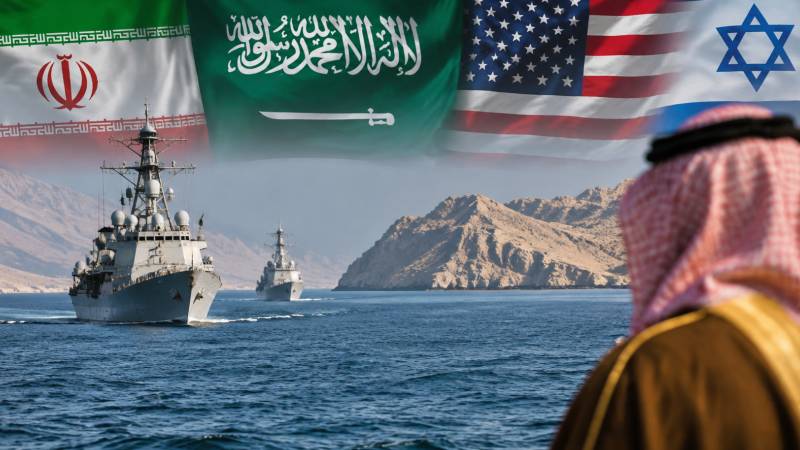
As the year 2026 is ending, a number of questions are being raised about security of Persian Gulf particularly in the aftermath of Iran-U.S-Israel war from February-April 2026. Following fragile ceasefire and signing of 14 point Memorandum of Understanding (MoU) between Iran and the U.S in June 2026 and the failure of Tehran and Washington to reach a comprehensive agreement to end their armed conflict, the signing of Makkah declaration on August 7, 2026 involving Pakistan, Saudi Arabia and Turkiye, the myopic nature of Gulf security is a reality.
Why Saudi Arabia and Qatar approached Iran for peace in the Gulf and why the Strait of Hormuz is termed as a major flash point in global and Gulf security? Why the United States as strategic allay of Saudi Arabia failed to protect Riyadh from relentless missile attacks of Houthis? Why Israel, which has an age old expansionist designs in the Middle East is not regarded as a threat by the Arab Gulf countries? Why Egypt, Pakistan and Turkiye are interested in Gulf security and how Iran views the Saudi backed alliance called as Makkah Pact directed against Tehran? Following the outbreak of Iran-Israel-U.S war on February 28 leading to the closure of Strait of Hormuz by Iran, surge of oil and gas crisis along with global economic meltdown, security of Persian Gulf tends to draw the attention of observers on international affairs.
According to Ferid Belhaj in his write up, “The Gulf’s Strategic Paradox: Lost confidence in the US Security Umbrella, Enduring Trust in the Dollar” published in The Middle East Institute, June 12, 2026: “The Gulf monarchies - Saudi Arabia, the United Arab Emirates, Qatar, Kuwait, Bahrain, and Oman - increasingly exist in a world where the United States no longer looks like the unquestioned guarantor of regional stability. Repeated tensions with Iran, the vulnerability of the Strait of Hormuz, attacks on Gulf infrastructure, and Washington’s cautious and calculated responses have all raised serious doubts about how far the United States would actually go to protect its Gulf partners. And yet, despite these growing doubts, the Gulf States continue to anchor their currencies overwhelmingly to the US dollar and keep the vast majority of their sovereign wealth inside American-centered financial markets.” Despite America’s enormous support to Israel and its failure to protect Gulf States from Iranian missile and drone attacks, Arabian Gulf states lack skills and capability to protect their security and mitigate their dependence on America. Their myopic approach on determining their threat perception tends to further aggravate the Gulf security dilemma.
If Iran can withstand joint Israel-U.S military attacks, why the Gulf States cannot protect themselves from external threats? From any standpoint, it is not Iran but Israel which is a threat to the Arab states but instead of focusing on dealing with the Jewish challenge, Saudi Arabia along with other Gulf countries and Egypt consider Iran as a threat. Yet, Iran’s missile and drone attacks against six pro-American Gulf States compelled them to take an anti-Iranian position but failed to prevent U.S-Israeli destructive attacks against another Gulf country i.e. Iran. Ironically, Gulf Cooperation Council (GCC), which was established in 1981 and composed of Bahrain, Kuwait, Oman, Qatar, Saudi Arabia and U.A.E, was directed against Iran but it failed to take any cogent step to deal with threats to Gulf security which cannot be determined as Iran centric. Over reliance over the United States and exaggerating threat of Iran while neglecting challenge from Israel reflect a myopic security narrative about Gulf security. GCC is a security organization but is unable to deal with its security predicament.
There is no shortcut to resolving the Gulf's security crisis without consensus between Iran and the Arab Gulf states. Saudi Arabia, Bahrain and the UAE must mend fences with Tehran, just as Iran must reconsider its support for the Houthis.
According to a write-up published in Arab Gulf States Institute, April 23, 2026 by Jean-Loup Samaan: “Fast-forward to 2026, and the Iran war has upended the belief in the deterrent effect of U.S. military bases. Not only did U.S. military bases in the Gulf fail to deter attacks, but they actually attracted them. As a result, Gulf States have suffered a total of 1,372 missile and 4,415 drone attacks from Iran over approximately six weeks. This failure was even more painful, as Gulf diplomats initially tried to prevent that war. So far, Gulf governments have refrained from publicly expressing discontent with the U.S. administration. Some, such as the United Arab Emirates, even assert that ties are getting stronger and will get even stronger after the war.
Still, frustration and anger over the lack of consultation and preparation with Washington are evident in off-the-record conversations with Gulf representatives. This is unlikely to lead to a sudden turnaround in which Gulf States would end their partnership with the United States, but the strategic assumption that held it together no longer works – hence, there is a need to rethink Gulf security. Without determining the nature of threat to Gulf security and focusing on Iran as a major challenge to the region, GCC is pursuing a myopic approach on its security predicament. Knowing that Israel has expansionist designs in the Middle East and is responsible for causing enormous destruction to Palestinians in Gaza and in occupied West Bank, Arab Gulf countries consider Iran and not Israel as a threat to the region.
Myopic strategic narrative about Gulf security needs to be analyzed from three angles. First, absence of regional security architecture composed of GCC member countries and the two major Persian Gulf states Iran and Iraq. Unless Persian Gulf is able to pursue a coherent and visionary approach to deal with Gulf security including uninterrupted supply of oil and gas from the Strait of Hormuz to the rest of the world, Gulf security narrative would remain myopic. The narrative that instead of Israel, it is Iran which is a major threat to the Gulf security lacks rationality and wisdom. It is not Iran but Israel which is the only nuclear state in the Middle East and its nuclear arsenal cause a major threat to Middle Eastern security.
Unless, Arab Gulf countries take a position against Israel and America’s relentless support to the Jewish state, one cannot expect peace and stability in the Gulf region. Unfortunately, two GCC members Bahrain and U.A.E are a part of Abraham accord and possess diplomatic relations with Israel. These two Gulf States are ferociously against Iran and are pro-American. Second, Iran’s position vis-à-vis the United States is principled but it also needs to follow a prudent approach by lifting blockade of Strait of Hormuz and end its support to Houthis in Yemen and Hezbollah in Lebanon. Iran’s blockade of Hormuz strait is a cause of its international isolation.
Likewise, both Iran and the U.S must pursue a flexible approach to mitigate their armed conflict in the Persian Gulf. Around nine months of U.S-Iran armed conflict has been a lose-lose and not a win-win situation for both countries. Arab Gulf countries particularly Saudi Arabia and U.A.E must pursue a pragmatic approach vis-à-vis Iran so that the U.S and Israel are not able to exploit Iran-Arab schism to their interest. Finally, there is a need to have a plausible and prudent regional security architecture in the Persian Gulf region where countries belonging to the region including Iran and Iraq take ownership of security and peace. Myopic narrative needs to be replaced with a pragmatic rational security discourse which would require withdrawal of foreign forces in the Persian Gulf and its vicinity. Inclusion of Iran and Iraq in GCC is the need of the hour.
There is no short cut to deal with regional security predicament unless consensus between Iran and Arab Gulf states is established. For that matter, Saudi Arabia, Bahrain and U.A.E must mend fences with Iran and in the same manner Tehran withdraws its support to Houthis. That is how one can hope for peace and stability in the Persian Gulf barring the involvement of United States and Israel.