

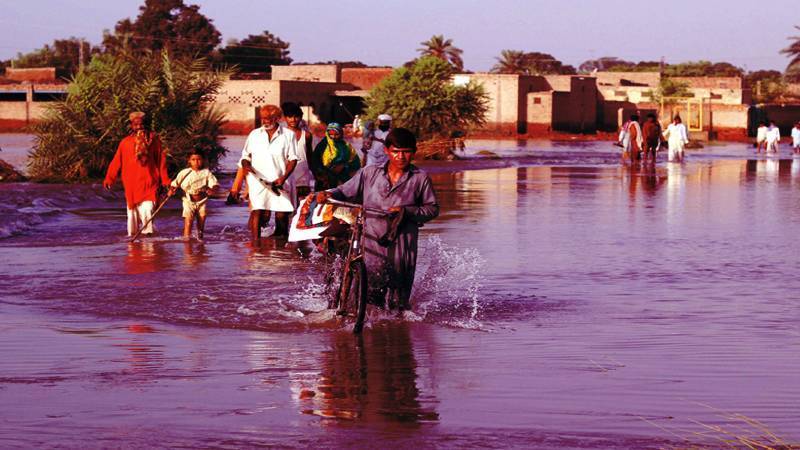
Poverty is more complex than perceived. Pakistanis experienced a déjà vu this year. The recent floods were reminiscent of the devastation caused by the floods of 2022 which submerged almost 12% of the country, killing nearly 1,740 people nationwide, with 330 deaths in KP alone, and costing upwards of US $15–40 billion in economic losses. This year, the floods have already claimed 271 lives since late June, mostly in Punjab this time, but drastically affecting areas in KPK and GB as well.
According to the Integrated Food Security Phase Classification, cities like Swat and Kohistan that are already in crisis and emergency with respect to food insecurity have now shifted to a more drastic phase of moving from risk of livelihood to loss of lives. These catastrophes are inevitable, but their outcomes are not. Allocating over Rs 85 billion under the federal climate adaptation budget this year failed to protect against floods, glacial outbursts, and drought, since Pakistan continues to lose lives and livelihoods in districts like Kohistan, Swat, and Gilgit—revealing a dangerous gap between policy promises and practical protection. Despite allocating Rs 60 billion for roads and over Rs 28 billion for agriculture in its 2024–25 budget, the Khyber Pakhtunkhwa government failed to deploy even modest resources to districts repeatedly hit by floods and food insecurity.
The tragedy in Swat, where three children lost their lives in Madyan under a collapsed roof and two young brothers were swept away in Malam Jabba, was not merely the result of heavy rainfall. It was a failure of institutional responsibility. The weather forecasts were available, yet neither the National Disaster Management Authority (NDMA) nor the Provincial Disaster Management Authority (PDMA) acted promptly to issue warnings or initiate protective measures for vulnerable communities. While the province of Punjab has, so far, recorded the highest death toll in 2025 with 144 fatalities compared to KP's 63, the recent incidents in Khyber Pakhtunkhwa illustrate a pattern of repeating institutional failures that contributed to the province's 330 deaths during the 2022 catastrophe.
The recent World Bank’s poverty threshold of $4.20 per day and extreme poverty line of $3 per day have instantly increased the poverty line from 39.8% to 44.7%, while extreme poverty has soared from 4.9% to 16.5% for Pakistan
Adding to this pattern of negligence was the heartbreaking incident involving a family picnicking near the Swat River. The family remained stranded on a rocky island for hours, clearly visible and pleading for help, before they were swept away by rising floodwaters. The area should have been evacuated well in advance, considering the known flood risks. Even after the emergency unfolded, rescue operations were so delayed that they failed to prevent the loss of multiple lives. The absence of timely response turned a foreseeable crisis into a national tragedy. More than just a logistical failure, it reflects a deeper, disturbing truth: how unserious we are as a state and society about the value of ordinary citizens’ lives.
When families can be seen pleading for help for hours and still go unaided, it sends a painful message that the lives of the poor, the remote, or the unimportant simply do not matter. Until this mindset changes, no amount of budgets, alerts, or donor conferences will protect the most vulnerable among us. Collectivism must be woven into our values. We are a disconnected nation. The same negligence by officials that cost lives in Swat echoes in our daily lives, though its impact isn’t always as deadly. Reckless driving, cutting queues, class-based entitlement, and encroachment all stem from the same disregard for others. Even a child screaming in a restaurant, while seemingly trivial, reflects a parent’s lack of courtesy toward others sharing the space. These small acts reveal how we perceive the rights of others with indifference and how deeply our social fabric has frayed.
Poverty in Pakistan is also inextricably linked with the chronic state of our education system. Approximately 26 million Pakistani children aged 5 to 16 are out of school as of June 2025, according to UNICEF and Save the Children. Education remains a distant dream for nearly one in every three children in the country. In rural areas, poverty forces many families to choose between putting food on the table or sending their children to school. Where schools do exist, they are often plagued by absentee teachers, poor infrastructure, and a lack of basic resources. Education is not just a tool for upward mobility—it is the foundation of a resilient, self-reliant society. Yet successive governments have failed to prioritise it with the urgency it demands.
Without a drastic shift in how we invest in and govern our education system, poverty will remain a generational trap rather than a temporary challenge. Beyond sheer numbers, the inequality within our education system is deeply entrenched. Only a small segment of society—those with access to elite, private English-medium schools—receive the kind of education that equips them for global opportunities. Many of these students eventually move abroad, contributing their skills to foreign economies. They often feel undervalued at home and find fairer remuneration and better professional environments abroad. Few return or contribute meaningfully to society. Yet if even a fraction of them chose to teach in public schools or support the local education system, they could help uplift the masses. By transferring their knowledge and exposure, they could empower the next generation to break free from the cycle of poverty and imagine a different future.
On the other hand, the vast majority of Pakistani children, particularly those enrolled in public schools, are taught outdated curricula and are largely excluded from the global technological revolution.
This gap is more than just linguistic—it is economic and developmental. Fields like artificial intelligence, scientific research, and digital entrepreneurship are almost entirely dominated by English-language knowledge and content. A student from an Urdu-medium background, no matter how bright, is often cut off from these opportunities simply because of the medium of instruction. This linguistic and technological divide not only stunts individual potential but also keeps the country as a whole lagging behind in innovation and growth.
The recent World Bank’s poverty threshold of $4.20 per day and extreme poverty line of $3 per day has instantly increased the poverty line from 39.8% to 44.7%, while extreme poverty has soared from 4.9% to 16.5% for Pakistan. Even though these increments can be largely attributed to the World Bank’s revised thresholds to poverty lines, it adds pressure on the government, considering the recent flood situation and IPC food insecurity data. A common person does not dig into details and could panic by reading headlines such as ‘Half of Pakistan is in poverty’, which creates a sad sentiment within society. The matter of poverty cannot be blamed entirely on natural phenomena such as floods, nor can the World Bank’s higher poverty line estimates take the blame away. The matter is a blend of poor economy, bad governance, lack of educational opportunities, natural disasters, and the World Bank’s recent revision. It is our responsibility to play our part to the best of our abilities so that at least we can mitigate what is not inevitable.