

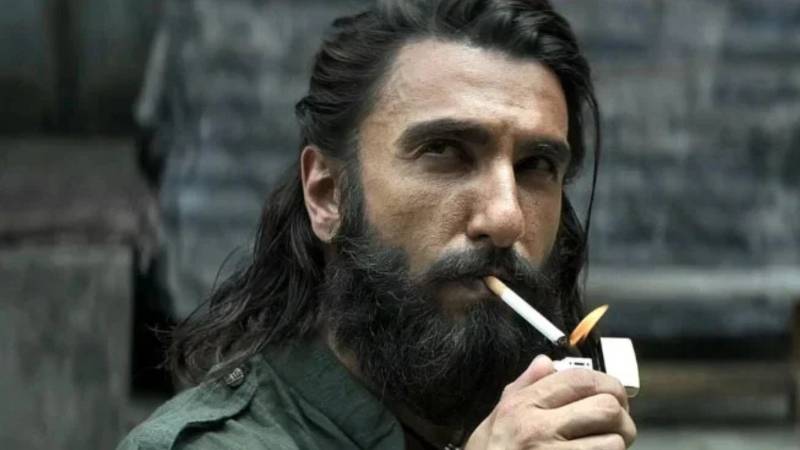
On 19th March 2026, Jio Studios and B62 Studios released a film, Dhurandhar: The Revenge, which serves as the best example of the lazy scriptwriting that Bollywood is known for to push the political narrative of India. Directed by Aditya Dhar and featuring Ranveer Singh as an Indian naval officer, the film places its lead character in Karachi's Lyari underworld.
It puts him in charge of criminal gangs and killing a fictional ISI officer, who is portrayed as the mastermind behind attacks on Indian soil since 1999. Marketed as “inspired by real events”, the film's technical elements are crafted with great care, featuring sharp cinematography, fluid action, and committed performances. Still, its script displays a propagandistic bias that reduces the India-Pakistan conflict to a binary: India as the angelic victim and Pakistan as the irredeemable aggressor.
From Pakistan's vantage point, this is not merely cinematic licence. It is the newest, most polished product of a systematic Hindutva strategy of pouring resources and institutional support into maintaining the Indian public in a cocoon of the nation’s mirage of goodness. The Bharatiya Janata Party (BJP) and its ideological mentor, the Rashtriya Swayamsevak Sangh (RSS), have treated Bollywood as strategic infrastructure.
Certification pathways have been eased, corporate capital realigned, and promotional machinery mobilised to ensure that films such as Dhurandhar and its sequel reach mass audiences unchallenged. The aim is clear: to sustain a domestic audience divorced from contradictory evidence, believing that all of India's covert actions are acts of self-defence and that Pakistan's grievances are artificial.
The Pakistan-phobic tropes used in the film are clinical in their selectivity. Pakistani institutions are seamlessly fused with terror financing and control of the underworld. Baloch identity is reduced to a mere camouflage for Indian heroism. The Baloch Liberation Army (BLA) and Tehreek-i-Taliban Pakistan (TTP), both internationally designated terrorist organisations, are depicted as Pakistani instruments alone. Absent is any mention of documented Indian operational footprints. In March 2016, Pakistani authorities arrested Kulbhushan Jadhav, a serving officer in the Indian Navy operating under an alias in Balochistan.
His confessions, financial trails, and operational directives—presented to the United Nations—outlined Research and Analysis Wing (RAW) instructions for funding BLA factions, disrupting the China-Pakistan Economic Corridor, and facilitating militant coordination in Khyber Pakhtunkhwa. Pakistani dossiers have also detailed the billions of rupees allegedly channelled through Afghan conduits to TTP splinter groups and Baloch front organisations. Dhurandhar: The Revenge completely ignores this body of evidence.
The trope of saving India and only India as the gleaming saviour has become too convenient, too repetitive, and too resistant to empirical scrutiny
This erasure is not an oversight; it is a deliberate feature of structural design. It fits within a broader Hindutva media ecosystem that deploys narrative power across an expansive communication landscape. While traditional television news has lost credibility—particularly after the military setback against Pakistan in May 2025 and the regional conflict in 2026—the digital and cinematic arms have grown increasingly sophisticated.
Social media, algorithmic curation, and state-linked production houses create an echo chamber in which the Dhurandhar franchise is presented as unvarnished truth. As it is celebrated, the Indian public is exposed to carefully calibrated reinforcement. For many viewers, the film confirms what they have been conditioned to believe: that India stands alone as a virtuous victim in a hostile neighbourhood.
This tactic mirrors propaganda methodologies refined over decades in other geopolitical contexts. Both frameworks rely on perpetual self-victimisation through an existential threat narrative, which is then used to justify covert operations while externalising all culpability. Cultural products, cinema, digital media, and public discourse are mobilised to internationalise this narrative, presenting the protagonist state as eternally under siege.
In the Hindutva variant, Partition, three wars, Siachen, and the Kashmir dispute (still subject to formal UN Security Council resolutions) are condensed into a ledger that records only Pakistani wrongdoing. Reciprocal proxy dynamics—UN-designated groups operating from Pakistani territory on one side and documented Indian engagement with BLA and TTP elements on the other—are omitted. The result is a convenient hero-victim polarity that becomes increasingly implausible for global audiences.
Pakistan views this narrative machinery with clarity, given its direct consequences. Its security institutions have borne the costs of proxy dynamics in Balochistan and the north-west. Development projects have been repeatedly targeted, and civilians have paid a heavy human toll. When Dhurandhar: The Revenge portrays India as the sole aggrieved party, it does more than entertain; it sanitises allegations that Pakistan has long documented.
The film’s technical excellence cannot obscure the intellectual laziness of its premise. The world is not a moral fable; it is a complex theatre of entangled statecraft, mutual grievances, and reciprocal actions that are verifiable. The trope of saving India and only India as the gleaming saviour has become too convenient, too repetitive, and too resistant to empirical scrutiny.
International observers are increasingly sceptical. While multilingual releases may extend the film’s reach, global audiences are more familiar with third-party assessments, UN records, and the layered history of South Asian security. The script, as it stands, appears engineered for convenience.
The narrative of exclusive Indian victimhood is losing credibility. Decades of cinematic repetition from Uri to The Kerala Story franchise to the Dhurandhar series have stretched the trope to excess. Global audiences, exposed to a wider array of sources, are less willing to accept the portrayal of India as an unblemished saviour besieged by irrational Pakistani aggression. Once opened, such perspectives are not easily closed.
Pakistan’s own record is not beyond scrutiny, and internal shortcomings in its security governance require accountability. The asymmetry lies elsewhere: in the scale of coordinated investment in narrative infrastructure within India. The RSS-BJP ecosystem has provided policy backing, capital, and institutional support to sustain this narrative cocoon. Dhurandhar: The Revenge is its latest showcase—technically impressive, yet substantively hollow. For Pakistan, the film is not merely an affront but evidence of a broader strategy that employs Bollywood’s global appeal as a veneer for contested geopolitical narratives.
A genuine reckoning of regional security demands bilateral transparency, third-party verification, and an acknowledgement of mutual agency. The Hindutva-influenced trajectory of Bollywood, however, moves in the opposite direction: polished, profitable storytelling that privileges one narrative while sidelining a contested reality.
Over time, the hero-victim construct becomes harder to sustain precisely because of its convenience. The success of films like Dhurandhar: The Revenge may prolong this illusion domestically, but it cannot arrest the broader global shift. The structure has been exposed. The script has been read. The illusion stands diminished.