

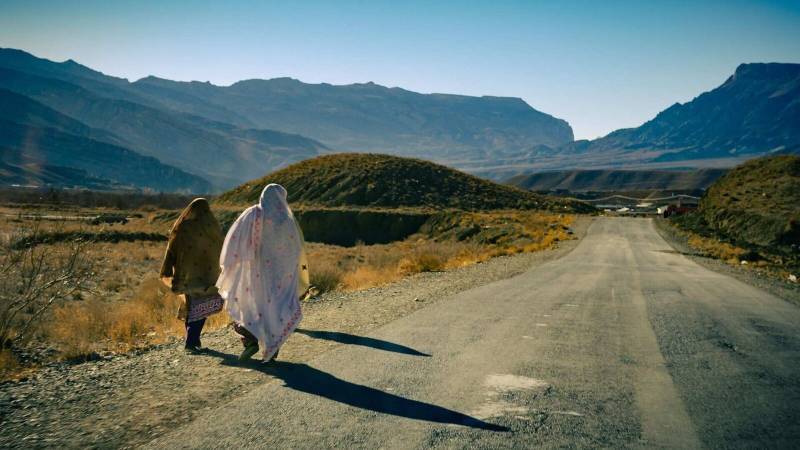
Like most drivers of insurgency and terrorism, Balochistan’s unrelenting cycle of violence reflects symptoms rooted in more than just neglect or exploitation—real or perceived—by Lahore or Islamabad. The province remains unsafe, underdeveloped and unintegrated not simply due to policy failure, but because it is fundamentally unsuitable for sustaining a large, prosperous population. Balochistan is restive because it is a prisoner of its geography. Its rugged terrain, arid climate and chronic water scarcity impose hard limits on both economic productivity and human settlement. Until we begin to acknowledge these structural constraints and develop solutions in line with this ecological reality, we will continue to treat symptoms rather than the cause.
Balochistan’s malaise can be best understood through what might be described as a Malthusian ceiling—a term that captures the idea that geography and ecology impose hard limits on economic growth and prosperity. The concept draws on the work of the English economist Thomas Malthus, who argued that in environments lacking technological or institutional breakthroughs, populations tend to grow until they hit subsistence-level constraints, where food, water or livable land becomes a limiting factors.
In Balochistan, these constraints are acute. The province’s rugged, mountainous terrain is a major barrier to connectivity; its arid climate and near-total absence of major freshwater bodies limit agricultural output to subsistence levels; and its scattered, low-density settlements cannot support economies of scale. Constructing roads or canals is prohibitively expensive and fails to unlock meaningful economic activity. These geographic and ecological features act as a ceiling on prosperity. Unlike Punjab, with its flat, fertile and irrigated landscape that enables surplus economic output and thus prosperity, Balochistan remains trapped in a condition where the population can barely live above subsistence levels without significant external transfers.
It is these structural barriers, and not a lack of adequate investment, that have kept the people of Balochistan impoverished, vulnerable and ready for exploitation by terrorists and grievance‑mongers. In a land that cannot sustain even subsistence farming at scale, it is all too easy for separatist recruiters to point at Punjab’s relative prosperity and frame Baloch hardship as the result of dispossession or exploitation by Islamabad and Lahore. That narrative takes root because there is no visible alternative. In the absence of opportunities to participate in mainstream economic activity—including stable jobs, gradual improvement in living standards, and optimism about the future—young Baloch face a stark choice: marginal survival or armed resistance.
If Balochistan has a developmental ceiling that is hard to break, then the only option is to offer Baloch people a way out of it
Compounding this is the province’s social structure, again a result of its geography and terrain. Tribal, nomadic and patronage networks dominate, and are typical of regions with harsh, uneven terrain and limited agricultural or urban economic opportunities. These networks not only provide insurgents with shelter and local legitimacy—in some cases, they can also serve as avenues for recruitment. Terrorists and insurgents exploit these networks based on a mixture of tribal loyalty, threats and financial inducements to recruit and seek cover among local populations.
If we accept that Balochistan’s problems are fundamentally structural and rooted in geography—and not in bad governance or poor investment—then we need to accept that they will not be solved through fiscal fixes alone. If Balochistan has a developmental ceiling that is hard to break, then the only option is to offer Baloch people a way out of it. The boldest and most direct way of accomplishing this is through a voluntary land-for-land resettlement programme. This would involve offering willing Baloch families the option to relocate to more agriculturally viable regions of Pakistan—specifically the heartlands of Punjab—where the climate and infrastructure offer dramatically better conditions for rural livelihood.
This proposal is more practical than it appears at first glance. Consider the numbers. Out of Punjab’s nearly 20.6 million hectares of land, about 9 percent—or 1.9 to 2 million hectares—is listed as “fallow” on the Punjab Government Agricultural Department website. Fallow land is described as fertile, cultivable land that is not currently being used. This is precisely the kind of land that can be repurposed and offered to re‑settlers without disrupting existing ownership patterns.
Under the programme, or a pilot version of it, a willing Baloch participant—say, a subsistence farmer or a nomadic herder—could trade his low-yield, often barren holdings in Balochistan for a long-term lease on an irrigated plot in Punjab. Swap acreage could be determined either through land value or through other metrics such as family size. In addition, the state would offer relocation and integration support—this could include assistance with housing, basic farming training, and guidance on how to navigate local agricultural markets. Over time, and depending on insights gained from the pilot programme, further schemes could target skilled or semi-skilled Baloch youth for relocation to industrial regions of Punjab and Sindh, offering opportunities for a broader cross-section of the Baloch population to be integrated into the national economy.
The benefits of such a policy are threefold. First, for the participants themselves, relocation represents an opportunity to break out of subsistence and engage in viable, surplus-generating agriculture. A relocated family can grow cash crops, build savings, educate its children, and eventually climb the economic ladder in a way that simply isn’t possible in the rugged landscapes of Balochistan. Second, relocation yields a significant security dividend. A key driver of insurgency is hopelessness and an absence of opportunity that makes grievance narratives compelling. By offering Baloch people a meaningful stake in the country, the programme undermines that narrative. And because the resettlement would be scattered and not clustered in one location, it would have the added benefit of breaking tribal patronage structures that often shield and support militancy. Finally, there is a clear economic imperative to utilising Punjab’s unproductive lands to generate agricultural output, including several crops for which Pakistan regularly faces supply shortages.
For too long, Balochistan’s population has been mired in a cycle of poverty, violence and dependency. This has happened despite sizeable investments and the best intentions of the federal government. This land resettlement proposal offers a pathway out—not through subsidies or transfers, but by offering willing Baloch families a real stake in the country’s economic and social future. By doing so, it brings the promise of a more inclusive Pakistan to the millions of proud but marginalised Baloch.