

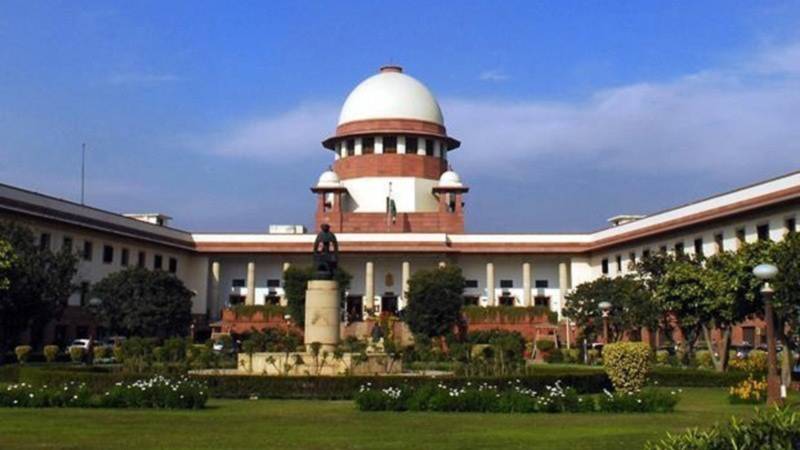
The judgment delivered by the Supreme Court of India on 11 December 2023, in which the abrogation of Article 370 was upheld, represents one of the most far-reaching constitutional decisions in India’s post-independence history. The court endorsed something unprecedented as it gave finality to the dissolution of Jammu and Kashmir’s autonomous status and its bifurcation into two Union Territories. On 1 May 2024, the review petitions filed against this judgment were dismissed in chambers, without reasons or hearing, further closing the door on judicial reconsideration.
It is important to understand that the constitutional questions raised by the case continue to resonate beyond the formal pronouncements. If we look at comparative constitutional law and even the Indian jurisprudential analogues, the ruling remains fraught with internal inconsistencies, procedural shortfalls, and normative departures from foundational principles.
The first fundamental legal defect lies in the Court’s treatment of the procedural requirement embedded in Article 370(3) of the Indian Constitution. The President could only declare Article 370 inoperative on the recommendation of the Constituent Assembly of the State of J&K. The assembly ceased to exist in 1957 without issuing such a recommendation, and rather than treating this as a constitutional deadlock, the Court interpreted the dissolution of the Assembly as rendering the proviso “otiose,” thereby empowering the President to act unilaterally.
This interpretation effectively reconfigures the constitutional text. The Court's logic collapses the distinction between an absent mechanism and an obsolete condition. It is a standard that wherever the textual barrier exists, the judiciary is bound to enforce it, not to bypass it through purposive dilution. The disregard for this interpretive rigour in a matter as sensitive as federal autonomy introduces a jurisprudential instability that is both dangerous and far-reaching.
The second and more profound concern lies in the method of abrogation. The Indian Government, relying on Presidential Orders C.O. 272 and 273, and invoking Parliament in place of the J&K Legislative Assembly (then dissolved), effectively repealed Article 370 and applied the entire Indian Constitution to Jammu and Kashmir. This was not done through a constitutional amendment under Article 368. Instead, it was achieved through executive action ratified by a simple majority. An entrenched constitutional provision, linked to a unique federal arrangement, was erased without recourse to the formal amendment process.
The Indian Supreme Court, which has historically described itself as the “sentinel on the qui vive,” has, in this case, abandoned that role
In effect, the executive became the constituent power and that shall continue to have far-reaching impact on Indian polity. The SCI did not engage with the Basic Structure Doctrine, which has been repeatedly invoked to strike down laws that tamper with federalism, democracy, or the rule of law. The Court endorsed a precedent whereby constitutional provisions may be overridden by executive discretion, bypassing both constituent will and parliamentary oversight.
Another equally important issue is the conversion of the state into two Union Territories. The Central Government, acting under President’s Rule, treated Parliament as the State Legislature and proceeded with the bifurcation. This self-referring logic undermines the very structure of federalism. A process that is constitutionally designed to include the voice of the affected State was instead conducted entirely by the central executive and its parliamentary majority. The SCI chose not to rule on the validity of this transformation, deferring to the Union’s statement that Statehood would be restored at an “appropriate time.”
Federalism, like democracy, is not a concession granted at the discretion of the Union. It is a structural principle. Even in a country like Pakistan which is arguably less free in terms of judicial independence, provincial boundaries and status are protected by Article 239(5) of the Constitution, which prohibits alteration without the consent of the relevant provincial assembly. The Indian Court's refusal to assert a similar constitutional safeguard permits a troubling centralisation of power that departs from the spirit of cooperative federalism for which the Indian Constitution was once admired.
The Indian Supreme Court, which has historically described itself as the “sentinel on the qui vive,” has, in this case, abandoned that role. The review petitions, which raised pressing questions about natural justice, were dismissed without oral hearing or detailed reasoning. This falls short of even the Indian Court’s own standards in cases such as Rupa Ashok Hurra v. Ashok Hurra, where it held that a curative petition lies where there has been a miscarriage of justice or denial of natural justice. The Court's refusal to allow even a full review process reflects a deeply troubling judicial passivity, particularly in light of the irreversible nature of the changes brought by the abrogation, and their impact on millions of people.
The erosion of judicial independence across South Asia, albeit at varying speeds and intensities, suggests a regional trend whereby apex courts are increasingly reluctant to confront executive overreach. In Pakistan, recent years have witnessed sustained criticism of judicial deference, especially in cases with clear political overtones or where constitutional norms have been subordinated to institutional expediency. The elevation and removal of judges, the selective opening of constitutional questions, and the timing of politically consequential rulings have all contributed to a growing perception that the superior judiciary is becoming functionally subordinate to the executive’s narrative.
The same anxiety underlies the Indian Court’s conduct in the Article 370 case, where formalistic reasoning and procedural evasion took precedence over constitutional integrity and structural accountability. This trend, if left unchecked, risks normalising a form of judicial governance in South Asia where constitutional adjudication becomes indistinguishable from political accommodation.
For those observing from Pakistan and elsewhere in the region, the precedent is concerning not because of territorial implications, but because it signifies a judicial model in which formalism displaces fidelity to constitutional structure, and deference replaces the duty of interpretation.
The path to rectification is narrow but still open. The curative petition mechanism exists precisely for such rare and exceptional circumstances, where judicial action or inaction threatens to erode constitutional norms. The standards laid down by the Indian Supreme Court itself, including miscarriage of justice, violation of natural justice, and denial of constitutional hearing, are all plainly met in this case. If the court refuses curative consideration then it would cement a jurisprudence of convenience, and signal the retreat of the Constitution before executive.
The Article 370 judgment is an affront to the Constitution of India. It rewrites the limits of executive power, restructures the federation without consent, and removes judicial scrutiny from acts of profound constitutional consequence. The reason behind this exercise is to highlight that constitutionalists across the region should continue to insist on procedural integrity, federal equity, and judicial independence, as these are not optional features of a constitutional democracy.