

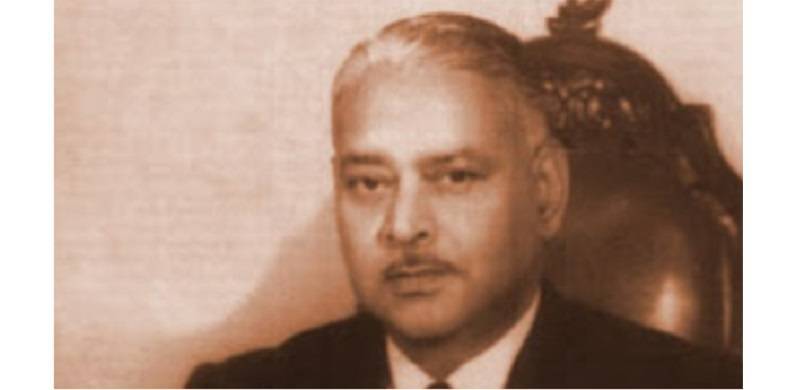
In Pakistan's judicial mythology, Justice A.R. Cornelius is the anti-Munir, the judge who stood firm when others capitulated, who defended democracy when the Court was validating dictatorship. This reputation rests almost entirely on one incident: his dissent in Maulvi Tamizuddin Khan (1955).
It's worth asking whether that reputation is deserved.
Cornelius's dissent in Tamizuddin was genuinely principled. While Munir and the majority upheld the Governor-General's dissolution of the Constituent Assembly, Cornelius argued the opposite: the Assembly, as the embodiment of constituent power, could not be dissolved by executive fiat.
His reasoning was constitutionally sound. A constituent assembly isn't a normal legislature; it represents the sovereign will of the people to create a constitutional order. Placing it beneath the Governor-General inverted the hierarchy of democratic authority. Cornelius understood what Munir refused to acknowledge: that Pakistan's constitutional future depended on whether sovereignty rested with the people or with colonial-era executive powers.
The dissent was carefully reasoned, democratically grounded, and politically brave. It remains one of the strongest judicial statements in favour of popular sovereignty in Pakistan's early history.
But judicial courage isn't measured by one dissent. It's measured by consistency under pressure.
The Tamizuddin case presented what we might call survivable resistance. Yes, the Governor-General had dissolved the Constituent Assembly. Yes, this was a constitutional crisis. But the legal system itself remained intact. Courts still functioned. The 1935 Act still provided a framework, however flawed. The judiciary wasn't facing its own extinction.
In this context, dissent was possible. Cornelius could oppose executive overreach while remaining within a functioning constitutional order. His position risked his reputation, perhaps his career, but not the Court itself. This isn't to diminish his courage; it is to situate it realistically.
The real test of constitutional commitment doesn't come when resistance is manageable. It comes when resistance threatens everything.
That test arrived in 1958. General Ayub Khan hadn't just exceeded constitutional authority; he had abolished the Constitution entirely. This wasn't executive overreach within a legal framework. This was the destruction of the framework itself.
The irony is striking: in 1955, Cornelius resisted to save the constitutional principle. In 1958, he sacrificed constitutional principle to save the Court
Here, Cornelius did not dissent.
His separate opinion in Dosso is revealing for what it avoids. He expressed philosophical concerns about fundamental rights, arguing they were "natural" and existed independently of any constitution. But he carefully sidestepped the central question: was the coup and the abrogation of the 1956 Constitution legally valid?
Munir said yes, embracing Kelsenian revolutionary legality. Cornelius said... nothing directly. He confined himself to narrow technical points about High Court jurisdiction and the nature of rights. He did not challenge the military takeover's constitutional legitimacy. He did not argue for the 1956 Constitution's continuing validity. He did not dissent from the judgment's core holding.
Cornelius's discussion of natural rights in Dosso sounds principled. Rights exist inherently, not merely because constitutions grant them. But what did this achieve for Dosso himself, or for Pakistan's citizens? The military regime remained unchallenged. The Constitution remained abolished. Citizens received a lecture on rights philosophy without any practical protection.
This is the judiciary's characteristic move: preserve the appearance of principle while accommodating the reality of power. Rights are affirmed in theory, violations are accepted in practice.
We can speculate about Cornelius's reasoning. Perhaps he recognised that dissent would be futile; Munir's majority would validate the coup regardless. Perhaps he believed that preserving the Court's institutional continuity mattered more than a symbolic gesture. Perhaps he genuinely saw the coup as a fait accompli that courts had to accept.
All of these are understandable. None of them justifies the transformation of Cornelius into a constitutional hero.
By 1958, the political landscape had fundamentally changed. Prime Ministers had been dismissed repeatedly. Parliamentary authority had been systematically eroded. The military-executive alliance had consolidated power. Cornelius likely understood that confronting this consolidated regime could destroy the judiciary itself.
His choice was institutional survival through strategic silence. This was prudent. It was realistic. It was not heroic.
The irony is striking: in 1955, Cornelius resisted to save the constitutional principle. In 1958, he sacrificed constitutional principle to save the Court.
This isn't hypocrisy; it is calibration. Cornelius calculated what resistance was possible at each moment. When the stakes were high but survivable, he dissented. When dissent threatened institutional survival, he retreated.
This is how most judges operate under authoritarian pressure. The question is whether we should call it heroism.
Over decades, Pakistani legal culture elevated Cornelius's Tamizuddin dissent into a complete judicial identity. He became the symbol of judicial resistance against executive overreach. Law schools teach his dissent. Lawyers cite it as proof that the judiciary has a tradition of standing firm.
This narrative serves an important psychological function: it allows the legal community to believe in judicial independence even when courts are accommodating power. We can point to Cornelius and say, "See, we have resisted before."
But selective memory is not history. Cornelius's legacy is not one of consistent constitutional defence. It's a legacy of strategic judgment, resisting where possible, accommodating where necessary, and choosing institutional survival over constitutional principle when the choice became unavoidable.
The Cornelius myth matters because it shapes how we evaluate judges today. If we believe Cornelius was consistently heroic, we can criticise later judges for failing to match his example. But if we recognise that even Cornelius accommodated when the stakes were high enough, we have to ask harder questions.
What do we actually expect judges to do when confronting consolidated authoritarian power? Is martyrdom a reasonable standard? Or is institutional survival a legitimate judicial value?
These questions have no easy answers. But they can't be answered honestly as long as we maintain comforting myths about judicial heroes who never existed.
Cornelius was a skilled jurist who made calculated choices about when to resist and when to retreat. That may be the best that can be expected under authoritarianism. But it isn't heroism. And the gap between what we celebrate and what actually happened matters, because it shapes what we demand of judges now.