

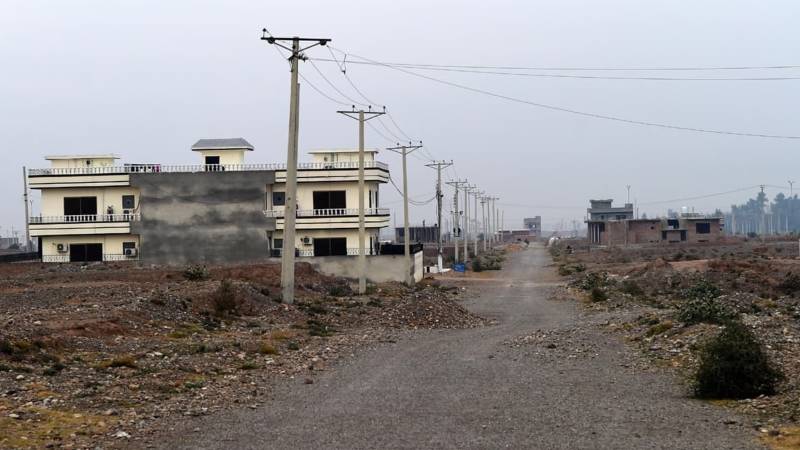
Three decades have passed since thousands of citizens, including retired government employees, martyrs’ families, and middle-class Pakistanis, invested their lifelong savings into the Regi Model Town (RMT) project in Peshawar. The project, initiated under the Peshawar Development Authority (PDA), was announced as one of the most ambitious housing schemes in Khyber Pakhtunkhwa’s history, a model residential city spanning five large zones over 4,620 acres of land. The promise was simple yet profound: a secure, well-planned home for those who had served the country with dedication and those who did not have homes in the provincial capital. But today, 30 years later, that promise lies in ruins.
According to official records, over 16,000 allottees paid for their plots between 1991 and 1994, believing that the government-backed project would ensure timely development and possession. Many have since passed away, leaving their heirs with files, receipts, and shattered hopes. The land earmarked for the housing scheme belongs to the Koki Khel tribe, an indigenous community from the tribal belt who claim that the PDA never paid them the due compensation for Zones 1, 2, and 5. As a result, they have refused to hand over the land, leading to a deadlock that has paralysed the project for decades.
The PDA’s inefficiency and bureaucratic confusion have only deepened the crisis. While the authority claims to have paid the compensation to the political administration in the past, the Koki Khel elders assert that the payments never reached them. There is no transparent record, no independent verification, and no accountability. The matter has been dragged through endless meetings, committees, and correspondence, but without any tangible outcome. The result is that the allottees, ordinary citizens who followed the rules and placed their trust in the system, are still waiting for possession of their land, while the original owners are still waiting for justice.
Over the years, successive governments have made promises to resolve the dispute, but none have demonstrated the political will to act decisively. From the ANP government (2008–2013) to the PTI administrations in KP (2013–to date), every leadership has used Regi Model Town as a talking point, not a priority.
It is estimated that around Rs. 10 billion has been collected from allottees over the years, yet the return on that investment is invisible
The PDA itself, burdened with inefficiency, internal corruption, and lack of coordination with the tribal administration, has lost credibility. A housing project that could have become the pride of Peshawar is now a symbol of institutional decay.
It is estimated that around Rs. 10 billion has been collected from allottees over the years, yet the return on that investment is invisible. Streets, sewage systems, parks, and basic infrastructure were never developed. Meanwhile, prices of plots have fluctuated artificially due to speculation and false promises. The land dispute with Koki Khel remains unresolved, leaving Zones 1, 2, and 5 under perpetual freeze, while only partial development has occurred in Zones 3 and 4.
The tragedy runs deeper than economics. Many of the allottees were widows of martyrs, retired teachers, low-grade civil servants, and pensioners who invested their savings with trust in a public institution. Some of them are no longer alive to see justice; others are living in rented houses, clutching the documents that represent their lost dreams. Every visit to the PDA office ends with disappointment, and every assurance fades into silence.
The Koki Khel tribe, on the other hand, is justified in demanding what is rightfully theirs. Their land was taken under the promise of compensation, a promise that remains unfulfilled even after decades. They have repeatedly called for direct engagement with the government to resolve the issue, but have been met with red tape and bureaucratic arrogance. Their grievance is legitimate, yet it is being used as an excuse by the PDA to mask its inefficiency.
This deadlock is not merely an administrative issue — it is a reflection of a deeper national ailment. Our governance system has become paralysed, hollow, and indifferent to justice. Projects like Regi Model Town expose the moral bankruptcy of public institutions that fail to deliver on their most basic commitments. Where merit and accountability are absent, and where deceit and manipulation thrive, the system cannot produce justice.
It is time for the government to take a step forward with sincerity. A joint commission must be established, consisting of representatives from the Koki Khel tribe, the allottees, and the provincial authorities, under the supervision of the judiciary. Immediate steps should be taken to audit the compensation payments, verify land records, and ensure transparent settlement.
If the government continues to delay justice, the allottees have no choice but to raise their voices collectively. They are preparing to launch peaceful protests, sit-ins, and even hunger strikes in front of the KP Assembly and PDA headquarters. Their demand is not revolutionary; it is simply the right to what they have already paid for. If thirty years of patience cannot move the system, perhaps the sight of senior citizens and widows holding placards will shake the conscience of those in power.
The fate of Regi Model Town has become a test of the state’s credibility. It is not just a housing issue, it is a mirror reflecting how deeply corruption, negligence, and moral decay have penetrated our institutions. The people are no longer asking for charity; they are asking for justice, transparency, and dignity. And if that justice does not come soon, the storm of public outrage will not remain silent any more.