

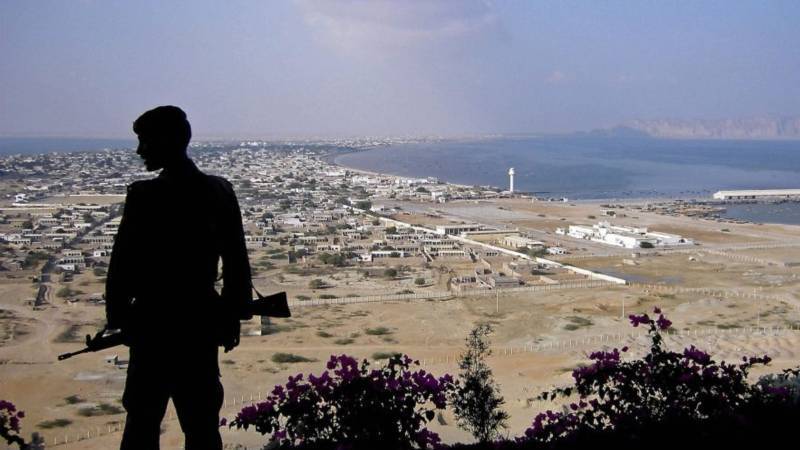
Balochistan, the largest province of Pakistan in terms of geographical coverage, covers 44% of Pakistan's landmass and has strategic significance in the region. The province is rich in natural resources but poor in human development indicators, with a 40% poverty rate and a 42% literacy rate, making it the least developed province of Pakistan. Insurgencies, militancy, terrorism, and systematic political marginalisation have continued to mar the economic growth of the province. While the economic and social development indicators are low, the sense of deprivation and alienation is high.
The potential of natural resources has hardly been utilised due to attacks by foreign-sponsored terrorist outfits, creating a vulnerable security situation in the province. People of the province have barely benefited from the precious minerals and natural gas. Natural gas was discovered at the Sui gas field in Balochistan's Dera Bugti district in 1952. Lahore and Karachi were the first cities to receive the supply in the mid and late 1950s.
Ironically, Quetta, the capital city of Balochistan, received gas supply as late as 1970, while only 14 towns of Balochistan received gas supply after the lapse of six decades. Even Sui Town, which is only four miles from the gas discovery site, could not get a gas supply. Just recently, Balochistan Chief Minister Mir Sarfraz Bugti inaugurated key gas supply projects in Sui Town in March this year to resolve long-standing issues faced by the local population.
Some militant and terrorist outfits with foreign support are involved in terrorist attacks in Balochistan. On May 24, a suicide car bomb attack on a train carrying soldiers in Quetta left at least 24 people martyred and more than 50 wounded. An outlawed Baloch separatist group claimed responsibility for the attack. Such attacks are aimed at creating chaos and terror and derailing the development process. Even some vulnerable young women were brainwashed into carrying out suicide terrorist attacks; some of them surrendered before they could inflict damage on civilians and law enforcement personnel.
On one hand, India-sponsored terrorism in Balochistan is a major challenge for the provincial and federal governments and law enforcement agencies. On the other hand, historically, non-political unelected regimes mishandled and mismanaged long-standing political and economic issues in Balochistan, which further created distrust among the people of the province. During General Pervez Musharraf's period, human rights violations, political victimisation, and marginalisation deepened. The worst that could have happened to fuel the already precarious situation was the killing of veteran political leader Akbar Khan Bugti in August 2006.
In 2009, President Asif Ali Zardari, during his first tenure, introduced the specialised package “Aghaz-e-Haqooq-e-Balochistan”, which included political reforms and economic development initiatives for Balochistan
Then came the elected government of the Pakistan Peoples Party (PPP) in 2008. Although the party and the people were reeling from the devastating loss of Mohtarma Benazir Bhutto, the PPP-led federal government initiated historic political and fiscal agreements and reforms in Balochistan to alleviate the long-standing grievances of its people.
The historic 18th Amendment in 2010 granted Balochistan, along with the other provinces, significant ownership rights over its natural resources. The 18th Amendment is still an unfinished agenda, which must be implemented in letter and spirit.
In this article, I will attempt to take the reader through various significant and landmark initiatives and constitutional amendments introduced during different tenures of the Pakistan Peoples Party.
The 7th National Finance Commission (NFC) Award was a landmark fiscal agreement for the provinces, announced by the PPP-led federal government in 2010. The historic agreement changed the formula from a population-based criterion to a multiple-indicator formula incorporating poverty, backwardness, and other key criteria to benefit Balochistan. It raised the province's share of the federal divisible pool from 5.11% to 9.09%.
In 2009, President Asif Ali Zardari, during his first tenure, introduced the specialised package “Aghaz-e-Haqooq-e-Balochistan”, which included political reforms and economic development initiatives for Balochistan. The PPP government initiated political dialogue with estranged Baloch political stakeholders who believed in the political process and the Constitution of Pakistan.
Detained political workers were released, and the return of exiled political workers was facilitated. The provincial government of Balochistan was handed control over check-posts in non-border areas and local broadcasting infrastructure. All this was done to promote mutual trust and bring the people and politicians of Balochistan back into democratic and parliamentary politics.
Generally, the Sardari system was blamed for keeping Balochistan backwards and for being a source of oppression for residents. If we go back to the political history of Pakistan, Prime Minister Zulfikar Ali Bhutto officially abolished the centuries-old Sardari system in Balochistan on 8 April 1976 through the System of Sardari (Abolition) Act, 1976. Bhutto formally announced the historic decision during a massive public gathering in Quetta at the end of a 14-day tour of Balochistan. He also abolished “Shishak”. Under the Shishak system, peasants were required to give one-sixth of their crop or newly born cattle to feudal lords. According to the law, those who used the old feudal titles in future would face punishment.
He also tried to raise political consciousness among the poor masses. In his address to the people of Balochistan, he stated: “When the roots of an exploitative system and anti-people are shaken, the spirit of revolution is born. When the status quo is challenged, the vested interests summon the power of the past in an effort to maintain their existence. To achieve freedom for the people, to break their shackles, to end their exploitation, we have also called upon the women of Baluchistan to come forward and work and take part in this struggle.”
The rich reserves of natural resources must be utilised for the development of the people of Balochistan, and the people should have the first and foremost right over their natural resources
He further stated that “until 1970, the budget allocations of the Province were equivalent to the allocation to one Division, say Sargodha, only about 20 million.”
Zulfikar Ali Bhutto made efforts to bring Balochistan into the mainstream development fold. During his tenure, eleven colleges were opened within four years in Balochistan, including the University of Balochistan in 1974. Hospitals were built, roads were constructed to connect remote and isolated regions such as the Bugti, Jhalawan, and Sarawan areas with the rest of the country, and water resources were developed. Balochistan Textile Mills was established to create jobs for local people and boost commercial activity. A network of primary healthcare facilities, including Rural Health Centres and Basic Health Units, was established across Balochistan.
Shaheed Mohtarma Benazir Bhutto, during her tenure, reopened Balochistan Textile Mills, which had been closed down in 1983. She tried to secure employment for 5,000 workers. As Prime Minister, her focus was on the promotion of female education, healthcare, and the electrification of remote districts in Balochistan.
Carrying forward the political and democratic legacy of Shaheed Zulfikar Ali Bhutto and Shaheed Benazir Bhutto, PPP Chairman Bilawal Bhutto Zardari has also given priority to the development of Balochistan through the PPP-led provincial government in the province. Bilawal Bhutto Zardari inaugurated eleven public welfare and healthcare projects in Balochistan in May this year. These initiatives would provide modern, free, and quality healthcare through people-centred services while increasing accessibility to basic services in Balochistan. Addressing the launching ceremony in Quetta, Bilawal Bhutto Zardari said that healthcare is a basic right of every citizen and not a privilege, calling free and quality medical treatment a core PPP commitment.
The landmark initiatives included the province’s first People's Air Ambulance and Benazir Ambulance Service, as well as a modern 150-bed trauma centre in Quetta, advanced women and child healthcare at Bacha Khan Memorial Hospital, and expanded child emergency care under the ChildLife Emergency Services programme. The initiatives also included the restoration of 164 Basic Health Units, a new health insurance programme for government employees, an immunisation system, and tuberculosis treatment centres across 10 district hospitals.
The Balochistan government has made significant progress in the digitalisation of the Health Department and in improving the supply chain for essential medicines and medical equipment. A significant improvement has also been achieved in routine immunisation coverage in Quetta, reaching 50%. The Balochistan government has completed the solarisation of 27,000 agricultural tube wells in 2025 to support farmers and promote sustainable agriculture.
Balochistan needs sustainable and inclusive political and economic reforms with meaningful participation and representation of its people. The key challenges in Balochistan cannot be resolved within a short span of time; they require concerted and continued efforts from all stakeholders. Genuine political representatives and voices must not only be heard, but their mandate should be honoured, and they should be made primary stakeholders rather than mere silent recipients. The federal government should also play its due constitutional role in providing support to the provincial government in bringing fundamental reforms across all key sectors.
The rich reserves of natural resources must be utilised for the development of the people of Balochistan, and the people should have the first and foremost right over their natural resources. Balochistan has the potential to become an industrial hub and can create thousands of employment opportunities for the local population. Through sustainable growth, people-centred economic development, and political stability, terrorism and militancy can be eliminated in Balochistan.