


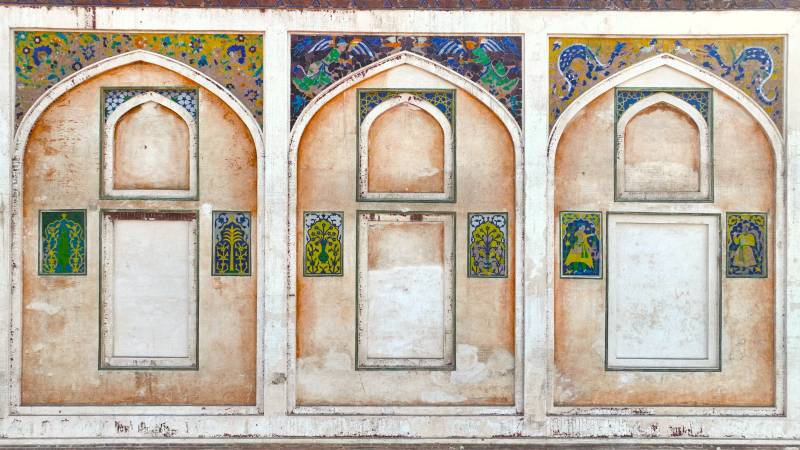
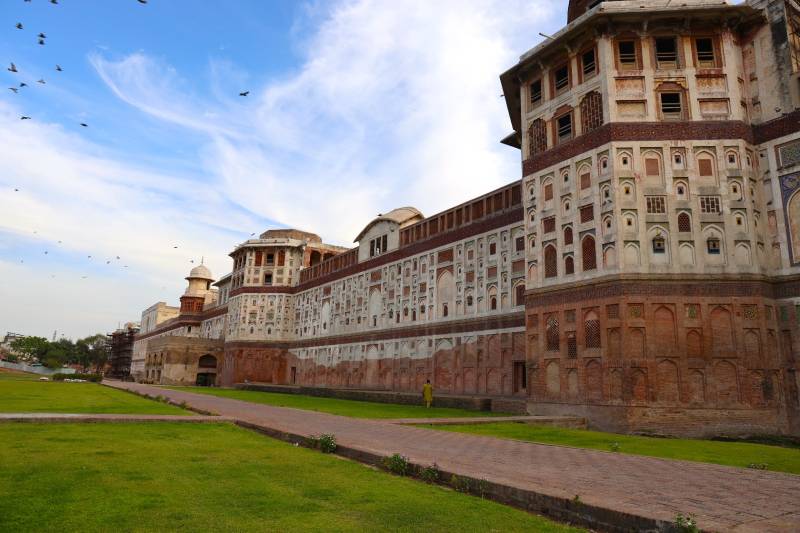
In 2015, the Aga Khan Trust for Culture, in partnership with the Walled City of Lahore Authority, decided to initiate the conservation work in Lahore Fort with the most glorious component of the Fort complex. The Picture Wall, considered as the largest mural in the world, stretches across 480 meters with an average height of 21 meters, surrounding the western, northern and north-eastern side of the Fort. It is an exemplary monument as, unlike other Mughal era buildings, it contains a complete variety of all the architectural craftwork used in the Mughal period. This includes tile mosaic work (kashi kari), fresco (naqqashi), brick imitation work (tazakari), stalactite work (qalib kari) cut and dressed brick work and stone lattice work. It is no surprise that this mural is mainly responsible for the UNESCO World Heritage status of Lahore Fort.
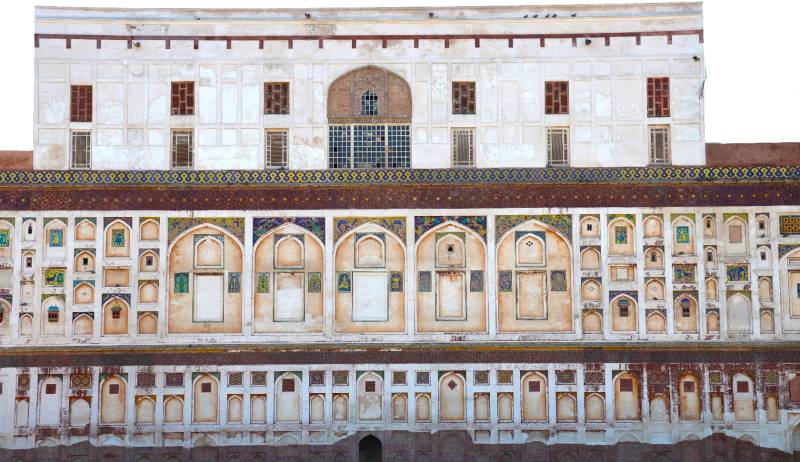
In fact, the Picture Wall’s exceptionality lies in its tile mosaic work, showcasing not only floral and geometric patterns, but also narrative scenes including animal fights, hunting and battle scenes, mythological creatures and even portraits. This enormous display of narrative scenes from the Mughal court make the Picture Wall an unprecedented fortification wall, the equivalent of which exists nowhere in the entire subcontinent or the rest of the world.
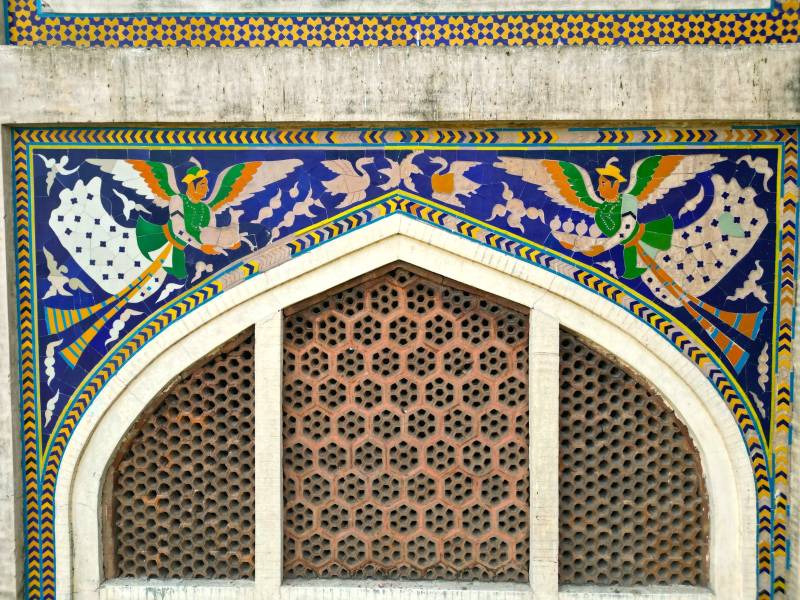
The Picture Wall is also a perfect example of the diversity and pluralism found in Mughal culture where Persian, Central Asian, European and South Asian elements are synthesised to produce artistic excellence.
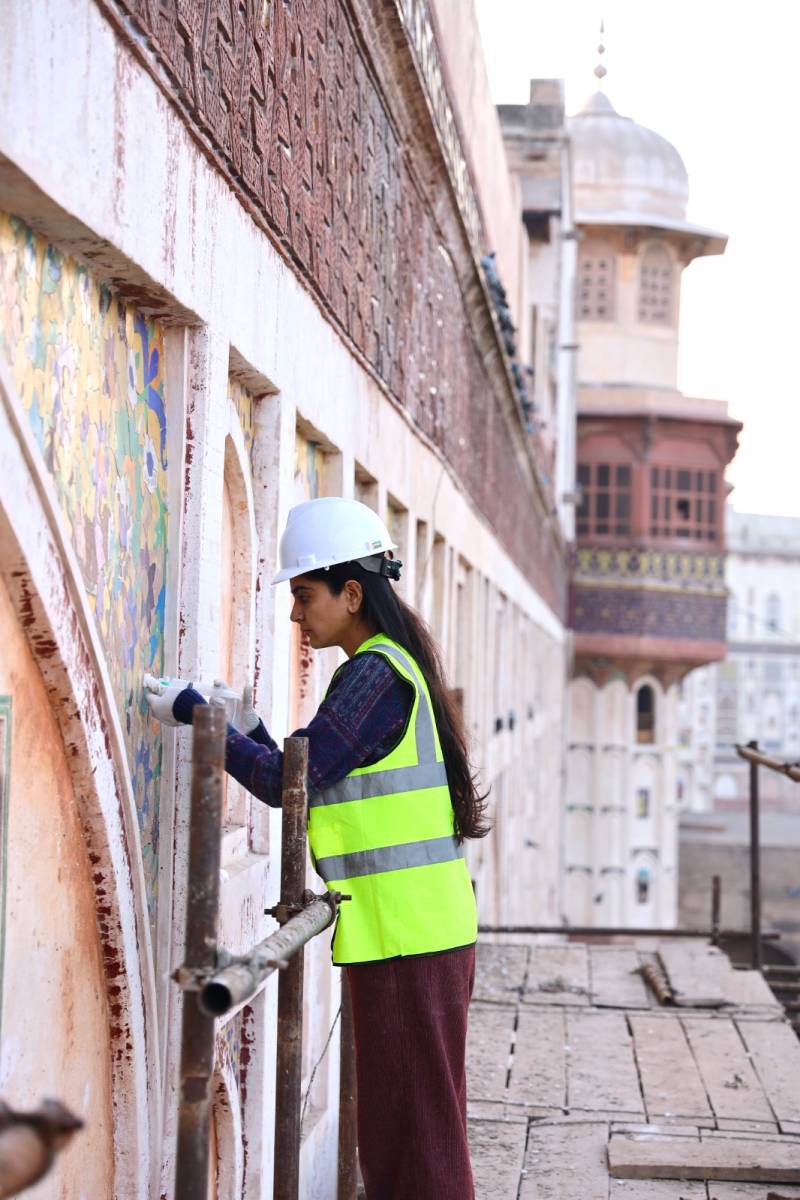
In order to do justice to this monument, a similar synergy was required for the conservation work. In this case, local and international experts, conservators and craftsmen worked together to ensure that the project sets an example of best practice in conservation at par with both local and international standards.
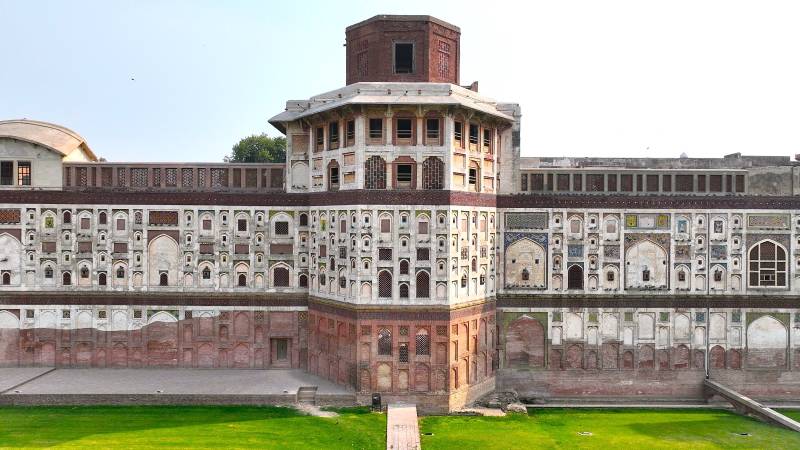
The Picture Wall is a perfect example of the diversity and pluralism found in Mughal culture where Persian, Central Asian, European and South Asian elements are synthesised to produce artistic excellence
The journey began in 2015 where digital documentation of the wall was undertaken to produce ortho-rectified drawings of the entire mural to record its as found condition. This was followed by the selection of an 11 meter wide proto-type area on the Western façade of the wall, to establish a conservation methodology that could be applied to the entire wall. From 2017-2018, intensive scientific analysis and material research was conducted. This was combined with meticulous experimentation for conservation procedures both on-site and in the laboratory. In this way, the proto-type area successfully laid the foundation of the conservation techniques and the general philosophy and approach for the project.
The emphasis on scientific analysis and minimal intervention makes this conservation project unique from others in the country. In Pakistan, conservation usually means reconstruction, where the deteriorating historic work is replaced by new construction. Instead, the conservation of the Picture Wall has focused on preserving the historic fabric of the wall to maintain the authenticity of the monument. This inevitably required a deep scientific understanding of the decorative elements in order to understand the deterioration and its solutions. This painstaking process led to innovative techniques, particularly for the conservation of tile work.
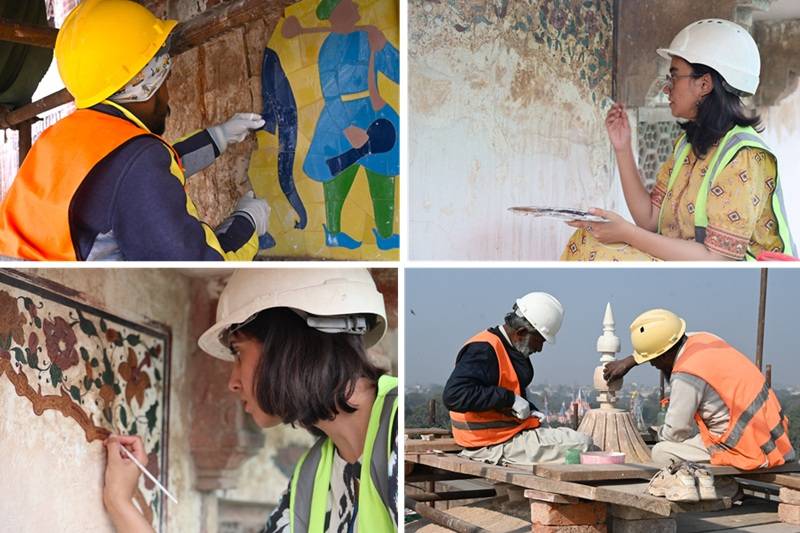
Moreover, following the norm of reconstruction, the field of conservation in Pakistan has always involved architects, engineers and craftsmen only. The conservation of the Picture Wall required a diverse team of not only architects and engineers but also conservation scientists, surface conservators and ceramists. The professional fields of conservation science and surface conservation are not very developed in the country. This means that this project created the first generation of conservation scientists and surface conservators in Pakistan who were trained on-site to preserve the craftwork. Around 30 conservators, mostly women, holding degrees in relevant fields like fine arts, ceramics or chemistry were trained in the course of 9 years.
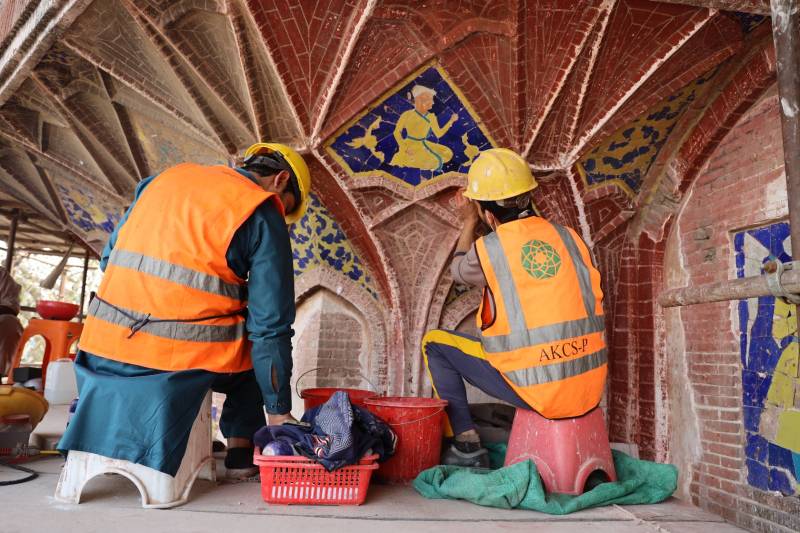
The purpose of the conservation of this wall was not only to preserve it but also to create skills that can be used for the future of conservation practice. This means that capacity building was essential, not only for training conservators but also for the craftsmen. Traditional hereditary crafts no longer hold the same value in modern society and as a result, there is a lack of skilled craftsmen especially among the young generation. Since this project ensured that along with the preservation of the artwork, reconstruction is carried out following minimal and clear guidelines, it allowed for the training of almost a 100 craftsmen in the art of kashi kari, plaster work, stone lattice work and stalactite work.
In addition, around 40 young men and women from the historic neighbourhood the Walled City of Lahore who did not hold formal degrees were employed on a wage basis and trained in the techniques of surface conservation. Wajahat Ali is Director of Conservation and Design at the Aga Khan Cultural Service - Pakistan, and presided over the project. He emphasises this point: “While the project has a clear physical outcome in terms of restoration, its equally important result has been the development of a young conservators now trained with a strong focus on preservation values. This aspect has been especially rewarding and, in many ways, more satisfying than the physical work itself.”
The massive scale of this wall has allowed for immense opportunities and skill development for the youth of the country. This was made possible by the generous funding of the Norwegian, French and German Embassies, the US Consulate, Aga Khan Trust for Culture and the Government of Punjab, contributing to a total of 1.9 million USD. This significant financial investment is expected to generate substantial revenue in the years ahead by boosting local and internation tourism. In the past two years, since the project has been highlighted, the number of tourists in Lahore Fort has already increased from 5 million to over 5.32 million.
Covered in grime, bio growth and dust, the picture wall stood ignored by visitors for almost a century. The team is proud to have revived the glory of this monument to be witnessed by future generations. The completion of the conservation of this wall is a historic moment for the entire nation.