

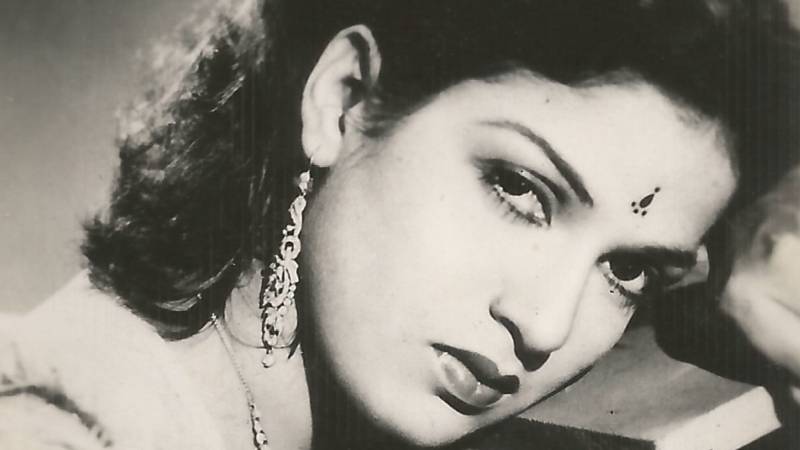
It was a period when India was under British rule. Lahore, in united India, was the centre of intellectual, literary, and cultural life. In its streets and neighbourhoods, Muslims, Hindus, Sikhs, and others lived side by side. Horse-drawn tongas moved along its roads, while motor cars were a rarity. Within the city, the bicycle was the main mode of transportation. On Lahore’s Mall Road, it was common to see girls riding bicycles. Many could be seen pedalling gracefully through the city streets. Among them was a lively girl, Uma, playful and spirited. She was the daughter of Professor Shiv Kumar Kashyap, a distinguished Professor of Botany at Government College, who had discovered new plant species and whose research brought him fame both at home and abroad.
Professor Kashyap had two sons and three daughters. Their home fostered an atmosphere of learning and curiosity. The children were free to choose their own paths in life. Their father always advised them to view life with their own eyes, to examine and understand it for themselves, to raise their own questions, and to seek their answers. Uma’s mother, though not highly educated, possessed the wisdom of experience. The house was surrounded by plants, trees, and flowers. Uma often marvelled at how her mother, despite her limited education, knew the names of every single tree and shrub.
Their house was spacious, with a beautiful lawn bordered by tall eucalyptus trees, followed by a hedge of citrus bushes, bright with bougainvillaea blossoms, and then neat beds of flowers in many hues. Life, in all its fullness and beauty, smiled upon them. Uma lived with her parents and siblings in this paradise of a home. She believed such dream-like days would last forever. But every dream ends someday.
Uma was only seven when her father, Professor Kashyap, passed away. It felt to her as if the shade of a sheltering tree had suddenly vanished in the burning noonday sun. Her elder brother stepped forward to hold the family together. He wiped the tears from Uma’s eyes and gave her the courage to walk again on the road of life. In his affection and guidance, Uma saw the reflection of her father—the same warmth, the same love, the same counsel: find your own destination, carve your own path. Encouraged by him, Uma gathered new strength and once again turned towards life.
Uma took a leave from college to act, having already performed Shakespeare on stage and plays on the radio, but since Anand’s wife was also named Uma, she adopted the screen name “Kamini Kaushal”
After completing her education, Uma joined Kinnaird College to pursue her B.A. (Honours) in English. Kinnaird, in united India, held a special place among women’s institutions for its standards and its atmosphere. Uma rode her bicycle daily from home to college. She had inherited confidence from her father and her brother. At Kinnaird, she took part in plays, danced, played badminton, and swam. At home, she kept many pets. From a young age, she also acted in plays for All India Radio. Drama fascinated her. She acted in Imtiaz Ali Taj’s Anarkali and performed in plays with Rafi Peer as well. Even in her teens, she had tasted the many colours of life.
Once, the famous actor Ashok Kumar visited Kinnaird College during World War II, when the students were raising funds for the War Relief. Ashok Kumar was invited as the chief guest. That day, Uma mischievously tugged at his hair from behind his chair. As he turned around, the hall rang with the laughter of girls. Little did Uma know that fate would bring her face-to-face with Ashok Kumar again, in a very different setting. That day she also performed a solo dance on stage.
Uma loved watching English films. Her favourite actress was America’s Shirley Temple, introduced first as a child star and later as a leading lady. Shirley was not only a fine actress but also a gifted singer, and would go on to serve as U.S. ambassador in Ghana and Czechoslovakia. One day, Uma told her brother she wanted to read Shirley’s book. He laughed and said, “Why don’t you become a Shirley yourself?” His words struck her heart. Then he added, “We’ll make a film at home, and you will be the heroine.” Uma laughed and agreed. He wrote a story titled The Tragedy, though in truth it turned out to be a comedy. With his camera, he filmed it at home, and in this playful experiment, Uma unknowingly took her first step towards a new journey.
Around that time, Chetan Anand, elder brother of Dev Anand, was already an important producer, director, and screenwriter. A friend of Uma’s brother, he knew Uma well and her love for acting. One day, he told her he was making a new film and wanted her in the lead role. Uma laughed it off, but he spoke to her brother, who persuaded her. She was then eighteen, still a student of English Honours at Kinnaird. It was the time of World War II, and the demand for India’s independence was growing. Yet life continued.
Chetan Anand began work on Neecha Nagar. Uma took a leave from college to act, having already performed Shakespeare on stage and plays on the radio, but since Anand’s wife was also named Uma, she adopted the screen name “Kamini Kaushal.” Uma herself wanted a name beginning with “K,” in honour of her sister’s little daughters, Kum Kum and Kavita. Thus, Uma became Kamini Kaushal. (To be continued)