

Monsters are not born; they are made. This is not just a literary phrase or a philosophical metaphor, but a reality visible across history, politics, and everyday life. When people commit shocking acts of violence, society is quick to brand them as “monsters.” Yet a deeper look reveals something far more troubling: individuals rarely create themselves in isolation. They are products of the societies, systems, and states that surround them.
The recent case of Taylor Ribson illustrates this point. His violent attack on a political opponent was not simply the deed of a disturbed man. It reflected the fault lines of a divided nation. In a society where Republicans and Democrats are increasingly cast as mortal enemies, political identity has become a battlefield. Ribson grew up in this climate of hostility, where leaders thrive on division and young people absorb an atmosphere of fear and resentment. His violence was a symptom of this larger disease—the polarisation and fragmentation of the state itself.
Philosophers have long debated whether evil lies in human nature or in human structures. Thomas Hobbes saw mankind as selfish and dangerous without strong authority to impose order. Jean-Jacques Rousseau disagreed, arguing that human beings are born innocent but corrupted by society: “Man is born free, and everywhere he is in chains.” Karl Marx advanced the critique further, exposing capitalism as a system that breeds exploitation, inequality, and desperation. In his view, crime often arises not from choice but from the pressures of economic injustice. Friedrich Nietzsche, for his part, warned of cycles of cruelty: “Whoever fights monsters should see to it that in the process he does not become a monster.”
All of these insights echo in Ribson’s story. His anger, frustration, and political hatred were not innate qualities but reflections of the environment around him. In a country marked by unemployment, economic divides, and partisan hostility, young people like Ribson find themselves pulled towards destructive paths. The individual act may shock us, but the conditions that made it possible are collective.
The making of monsters is not the work of the individual alone; it is the outcome of structures, ideologies, and inequalities sustained by the state and society
The beginnings of this process are often subtle. A child who steals out of need is not a criminal; he is a human being responding to deprivation. Yet society frequently punishes rather than understands, labels rather than nurtures. The scar of humiliation becomes deeper than the act itself. Over time, rejection and exclusion harden into bitterness, and bitterness into aggression. It is this silent shaping of identity, through poverty, neglect, and judgment, that slowly creates the conditions for monstrosity.
When humiliation becomes unbearable, people seek compensation through power. Sometimes that power is expressed in crime, sometimes in political extremism, and sometimes in violence. Ribson’s choice to act violently against an opponent was not the spontaneous creation of evil, but the outcome of long-standing frustrations magnified by political division. His act of killing was not only his own—it was the reflection of a divided state, a fractured society, and the systemic failure to offer its youth belonging and purpose.
History confirms this pattern. Adolf Hitler’s rise from an embittered soldier to a destructive dictator was inseparable from Germany’s humiliation after the First World War and its economic collapse. Revolutionaries once denounced as criminals later became national heroes because their violence was rooted in systemic injustice. Even today, children forced into gangs or militias across the world are not “evil” by nature; they are casualties of poverty, displacement, and neglect. Hannah Arendt, writing on the banality of evil, observed that “the sad truth is that most evil is done by people who never make up their minds to be good or evil.” In other words, ordinary lives, bent under extraordinary pressures, are what give rise to extraordinary violence.
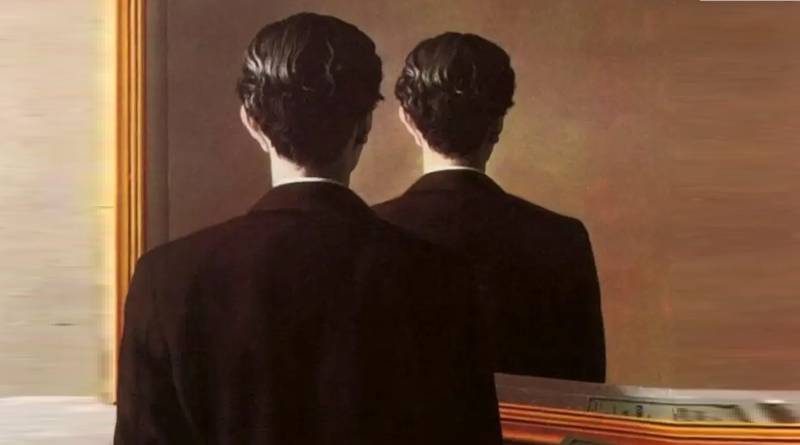
This brings us to the central conclusion. If we insist on calling Ribson a monster, then we must also admit that he is not alone in his monstrosity. He is a mirror reflecting the divisions, inequalities, and failures of his society. Political leaders who profit from division, economic systems that entrench poverty, and states that fail to protect dignity all share responsibility for creating the conditions that breed violence.
The making of monsters is not the work of the individual alone; it is the outcome of structures, ideologies, and inequalities sustained by the state and society. To condemn the individual while ignoring the forces that shaped him is to misunderstand the problem entirely. If we wish to prevent future tragedies, punishment is not enough. We must address the deeper causes—poverty, unemployment, inequality, and political hostility—through which societies silently manufacture the monsters they later disown.
Taylor Ribson’s act was not the crime of one man in isolation; it was the indictment of an entire system. The responsibility for monstrosity lies less in the individual and more in the society and state that allowed, even encouraged, his transformation. Until we accept this truth, we will continue to produce monsters in the shadows of our own neglect and continue to act surprised when they appear.