

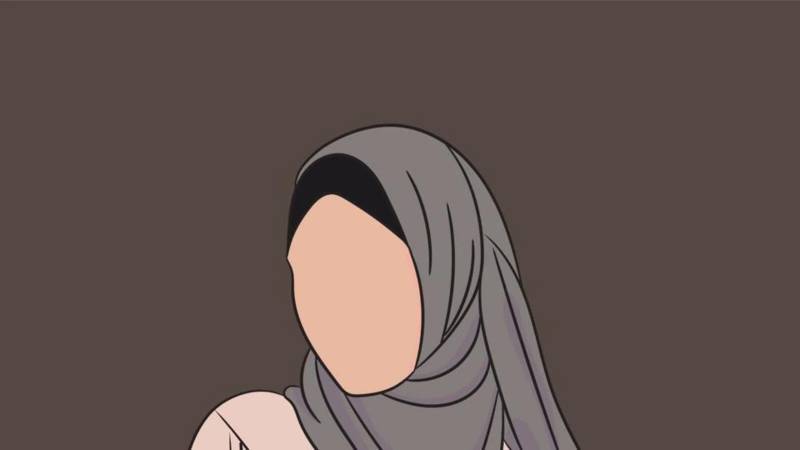
In today’s global landscape, the hijab stands as a potent symbol—a headscarf worn by Muslim women from Western cities to Middle Eastern capitals, its presence shaped by faith, culture, and, above all, the forceful currents of modern political history. While the Qur’an champions modesty as a timeless virtue, the modern hijab, as a standardised garment, is not a divine mandate etched in stone but a cultural practice, deeply rooted in Islamic tradition yet remade by male-led political regimes and global events. Since the late 20th century, state decrees, revolutionary ideologies, and identity politics have transformed the hijab into a political lightning rod—often wielded to control women’s bodies and assert ideological dominance—overshadowing its earlier, more fluid expressions.
The Qur’an’s call for modesty is poetic, not prescriptive. In Sūrah An-Nūr (24:31), women are advised to “draw their khimār over their bosoms,” and in Sūrah al-Aḥzāb (33:59), to “draw their jilbāb close around them.” In seventh-century Arabia, the khimār was a versatile shawl, used to cover the hair or chest in public or to shield against cold nights, its form unbound by rigid rules. Early Muslim women—Khadīja, the Prophet’s entrepreneurial wife; Aisha, a scholar of hadith; and Medina’s Ansar women, who supported the nascent community—adapted the khimār to their lives. It might drape loosely at home or veil the hair in markets or during hajj, free from state-enforced uniformity.
As Islam expanded, it absorbed diverse veiling traditions. Persian Sassanid noblewomen veiled their faces; Byzantine Christians wore scarves in church; Egyptian peasants wrapped linen against the sun. Under the Umayyads and Abbasids, these practices merged with Qur’anic modesty. In 9th-century Baghdad, elite women wore silk veils akin to a modern niqāb, while rural Khorasan women donned simple scarves. Scholars like al-Ghazzālī (d. 1111) and Ibn Ḥajar (d. 1449) prioritised modesty as humility before God, allowing varied coverings that preserved dignity.
Ottoman dress reflected this diversity. In 18th-century Istanbul, Armenian, Greek, and Muslim women wore ornate headpieces as markers of class and community, not just faith. Elite black overgarments, resembling today’s chador, varied by era. The hijab’s fluidity persisted until colonialism disrupted it in the 19th century. French authorities in Algeria banned face-veiling, branding it barbaric. In British India, purdah was debated as oppression or tradition. Reformers like Egypt’s Qāsim Amin linked unveiling to progress, but for many women, discarding the khimār under colonial orders symbolised cultural erasure—recasting the veil as anti-colonial resistance.
The hijab is no seventh-century relic or divine mandate, but a dynamic symbol—its modern spread driven by political regimes and global crises
The hijab’s transformation into a political tool accelerated in the 20th century, driven by male-led regimes and global upheavals. In Turkey, Mustafa Kemal Atatürk’s 1920s–1930s reforms discouraged headscarves to align with Western secularism, with formal bans in universities and government buildings solidifying by the 1980s. These restrictions empowered unveiled women in public life but fuelled resentment among devout communities. By the 1980s, Turkish students reclaimed the hijab, asserting that modesty complemented modern citizenship—challenging state secularism.
The 1979 Islamic Revolution in Iran marked a seismic shift, thrusting the hijab into the global spotlight as a state-enforced emblem. Iran’s male leaders, under Ayatollah Khomeini, mandated that all women—citizens and visitors—cover their hair and bodies, with morality patrols arresting those deemed immodest. The hijab became a pillar of the Islamic Republic’s legitimacy, its global broadcast via media inspiring Islamist movements like Egypt’s Muslim Brotherhood and Pakistan’s Jamaat-e-Islami to promote standardised black hijabs as symbols of political Islam. By the 1980s, hijab-wearing surged in countries like Egypt, where women faced social pressure to conform, according to a 1990s study by sociologist Leila Ahmed.
In Saudi Arabia, pre-2018 Wahhabi doctrine, enforced by male authorities, mandated abayas and headscarves under strict guardianship laws, limiting women’s autonomy. The Committee for the Promotion of Virtue arrested women for non-compliance, as documented in 2017 Amnesty International reports, until reforms under Crown Prince Mohammed bin Salman relaxed dress codes. Similarly, the Taliban’s 1996–2001 and post-2021 regimes in Afghanistan imposed the burqa, punishing violations with violence, as reported by Human Rights Watch (2022). These regimes wielded the hijab to suppress women under the guise of faith, aligning it with patriarchal control rather than personal conviction.
The post-9/11 era further amplified the hijab’s spread, as Muslim women globally embraced it to counter rampant Islamophobia. In the U.S., a 2007 Pew Research study noted a surge in hijab-wearing among American Muslims post-2001, reflecting heightened religious observance amid scrutiny from laws like the Patriot Act. In Europe, women in London, Paris, and Berlin donned the hijab to defy stereotypes, despite restrictive laws—France’s 2004 ban on religious symbols in schools and 2010 niqāb prohibition sparked debates over secularism versus religious liberty. In Indonesia, the world’s largest Muslim-majority country, hijab adoption grew post-9/11, with a 2010s survey by the Pew Forum showing increased observance among urban women, driven by identity politics and global Islamic revivalism.
Male-led regimes have consistently exploited the hijab for political gain. In Iran, Saudi Arabia, and Afghanistan, men enforced it to signal ideological purity, while movements like the Muslim Brotherhood framed it as a marker of Islamic governance—often sidelining women’s agency. Yet women have also reclaimed the hijab—from Tehran’s streets, where protests against mandatory veiling erupted in 2017 (e.g., Vida Movahed’s iconic scarf-waving), to Western campuses, where it symbolises resistance to cultural assimilation.
The Qur’an’s call for modesty—expressed in images of cloaks, lowered gazes, and dignity—offers no fixed design. In the fourteen centuries before modern states, no caliph made the khimār a political tool. Today, a woman adjusting her hijab inherits a layered history: the shawls of the Prophet’s household, Abbasid silk veils, colonial bans, Tehran’s revolutionary mandates, Taliban and Saudi oppression, and post-9/11 defiance. The hijab is no seventh-century relic or divine mandate, but a dynamic symbol—its modern spread driven by political regimes and global crises. Rooted in Qur’anic ideals yet remade by male-driven agendas, empire, and revolution, it carries fourteen hundred years of change—a simple cloth embodying personal conviction, collective struggle, and the weight of history.