

Roman Herzog was the President of Germany in the mid-1990s and, as the first destination of his out-of-area visits, chose Pakistan. The hosts proposed the Institute of Strategic Studies as the venue for his public talk, but he preferred the National Library because the strategic connection sounded too militaristic. Granted, some of the best and most devious minds in this field—Machiavelli and Chanakya—never wore a uniform, but it’s true that defence thinkers have dominated the evolution of strategic thought. One of our former army chiefs, when elucidating perfectly sound depth and defiance aspects of strategy, was mocked—because after shedding their immunity, all of them are.
The irony of strategy is that the inventor of the most practised model in history is a relatively unknown figure. André Beaufre, a French general and strategist, developed the concept of Piecemeal Strategy: take down only a bit of your target, not to alarm the next enemy—and then restart after a decent pause. Death by a thousand cuts was its primitive form, effectively used by smaller states and private militias. According to Liddell Hart, one of the best military historians, Britain eliminated its rivals with the help of a few willing allies, then dispensed the same treatment to them—one at a time. Like all things British, this concept was given a politically correct name: The Balance of Power.
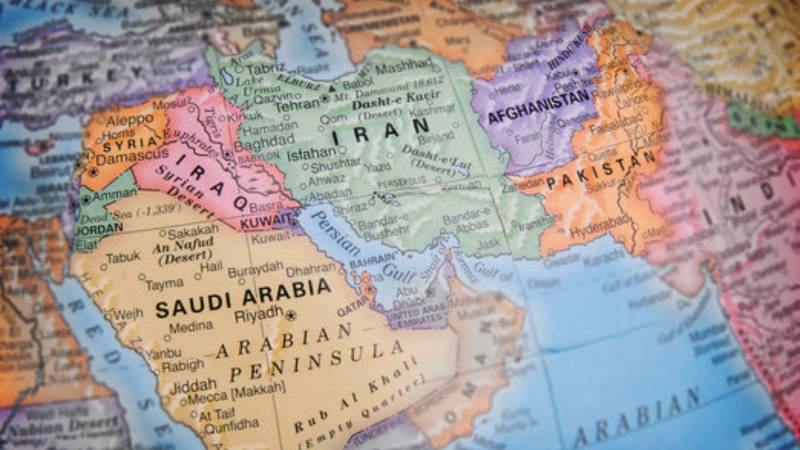
The Soviet Union took nearly a century to inch its way to the Amu Darya (the Oxus). The US and Israel have pursued this doctrine in the Middle East for a long time—and with spectacular success. The latest manoeuvres in the Levant demonstrate how nimbly it has been done.
Assad’s regime in Syria was toppled. Since it had forcefully kept the country together, its fall was considered just deserts—and even cheered. Erdoğan, the quintessential self-server, though fully aware that the fall of the Alawites was detrimental to the Palestinian struggle, supported it for some measly gains. A few eyebrows were raised, but only because the new marionette in Damascus, Ahmad al-Sharaa, had a dubious past. (Isn’t that an asset for a hitman?) In the meantime, Iran had been practically neutralised after the US jumped into the arena with all its might. The time was therefore right to give the new dispensation in Damascus the handling it deserved.
Patriotism may or may not be the last refuge of a scoundrel—national interest is the last argument of a coward
This Salami Tactics approach has been at work for a long time. Sadat was tamed; most Arab countries either crushed (Iraq under Saddam) or, like Jordan and Saudi Arabia, fiddled with their traditional systems of inheritance; and the lesser Gulf States were won over with a mix of force and persuasion.
I have some idea why a country like Iran and its sidekicks—Hezbollah and the Houthis—do not give up. In a post-9/11 conference in Munich on terrorism, when it became the world’s foremost scourge, an Israeli general said their main concern was how to counter Shiite suicide bombers—and for that, they were seeking a fatwa from Sunni clerics that taking one’s own life was against the tenets of Islam. I do not know if they got one, but Israeli efforts to woo the Sunni world have been remarkably successful.
Arabs once led the Islamic jihad. As late as the eighteenth century, their horsemanship was legend. Napoleon reportedly claimed that with French infantry and Arab cavalry, he could conquer the world. No idea what caused the former’s decline, but the Bedouins—when they dismounted from camels and horses—found the new environment out of sync with their genius.
The marvel of this technique lies in the fact that even when those next in line can see the disaster in the making, they find themselves helpless—or suffer from the illusion that they would prove to be the proverbial exception to the rule. Countries like Turkey and Pakistan are convinced of their immunity—because of NATO, nuclear weapons, or whatever other reasons.
The problem is that their unwillingness to act has to be rationalised—and that brings out the worst in them.
“We have enough on our plate, and getting embroiled in faraway disputes would not be in our national interest.”
In the rare case of anyone asking them if they would be better positioned when the threat was closer to home, the most likely response would be a shrug of the shoulders—or “Inshallah.” Leaving it to Allah is still not as bad as passing the buck—in this case—to the Arab neighbourhood or the “international community”, which, even if it exists, has amply proven that it isn’t interested—or is actually in the other camp.
“We cannot act because it would bring us on the wrong side of the mighty US”
— is one of the more honest arguments. And just in case someone brings up lesser powers who dared—and in cases like Afghanistan, even won—one would be reminded of women’s rights and the TTP; lately also of the FATF. Anything that provides an excuse, even a lame one, to postpone the day of reckoning.
Roz-e-Mehshar ko multavi kar do; ho gayi maikade mein raat mujhe (Remember Adamm!)
And God forbid if anyone were to remind them of the Divine edict to hang on to Allah’s rope—the chances that one would be hanged with the same rope are no longer abstract.
Yes, Turkey as a NATO member would be spared as long as there was a threat on the Alliance’s eastern flank. Having known the irrelevance of nuclear weapons in the demise of the Soviet Union, I find it pathetic that Pakistanis still invoke the nuclear exception. Mercifully, no one wants to find out the threshold of an atomic power—but everyone knows the space under the nuclear overhang is large and flexible.
Only the other day I heard an illustrious diplomat tabling the most egregious argument of all time:
“Pakistan can do nothing to support Iran because it’s now a member of the Security Council.”
Didn’t know if the restraint was Pakistan-specific, as many others—the P5, in fact, permanently—merrily go around doing whatever the hell suits them. I can think of no better time to leave the UN. Some other “excuses” are so frivolous that one would not even care to respond.
“Iran is the real enemy, and let’s join hands with Israel and the US to cut off the head of the snake”
— is just one. Theodor Herzl, the father of modern Zionism, once positioned Zionism as a meeting point between Christianity and Judaism in their shared stance against Islam and the Oriental barbarism. But believe it or not, I’ve heard otherwise sensible souls pontificating that we and the Jewish state could be friends.
Certainly not popular opinions, they still indicate reluctance on the part of our comfort-loving elite and pro-status quo establishment to go beyond rhetoric. That the majority of this minority comes from my old institution and from the country’s traditional martial areas has convinced me that the British found the right raw material to serve the Empire.
That the country must inevitably suffer because of extra-regional forces creeping towards us may be a strong possibility—but fighting them away from our borders, though a wiser course, we are unlikely to take—and would rather wait for our turn.
Patriotism may or may not be the last refuge of a scoundrel—national interest is the last argument of a coward.
There were times I used to compare our dilemma with that of the zebras who, instead of taking on the predators, preferred to be hunted down one by one. I think it was being too generous with our faint of heart. Zebras at least run. Our present situation is akin to a bird that has been mesmerised by the snake. When death glares it in the face, it simply waits to die.
Talking of strategists, how could one not recall Liddell Hart’s strategy of action? It needed our region to provide the antithesis.
One could be sure that the only potent antidote—regional unity—would remain a far cry. Didn’t the historians Will and Ariel Durant warn us nearly a century ago that while the West organises, the East dithers?