

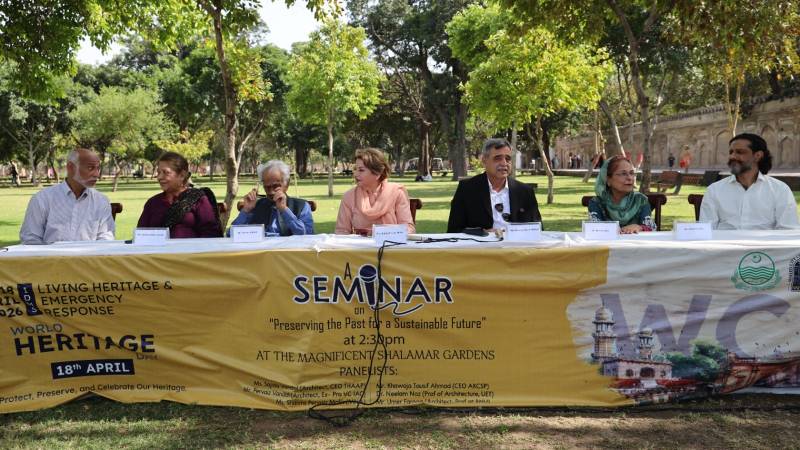
The idyllic lawns and opulent fountains of the Shalimar Gardens represent a living symbol of Mughal royalty synonymous with artistic grandeur, a vital part of Pakistan’s much-celebrated, majestic cultural heritage. An event to commemorate ‘World Heritage Day’ was held at this iconic site under a canopy of rustling leaves on a warm, breezy afternoon. Its objective was to raise awareness of the importance of heritage conservation. The seminar, themed “Preserving the Past for a Sustainable Future,” was organised by the Walled City of Lahore Authority (WCLA) and brought together a panel of distinguished professionals from academia, politics, and the NGO sector.
Stirring conversations explored the value of heritage sites to a nation’s culture and identity, as well as ways of enhancing young people’s understanding of their artistic traditions and cultivating a sense of ownership over them. They also underscored the need to integrate sustainability into conservation for the benefit of communities.
Discussions were presided over by a panel comprising Director General (DG) Walled City of Lahore Authority (WCLA), Najamus Saqib; CEO Aga Khan Cultural Service - Pakistan (AKCS-P) Tausif Khawaja, Member National Assembly (MNA), Shaista Pervaiz Malik; Professor Emeritus, University of Engineering and Technology, Lahore, Neelam Naz; architect and professor at BNU, Omar Farooq; CEO THAAP, Sajida Vandal; and architect and former Pro Vice Chancellor of the Institute for Art and Culture (IAC), Pervaiz Vandal.
Dr. Neelam Naaz argued that preserving cultural heritage requires a systematic, institutional approach to promoting awareness of its importance. Expanding on this idea, she suggested introducing cultural heritage at the primary school level through activity-based learning methods such as field trips. She further noted that this knowledge should be extended to the grassroots through creative visibility initiatives, including printing images and captions on everyday items like matchboxes. CEO THAAP Sajida Vandal echoed similar views, stating, “We need to shift people’s way of thinking and present heritage in a language that is accessible to everyone.”
While both traditional skills and international best practices have been incorporated into conservation techniques in Pakistan, knowledge gaps still remain
MNA Shaista Malik reinforced this point, adding that cultural understanding should begin at home, with parents taking the initiative to educate their children about their heritage. She also observed that officials in positions of power carry the onus of protecting heritage sites. “Local councillors ought to take ownership of historic sites and ensure that their protection and preservation are treated as an administrative priority,” she declared.
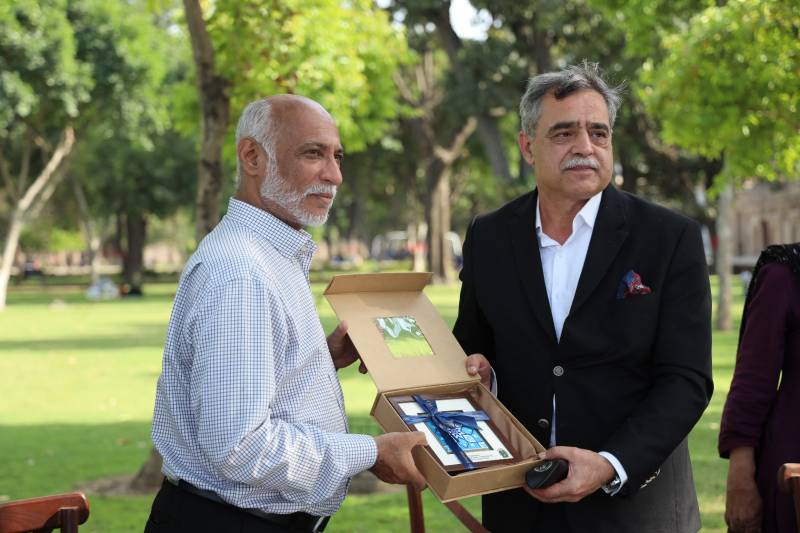
Heritage conservation is a technical field that requires specialised skills across a range of disciplines spanning both the sciences and the arts, including engineering, computer science, and architecture. Efforts to build such a skillset have been undertaken by WCLA, as stated by CEO AKCS-P Tausif Khawaja. Describing the Wazir Khan project as an initiative that went beyond restoring and preserving physical structures, he said: “The Wazir Khan Mosque project included a key component through which young professionals received technical training in computer science, surveying, and other skills. Many of the programme’s graduates have gone on to pursue successful careers based on the skills they acquired.
While both traditional skills and international best practices have been incorporated into conservation techniques in Pakistan, knowledge gaps still remain. According to Associate Professor Muhammad Omar Farooq, lighting is a complex aspect that, in many heritage sites, continues to leave much to be desired. “There is a research deficit on lighting in the context of conservation; adjusting lighting can completely change the way one experiences a historic site. For instance, low lighting can create a highly dramatic effect.”
The focus of heritage conservation, besides protecting the monument, has to be on improving the quality of life of the people and communities living around it. Engaging communities is thus an important consideration in the planning and execution of a site’s conservation. AKCS-P’s CEO Tausif Khawaja quoted the example of Prince Karim Aga Khan IV, who consistently emphasised that historic monuments derive their meaning and relevance from the communities they serve and their contribution to improving quality of life.
DG WCLA Najamus Saqib endorsed this approach, describing communities as the “end users” of conservation projects. Recalling his time in England and the initiatives he was involved in, he noted that communities were engaged from the outset of each project and involved through regular consultations. Their role was considered so crucial that no funding was released without their consent.
The discussions highlighted that cultural identity is deeply rooted in historical heritage, which reflects a society’s history, skills, and aesthetics. The seminar brought attention to the potential of sustainable conservation practices to transform community life, as well as the importance of inclusive approaches that actively engage local communities.