

On the 23rd of April 2025, India announced that the Indus Waters Treaty would be “held in abeyance” until Pakistan abandoned what New Delhi called support for cross-border terrorism. On the 31st of August 2026, a five-member Court of Arbitration at The Hague unanimously found that the treaty “remains fully in force”. India does not recognise the Court and did not take part. Both facts are real. The better question is what the award now asks of Pakistan.
Start with the Court’s reasoning, which was careful. “Abeyance” is not in the treaty and is not a term the law of treaties recognises, so the Court treated it as a claim of suspension or termination. The treaty offers one exit. Article XII(4) keeps it in force until the two governments end it through a ratified treaty of their own. The Court then went through each justification India has offered, from material breach and changed circumstances to armed conflict and countermeasures, and found that none held.
On terrorism, it said it did not take the allegation lightly. Assuming it were proved, the Court still saw no breach of this treaty, which deals only with the use of the rivers’ waters. The finding concerns what the treaty covers. India’s security concerns sit outside it.
Parallel Tracks and the Ratle Order
An award cannot enforce itself. India made no submissions, so the Court pieced its position together from public statements and correspondence with Pakistan and the Neutral Expert. Future tribunals will read the record the same way.
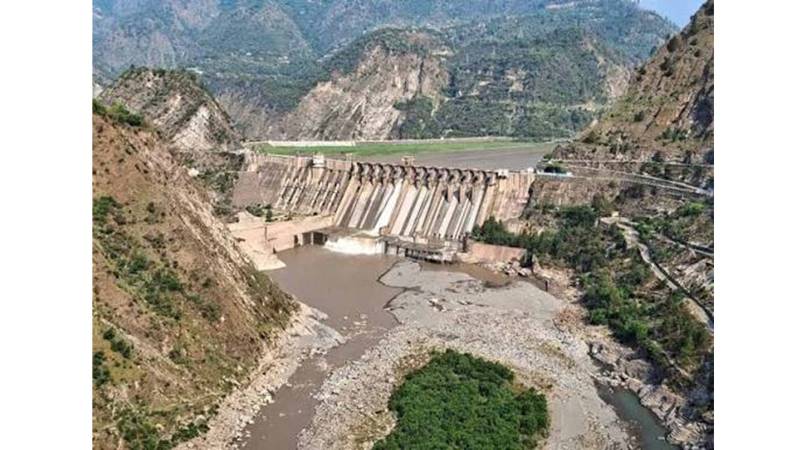
Consider the order on the Ratle plant issued the same day. It bars India from concreting the dam wall and power intake above set levels until 90 days after the Neutral Expert’s final decision, expected in July 2027. It also requires India to notify any change to the construction schedule, because India had stopped providing it and the Court wanted visibility of what is actually being built. The Court refused two other measures Pakistan sought. It weighs each request on its merits.
While stating it did not take cross-border terrorism allegations lightly, the Court ruled that even if proved, such claims do not constitute a breach of an agreement strictly governing the use of river waters
The Neutral Expert, an engineer appointed by the World Bank, runs the parallel process. India asked for it in 2016 but has not attended its recent meetings, though he has said India may rejoin at any time. A sixth meeting with the parties was scheduled for the 9th and 10th of November, and a final modelling meeting for February 2027. Every stage is a place where evidence is either built or lost.
Building a Standing Compliance File
That points to a plain task. Pakistan’s legal position is strong, and the next hearings will test its paperwork. Requests for design data and flow information should go to India through the Permanent Indus Commission, in writing and with dates, and each reply or silence should be filed. Hydrological monitoring on the Indus, Jhelum, and Chenab should feed the same archive.
I propose that the Ministry of Law and Justice and the Foreign Office, working with the Commissioner for Indus Waters, make this a standing, funded compliance file for every Indian project on the Western Rivers and publish a yearly summary of requests made and answers received. Publication is the point. It gives Parliament and the public something to measure, and it shows any future court a state that kept to the treaty’s procedures while the other side stepped away.
India may go on calling the Court illegitimate. Courts still read files. Later rulings are likely to weigh what each side did between awards, and Pakistan has those months to decide what its file will say.