

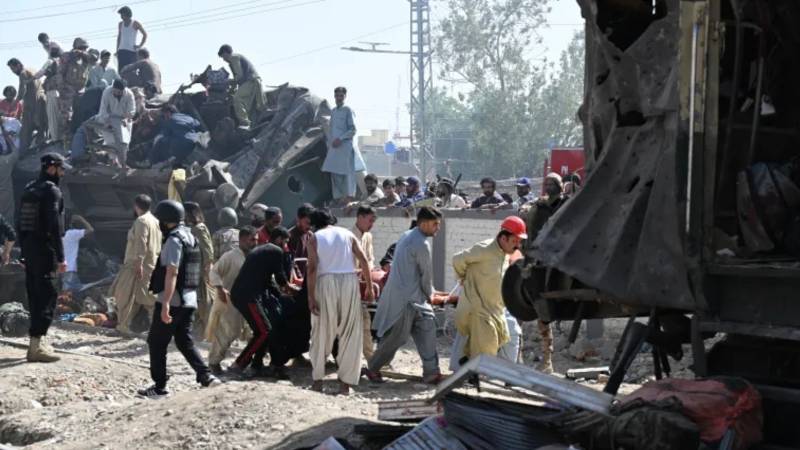
The weekend was packed with developing stories, foreign visits and geopolitical achievements everyone long awaited. On Friday, Field Marshal Asim Munir landed in Tehran to hold final negotiations on the peace deal between the United States and Iran. Saturday was spent anticipating the proposal and praising Pakistan's role as a mediator in bringing peace to the region. Then came Sunday, and we saw dark clouds of smoke rising from a railway track in Quetta, with reportedly 24 people being killed in a terror bomb blast. These were mostly civilians, not security personnel. The target was purely a civilian target.
It goes without saying that Pakistan’s geopolitical profile has risen sharply in recent months, as it continues to broker peace between the United States and Iran. Through untiring efforts, the Pakistani leadership has been constantly engaging with both parties and other regional powers to restore stability and bring peace to the region. As US Secretary of State Marco Rubio recently acknowledged, Pakistan has been “the primary interlocutor” in the peace process and has done “an admirable job.” The whole world has been watching Pakistan and hoping for good news, easing the global economic tensions that emerged due to the Iran conflict.
The global image of Pakistan shifting from an unstable region to a peace-maker, from a conflict-driven region to a net stability provider, is an emerging reality. But it seems to be unacceptable to many, and especially the enemies of the people of Pakistan. That animosity and hatred towards the state and people of Pakistan is what gives rise to events like the one we witnessed on Sunday morning in Quetta.
The debate of underdevelopment, resource exploitation and deprivation in the province of Balochistan is also correct to some extent. But we have to realise that what is happening today is not resistance, but rather blatant terrorism. It is true that the state has under-delivered in certain areas and has been unable to create opportunities for youth in the region and provide access to the necessities of life to the people. This is the reason why resentment exists, and the gap was there to be exploited by these external actors.
What comes first, investment or security, is to be decided by the people in power, but the economic growth of Pakistan is linked with Balochistan, and to solve the security problem, you have to develop the region
These groups, such as the Baloch Liberation Army and others, disguised as freedom fighters, are nothing more than a tool being used by their foreign masters to hurt the state of Pakistan. What freedom is earned through bombing a train? Killing civilians, children and women? They are there to harm the image of Pakistan, not to fight for the rights of the Baloch people. These acts produce international headlines, images and news to tarnish the global profile of a country of over 240 million people; they have nothing to do with political resistance or the rights movement.
And the tragedy within the tragedy is this: every bomb planted in Balochistan sets back the legitimate political and economic case for the province by years. Investment is delayed, military response is further hardened, and opportunities fade. This is a recurring cycle that continues to strangle the polity and functioning of the province. This is not what the people of Balochistan will ever benefit from; rather, their future lies only with a stable Pakistan and vice versa.
It is not terrorism that will define the future of Balochistan, but stability, economic investment and inclusive growth. The state must take tough decisions in including the region in its developmental plans and not look at it as a security problem alone. Now, what comes first, investment or security, is to be decided by the people in power, but the economic growth of Pakistan is linked with Balochistan, and to solve the security problem, you have to develop the region.
Field Marshal Asim Munir, in a recent visit to Quetta, rightly said that the efforts were “focused on public welfare, socio-economic uplift and strengthening the bond between the state and the people of the province.” It is good that the state itself has realised and is making efforts in the right direction, balancing both security and regional socio-economic development.
The smoke over Quetta's railway tracks is a reminder of two simultaneous failures: a state that neglected a province for decades and created the conditions for resentment, and an organised militant apparatus, funded and directed from outside, that has weaponised that resentment against the very people it claims to speak for.
Pakistan has to show the same resilience and approach the internal challenge of terrorism as it has done on the external front while brokering peace in West Asia. Because growth will come when both internal and external fronts are aligned and synchronised.