

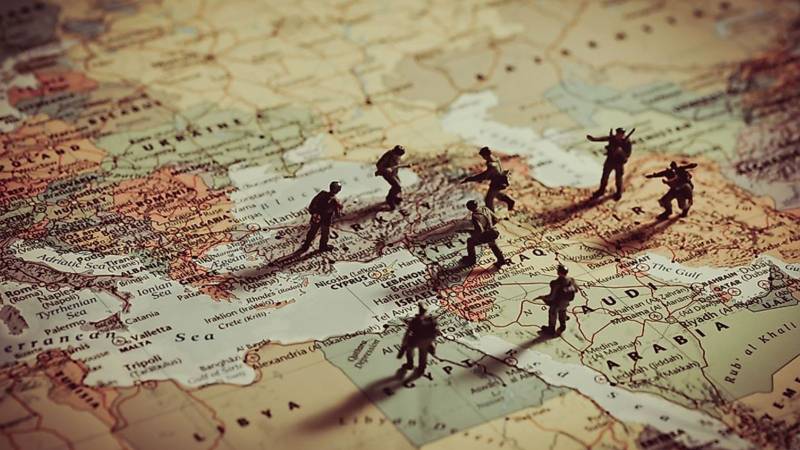
The diplomatic efforts of the West in the Middle East often fall short due to fundamental differences in perceptions of conflict and negotiation. Western policymakers tend to ground their approaches in leverage, incentives, and rational bargaining. In contrast, many Eastern societies interpret negotiations through the lens of identity, historical memory, dignity, and collective experience. Persistent cultural misunderstandings—traced with orientalist assumptions and limited cultural engagement—continue to undermine diplomatic efforts.
Addressing this gap requires a shift in mindset: one that recognises the constructivist nature of international relations, which holds that state behaviour is shaped not only by material interests but also by norms, identities, and shared meanings. It also requires embracing cultural relativism—the principle that political systems and values must be understood within their own cultural contexts, rather than judged by external standards—in order to respect diverse political logics.
Recent escalations between Iran and Israel have reignited global concerns over conflict and nuclear risks. In response, the United States deployed its familiar toolkit of military deterrence and diplomatic pressure, attempting to contain hostilities and bring parties to the negotiation table. Yet this moment once again exposed the deep difference in mindsets and cultural frameworks guiding each side’s approach to diplomacy.
This reflects a historical pattern in Western engagement with the Middle East: prioritising short-term control and leverage-based tactics while underestimating long-term perceptions and political logic. In many cases, how something is said matters more than what is said. Tone, symbolism, and delivery often lead to misinterpretation and resistance.
The disconnect in diplomatic language—a lack of mutual understanding in both content and form—undermines even well-meaning efforts. Subtle but enduring orientalist assumptions still shape how Middle Eastern actors are viewed: as reactive, emotional, or unpredictable. For many in the region, negotiation is not a technical tool but a two-way process rooted in mutual respect and cultural nuance. In contrast, the West’s often “direct” and transactional approach creates tension, pushing actors to adopt rigid or defensive postures.
Western diplomacy in the Middle East often falters not due to intent, but because of misaligned worldviews
Conflict and negotiations are certainly driven by strategy, but they are also shaped by identity, history, and constructed meaning. Both parties must be clear on what it means to reach a resolution. Western diplomacy typically views negotiations as interest-based exchanges where deals are made under pressure. But in the Middle East, concepts like honour, historical memory, resistance, and collective dignity shape how leaders and societies respond. An offer made under coercion is often perceived not as a compromise but as submission; rejection then becomes a matter of pride, not obstinacy.
Orientalist and universalist assumptions, when left unexamined, frame the East as irrational or governed by emotion. These attitudes undermine diplomacy, treating regional actors as problems to be managed rather than equal stakeholders. Recognising these cultural logics is essential to a culturally relativist diplomacy—one that listens before prescribing.
Iran: From 1953 to the Nuclear Talks
In 1953, Iranian Prime Minister Mohammad Mossadegh was removed by Western powers amid Cold War fears and oil politics. While the West saw it as realpolitik, it became, for Iran, a lasting symbol of foreign interference—an event that still echoes in the national psyche. Fast forward to 2015, the Joint Comprehensive Plan of Action (JCPOA) was a major breakthrough in diplomacy, proving that mutual trust could be built. However, the U.S. withdrawal from the JCPOA in 2018, coupled with renewed sanctions, was again an error in comprehension. The U.S. aimed to increase leverage, but Iran interpreted it as another chapter in a long history of broken agreements and betrayal. Iran’s shift in stance was not merely political, but rooted in deep historical memory and mistrust.
Iraq: 2003 and Its Aftermath
The invasion of Iraq was framed as a democratic intervention. But post-war challenges revealed the misfit between imported governance models and local social structures. Iraq’s sectarian and tribal complexity could not be reshaped externally. The U.S. misread the social fabric and cultural logic, treating reconstruction as a technical fix rather than a deeply political and identity-laden process.
Certainly. Here's the revised section with a new opening line that smoothly introduces Afghanistan as a parallel case relevant to Middle Eastern diplomacy:
Afghanistan: 2001 to 2021
Though not part of the Middle East, Afghanistan offers a parallel case that underscores a recurring flaw in Western interventions across the region: the failure to align external strategies with local political cultures and systems of authority.
The international mission in Afghanistan aimed to combat terrorism and build a stable, democratic state. Billions were invested in constructing institutions modelled on liberal democratic principles. But many of these institutions struggled to take root or connect with Afghanistan’s indigenous systems of authority. Power remained tied to local structures like tribal councils and religious networks. The Western-backed government collapsed swiftly after international forces withdrew. For many within the country, the return of the Taliban, while contested, was not a surprise—it was partly seen as a reassertion of familiar structures of power.
Although Afghanistan is not part of the Middle East, its trajectory echoes a wider pattern in Western engagements across the region—from Iraq to Iran—where strategies grounded in external models faltered in the face of deeply rooted cultural, religious, and historical frameworks. The lesson from Afghanistan reinforces the importance of understanding local notions of legitimacy and authority rather than imposing universalist models.
Across all these cases, the pattern is clear: the problem wasn’t always the strategy, but the assumptions behind it. External strategies often failed because they didn’t align with local perceptions of authority, dignity, or legitimacy. Policies built around leverage, pressure, or imported institutional models failed to account for how people in the region understand negotiation, resistance, and honour. If the goal is lasting diplomacy, it must begin with deeper cultural engagement, not transactional concessions.
To resolve the current standoff in the Middle East and pursue fruitful diplomatic efforts, more than strong messaging or military pressure is required. Western actors may benefit from adjusting their assumptions alongside their strategies. Often, it is not the goals that fail, but the assumptions behind how they are pursued. Aligning leverage and negotiation strategies with regional political cultures and historical sensibilities may be the key to success.
Recommendations for Culturally Aware Diplomacy
To approach the region with greater care, context, and cultural awareness, the West should:
- Understand regional interpretations of power and respect. Pressure-based diplomacy, intended to shift behaviour, can be perceived as humiliation or external dominance. Successful diplomacy requires sensitivity to dignity, autonomy, and symbolic gestures, with strong narrative control to shape responses.
- Frame negotiations as mutual, not conditional. Offers made under pressure are often seen not as opportunities but as capitulations. Talks should be framed as joint problem-solving efforts between equal partners, with face-saving mechanisms and a focus on common ground and shared interests.
- Interpret hardened postures as cultural, not irrational. What may appear as defiance is often rooted in cultural and historical logic. Flexible diplomacy—through backchannels, informal dialogue, or third-party mediation—can create space for constructive engagement.
- Leverage culturally fluent mediators. Countries like Qatar and Türkiye, with regional understanding and soft power, can offer more credible and acceptable negotiation platforms.
Conclusion
Western diplomacy in the Middle East often falters not due to intent, but because of misaligned worldviews. If diplomacy is to succeed, it must move beyond orientalist assumptions towards deeper cultural engagement and shared respect. Guided by constructivist international theory and cultural relativism, a more nuanced, humble, and reciprocal approach can help rebuild trust and produce more enduring outcomes.