

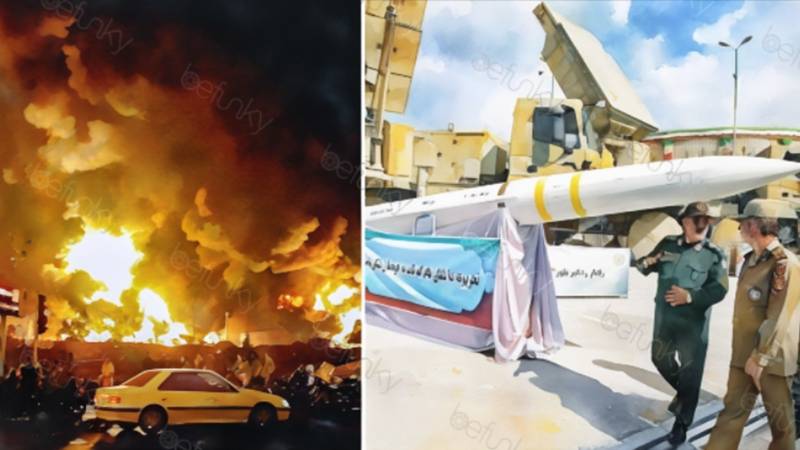
By December 2025, the geopolitical landscape of the Middle East has been irrevocably altered by the fires of the "Twelve-Day War" just six months prior. The air is thick not with the promise of peace, but with the residue of a conflict that has only paused. The discussion at the White House is not merely about diplomatic maneuvering or containment; it is the continuation of a decades-long project: the systematic subversion of Iranian sovereignty, a campaign in which the United States provides the strategic architecture and Israel acts as the kinetic spear.
To understand the present moment—where "ceasefire" is a euphemism for rearmament and "diplomacy" is a thin veil for coercion—one must look beyond the headlines of the June 2025 conflict. One must examine the long arc of American strategy toward Tehran, a playbook that has cycled through containment, subversion, and war, all aimed at a singular objective: the neutralisation of the Islamic Republic as a sovereign entity capable of projecting power.
The Strategic Blueprint: From "Containment" to "Rollback"
For nearly two decades, American policymakers have wrestled with the "Iran problem." The internal debates in Washington, often hidden behind the sterile language of think-tank papers and policy briefs, have revealed a consistent desire not just to modify Iran's behavior, but to fundamentally alter its statehood. The options laid out by strategic planners have long been clear: diplomatic persuasion, military invasion, or the fomenting of internal regime change.
The "military option," once dismissed by some as too costly, became a terrifying reality in June 2025. The "Twelve-Day War" was not an accidental skirmish; it was the manifestation of a specific strategic choice known in policy circles as the "Osiraq option"—a reference to Israel’s 1981 strike on Iraq’s nuclear reactor. For years, American analysts argued that while a full-scale US invasion of Iran (the "Go All the Way" option) was politically and logistically prohibitive, a limited air campaign to decapitate Iran's nuclear and military infrastructure was feasible.
The events of June 2025 followed this script with chilling precision. Israel’s surprise bombardment of Iranian nuclear facilities in Natanz, Isfahan, and Fordow, coupled with the assassination of nuclear scientists and military commanders, was a direct assault on the most guarded aspects of Iranian sovereignty. When the United States joined the fray on June 22, bombing nuclear sites and intercepting Iranian retaliatory fire, it signaled the end of the era of proxy warfare and the beginning of direct sovereign violation.
But the physical destruction of centrifuges and missile silos is only the most visible layer of subversion. The deeper strategy, often termed "regime change" or "democratisation," relies on hollowing out the state from within. This approach, favored by various US administrations, seeks to exploit Iran’s internal ethnic and political fissures. By strangling the economy through sanctions and emboldening opposition groups, the objective is to create a "Velvet Revolution" or, failing that, an insurgency that renders the state ungovernable. The "Twelve-Day War" likely accelerated this process, leaving the Iranian government humiliated, its defenses shattered, and its populace displaced—conditions ripe for the internal collapse that Western strategists have long predicted and actively courted.
Israel’s Doctrine of Absolute Dominance
If the United States provides the broad strategic umbrella of economic strangulation and political isolation, Israel provides the sharp edge of kinetic subversion. The relationship is symbiotic but distinct. While Washington often operates on a global clock, balancing interests in Asia and Europe, Jerusalem operates on a timeline compressed by proximity and existential anxiety.
The Israeli strategic doctrine, laid bare in the aftermath of the June war, is not one of security in the conventional sense—where borders are defended and treaties signed. It is a doctrine of "absolute dominance." As is proved by the devastation wrought on Iran's nuclear program, Israel seeks to deny its adversaries any capability that could even theoretically challenge its military hegemony. This goes beyond defense; it is the preemptive erasure of sovereign capacity.
Netanyahu’s agenda in Washington in December 2025 reflects this imperative. With the Iranian nuclear program in ruins, the goalposts have shifted. The demand is no longer just about uranium enrichment; it is about Iran’s ballistic missile program. This shift is critical. Every sovereign nation possesses the right to self-defense, and for Iran, isolated by sanctions and lacking a modern air force, ballistic missiles are its primary deterrent. By demanding the dismantling of this conventional capability, Israel is essentially demanding the demilitarisation of a sovereign state, leaving it defenseless against future incursions.
This pursuit of dominance creates a paradox of insecurity. By insisting on total freedom of action—the ability to strike Tehran, Beirut, or Damascus at will—while denying its neighbors any level of certainty or deterrence, Israel forces the region into a state of perpetual instability. The "Twelve-Day War" resulted in a fragile mutual deterrence, a balance of terror that Tehran might accept as a survival mechanism, but which Netanyahu views as an intolerable threat to his legacy and Israel’s unrestricted maneuverability.
The Divergence of Clocks
A critical friction point in the US-Israel subversion of Iran is the mismatch of strategic "clocks." As 2025 draws to a close, Israeli and American decision-makers are viewing the same intelligence through vastly different lenses.
For Jerusalem, the clock is ticking in minutes. The proximity of Iranian missiles, and the potential for a "breakout" even after the damage of the June war, creates a psychological pressure cooker. Israeli officials warn that Iran uses "drills" and proxy movements to normalise dangerous realities, compressing Israel's decision time. The trauma of past intelligence failures has made the Israeli security establishment intolerant of ambiguity. They do not want to "manage" the Iranian threat; they want to eliminate it.
Washington, however, operates on a longer, more sluggish clock. The Trump administration, having returned to power, faces a complex global board. While the President’s "America First" rhetoric might align with avoiding endless foreign wars, the deep state machinery and political hawks push for decisiveness. Yet, American officials must weigh the risks of escalation beyond the immediate theater. A wider war with Iran doesn't just mean missiles falling on Tel Aviv; it means the disruption of Gulf energy infrastructure, shocks to global markets, and the potential entanglement of US forces in a ground war—the very "invasion" scenario that US planners have long deemed a quagmire.
This divergence creates a dangerous dynamic. Israel, feeling the window of opportunity closing, may act as a catalyst, launching provocations or strikes designed to force the United States into the conflict. The "Leave it to Bibi" scenario, discussed by analysts for years, posits that Israel might strike Iran not just to destroy targets, but to drag the United States into a war it might otherwise seek to avoid. The US involvement in the final days of the June 2025 war suggests this dynamic is already in play; when the missiles start flying, the United States invariably steps in to shield its ally, effectively co-signing the violation of Iranian sovereignty.
The Erosion of the State
The cumulative effect of these policies—the sanctions, the assassinations, the bombings, and the diplomatic isolation—is the systematic erosion of the Iranian state. Sovereignty is not merely about flags and borders; it is about the state’s monopoly on violence and its ability to protect its citizens.
When foreign powers can assassinate a nation's top scientists in its capital, explode its most secure facilities, and dictate the terms of its conventional military armament, that nation’s sovereignty has been pierced. The Iran of late 2025 is a besieged fortress. Its economy is battered by the "maximum pressure" campaigns that have persisted through multiple US administrations. Its skies are contested. Its political legitimacy is frayed by the inability to prevent foreign incursions.
This erosion is not collateral damage; it is the intended outcome. By degrading Iran’s capabilities, the US-Israel alliance seeks to reduce Tehran to a "vassal" status—a state that may exist on a map but lacks the agency to act against Western interests in its own region. The demands for Iran to sever ties with its regional partners (often labeled "proxies" by the West) are demands for Iran to surrender its foreign policy independence.
The Illusion of Victory
As Netanyahu pushes for a "restart" of the war to finish the job against Iran's missiles, and as American hawks argue that deterrence only works if Iran believes Washington will strike again, the region stands on a precipice. The "Twelve-Day War" proved that military action can destroy concrete and steel, but it cannot destroy the knowledge to build them, nor the nationalistic resolve that often hardens under fire.
The subversion of Iranian sovereignty has come at a high cost. It has radicalised the region, militarised the Persian Gulf, and shattered the norms of international non-intervention. The United States, in its quest to "contain" a regional power, has found itself locked in a cycle of escalation where each tactical victory—a scientist killed, a site bombed—only breeds the necessity for the next war.
The "absolute dominance" sought by Israel and facilitated by the United States is a mirage. In the Middle East, total security for one state usually implies total insecurity for all others, a formula that guarantees resistance. As the year 2026 approaches, the question is not whether Iran will rebuild its shattered sovereignty, but what terrible form that reconstruction will take in a world that has denied it the path of normal statehood. The US and Israel may have succeeded in eroding Persia’s power, but in doing so, they may have birthed a more volatile, desperate, and uncontainable force from the ruins.