

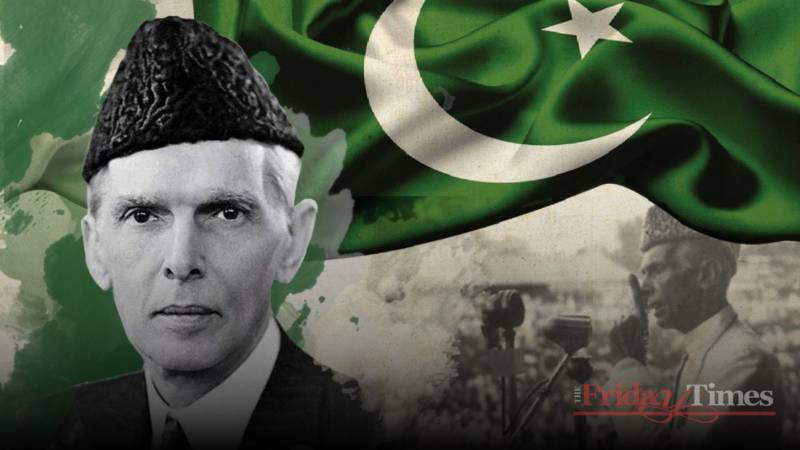
“It was the best of times, it was the worst of times, it was the age of wisdom, it was the age of foolishness, it was the epoch of belief, it was the epoch of incredulity, it was the season of light, it was the season of darkness, it was the spring of hope, it was the winter of despair.” This is what Charles Dickens wrote about Paris and London in A Tale of Two Cities in 1859, describing the political and social conditions leading to the French Revolution and the Reign of Terror (La Terreur in French). But, dear Quaid, this, unfortunately, reflects what our twin cities of Rawalpindi and Islamabad have been going through since you breathed your last, leaving your dreamland rudderless.
Yes, dear Quaid, you gave us a large and beautiful country. We failed to appreciate its value as a nation. Many challenged your decision, demanding a separate country for the Muslims. You were showered with disparaging titles — the enemy of Motherland Bharat, a megalomaniac, stubborn and narcissistic, an egoist, Kafir-e-Azam, and whatnot. Your opponents included rightists, leftists, Marxists, nationalists, unionists, and Islamists. You had undertaken this huge task on behalf of the common Muslim populace. All the stakes were against you. You had no vibrant political organisation to drive home your political ideals. You had to bank on the disorganised, undisciplined, factionalised, depressed All-India Muslim League, beaten to a pulp in the general elections of 1937 by the arrogant, strident, well-organised and well-led National Congress.
Only you, dear Quaid, had discerned the hidden and hypocritical agenda of the Indian National Congress leaders who spoke in the same vein of secular and democratic dispensation and Ram Raj through their affiliates, including the Shuddhi Movement of Swami Dayanand Saraswati and his disciple Swami Shraddhanand, working for the promotion of Hinduism in North India, especially Punjab, in the early 1900s. The movement was followed by the Rashtriya Swayamsevak Sangh (RSS), founded by K. B. Hedgewar in 1925 to build on the work of the Shuddhi Movement. These purely Hindu organisations aimed at converting the lowest classes from other religions to Hinduism and integrating them into the mainstream Hindu community, leading to Ram Raj. You envisioned a bleak future for Muslims in such a biased, dogmatic, and intolerant society. You took up the cause of the Muslims as a distinct nation living alongside Hindus in the Subcontinent. This was in stark contrast with the Congress's stance of considering Muslims merely as the largest minority.
Earlier, you had worked with Hindu leaders, squandering your time and energy to foster unity between the two larger communities to preserve the unity of the Subcontinent. You were decorated with the flattering title of the “Ambassador of Hindu-Muslim Unity”. However, these Congress leaders felt overawed and overshadowed by your well-reputed parliamentary etiquette, vast knowledge, matchless eloquence, and sound arguments, and surreptitiously kept undermining your sincere efforts. Their arrogance, grudge, and jealousy were further heightened when M. K. Gandhi abandoned his adopted country of South Africa and returned to India to hijack the vibrant freedom movement under the banner of the National Congress, in which you, my Quaid, had played a prominent role.
We remained a nation as long as you were there. We lost our moorings the day you bid adieu to us
The All-India Muslim League, after its humiliating debacle in 1937, needed a determined leadership undaunted by the odds in its way. You took up the cudgels at the behest of the disenchanted Muslims. You reorganised it in every nook and cranny of the Subcontinent, undertaking long travels despite your fragile health and presiding over marathon sessions, collecting and cataloguing the excesses committed against Muslims by the Congress provincial administrations. Within three years, you were miraculously able to have the Pakistan Resolution passed in March 1940 in Lahore.
You transformed the All-India Muslim League into the premier political party of the Subcontinent’s Muslims. It captured almost all Muslim constituencies in the general elections of 1945–46, notwithstanding the opposition of the Unionists of Punjab and the nationalists of the erstwhile North-West Frontier Province. And, dear Quaid, you realised your cherished dream of a separate and independent country for the Muslims, comprising the north-western provinces and Bengal. We remained a nation as long as you were there. We lost our moorings the day you bid adieu to us. The adventurists were just waiting for that day.
Constitution-making and nation-building were pushed to the back burner; the Prime Minister was assassinated; a race for the capture of state positions and resources ensued; the timid, sick, and disabled were catapulted to the helm and then brought down by more scheming operators; we were governed by the colonial Act of 1935 for nine years; the ill-advised One-Unit scheme was enforced, abolishing the geographical position of the smaller provinces and merging them into the larger entity of West Pakistan in 1954 at the behest of Iskandar Mirza and General Ayub Khan to offset the advantages of the numerically larger Bengal.
The new Constitution enforced in 1956 was abolished within two years by the Chief Martial Law Administrator, General Ayub Khan; the parity scheme was adopted for the division of state financial resources and federal jobs between both wings of the country, to the disadvantage of the larger Bengal. Ayub Khan was followed by another bunch of generals who failed to honour the verdict of the people delivered in the general elections of 1970, denying power to the majority party. We lost half of your Pakistan, dear Quaid.
Following your footsteps, this nation staged an amazing comeback and started rebuilding the remaining Pakistan. We adopted a new Constitution and parliamentary democracy; regained our lost position in the Muslim world and among the comity of nations; and developed a better system for the division of state resources among the smaller provinces. Though the democratic dispensation we achieved after many years of wandering in the political wilderness was not ideal, it was still better than any military or civilian autocracy. But we forgot our ordeal and the humiliation of 1971 and indulged once again in the same unwise and harmful adventures.
After seven years of humiliation, we plunged the country into martial law for eleven years, followed by a stint of eleven years of powerless civilian rule. This cyclical pattern of lame democracy and autocracy has stalked us to this day. Dear Quaid, your dreamland is seriously trapped in political polarisation, a weak economy, insurgency, religious militancy, and autocracy.