

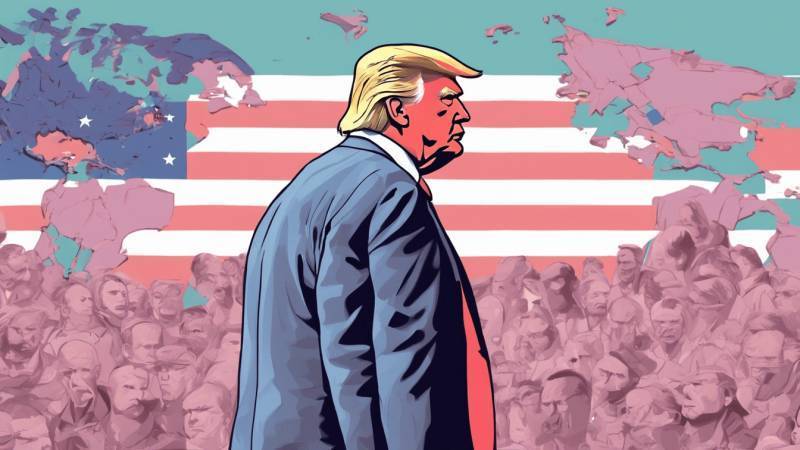
The jingoism slipped down and the steam turns on rapprochement in the aftermath of the recent escalation at the nuclear flashpoint between the overpopulated, nuclear-armed South Asian nations of India and Pakistan. As all who matter in the evolved multipolar reality in the global political system have flexed muscles well, it reminds me of psychologist Sarah Gregg’s brand name, The Power to Reinvent.
Withered American Dream?? The selling mantra of Gregg, also a coach and speaker, suggests: “Stop wrestling with persistent feelings of unworthiness, people-pleasing & perfectionism,” as “There is an easier way.” What…? Yes, that’s right. It’s the power to reinvent itself that the United States has time and again successfully demonstrated throughout its history. Rising from the ashes of the Civil War, the British set up the Capitol Hill building, the great economic recession of the 1930s, and Al Qaeda’s claimed 9/11 destruction of the Twin Trade Towers in New York — the country demonstrated resilience all the way through the course of history. Now, with immense foreign debts and multiple innovative challenges of the contemporary era, the country is trying to meet it by adopting an innovative discourse once again.
However, a downward journey it may seem from the democratic ideals — the introduction of the Patriotic Law and related regulations in the post-9/11 scenario significantly impacted the “American Dream” of the Americans and the America-seekers. Most significantly, the political circus during the past decade that shook up the entire framework of democratic values, its politico-economic and cultural ideals, and the unique Americanism that the country stands for appeared to be crashing down, at least for a while, spurring a flurry of stimulus for the conspiracy theorists…
The Rebellion — what happened during the past decade… was it an accident or a policy end? It might appear so, and a host of analysts across the world, including myself, jolted and failed to see President Trump stepping into the White House once again for a second stint. A smoke screen it might have appeared in the beginning, but the flinching shadows of the choreography behind it have now started making sense. No, it wasn’t an accident but an innovative policy approach, weird enough in appearance to baffle minds and bemuse political pundits. Why so?
Israeli Prime Minister Benjamin Netanyahu and Indian Prime Minister Narendra Modi might be feeling disappointed or disgruntled by the diversification of the American foreign policy approach
A sneak peek into the history of US foreign policy reveals a rebellion from traditional European diplomacy — the approach that helped the country reinvent itself and evolve the State Department into the largest diplomatic establishment in the world. Probably, once again, the US required deviation from the traditional policy discourse and expansion of the empire in kinetic terms, appreciating the reformed and reconstructed realities of the multipolar world. The conventional kinetic forces have now been counterbalanced by factors, including the dawn of neo-economics and the formidable reality of Artificial Intelligence (AI) as the new normal.
It might not have been acceptable to the simple minds of common Americans without a big socio-cultural and political shake-up, where the Cold War era’s “Russians are Coming” was the fear-inducing and strategic policy-feeding mantra. It has now been transformed into “The Chinese are Coming”, after a breathtaking quarter century of institutionalisation of the terrorism and counterterrorism industries. Under a host of frameworks where traditional security approaches might not be the correct response to the mounting, newer, adrenaline-gushing, larger-than-life reality of the metaverse, an innovative, out-of-the-box solution might be the correct discourse, no matter how weird it appears. Hence, there you have a tactical businessman, razor-sharp, candid, and bluntly straight, who actually knows when and where to invest and pull the rope.
Evaporating Pinned Hopes — some analysts see the White House’s policy reset as a setback to Indian and Israeli hopes of domination. Israeli Prime Minister Benjamin Netanyahu and Indian Prime Minister Narendra Modi might be feeling disappointed or disgruntled by the diversification of the American foreign policy approach. Probably, it’s time that America needs to go wild again and reinvent itself, remain resilient and renewed, as it did in the past, and continue to thrive as the dominant global war power and stay afloat above the emerging multipolar currents.
Wave of Reconciliation and the Question Mark — what’s been tipped off is a closing in the nuclear deal between Iran and the US. Come what… yes, that’s what has been making rounds on the global scenario as the latest. Analysts believe that it would be the biggest development in the global political scenario in recent times, after the Iran–Saudi Arabia détente brokered by China in March 2023. Now, it is yet to be seen whether this “wave of reconciliation” will continue — and whether resolution of the Kashmir dispute would be next. The recent litmus test that President Trump ran through warring India and Pakistan has brought the escalation to a halt, but can it ultimately resolve the nagging conflict between the South Asian nuclear neighbours, or would it be a gauntlet between the US and China? That’s yet to be gauged.
Neutralising the Irrepressible Contenders — the Trump administration is trying to neutralise all the allies of, and those closest to, China. It first extended an olive branch to Russia and is now reaching out to Iran, after testing Pakistani war potential and the effectiveness of contributing Chinese war tech towards it! Yes — and the fact that this is happening early in President Trump’s second stint means he will have time to pursue things practically. Local analysts believe that anything contributing to peace is better for all. Because economics is the ideology — it’s the neo-religion, the neo-nationalism, and the bottom line of global prefecture in essence!
Yes, probably that’s why President Trump was brought to power — to get things across in an abrupt and non-traditional manner, which could never have been accomplished under a traditional political discourse, local analysts explained the candidacy of President Trump.
Yes, it might be. The point is: in order to maintain its global empire, continue flourishing, and keep the war economy multiplying, the US has attracted scores of complications that have adversely impacted the American power of reinventing itself as a nation and a world leader in many ways. Therefore, it was a timely decision on the part of the American decision-makers to deviate from traditional political discourse and find a leader who could deliver innovative frameworks.
With all the traits President Trump is publicly known for, he turned out to be the best innovator, so far, who can roll down a win-win discourse for all. Without significantly antagonising the silent empire of Russia and thundering China, Iran has been isolated, denting its assets in the Middle East, the Hezbollah episode. Hence, the prevailing American foreign policy seems good enough as the need of the time, as the world badly requires plugging looming environmental and climate disasters, population and food security challenges, where Mutually Assured Destruction (MAD)-destined war can't be a viable choice for anyone!