

Pakistan is no stranger to environmental disaster. Ranked among the top ten most climate-vulnerable countries, its exposure to escalating climate threats has turned into a persistent economic and humanitarian emergency—and a stark example of environmental injustice, where fair treatment and inclusion in environmental policymaking and enforcement remain elusive for many.
Over the last century, Pakistan’s annual mean temperature has increased by 0.63°C. If global emissions remain unchecked, that rise could reach 3°C–6°C by 2100. Recently, according to the Pakistan Meteorological Department, Jacobabad recorded a staggering “feels-like” temperature of 60°C—one of the highest ever—while Dadu and Sibbi followed close behind at 59.7°C and 56.6°C, respectively. These are not just statistics; they are symptoms of a climate system spiralling out of control.
Meanwhile, along the southern coastlines, sea levels are already creeping upward, with projections of a 60 cm rise by the end of the century, putting regions like Keti Bander and the Indus Delta at grave risk. Some 485,000 hectares of agricultural land have already been claimed by the sea.
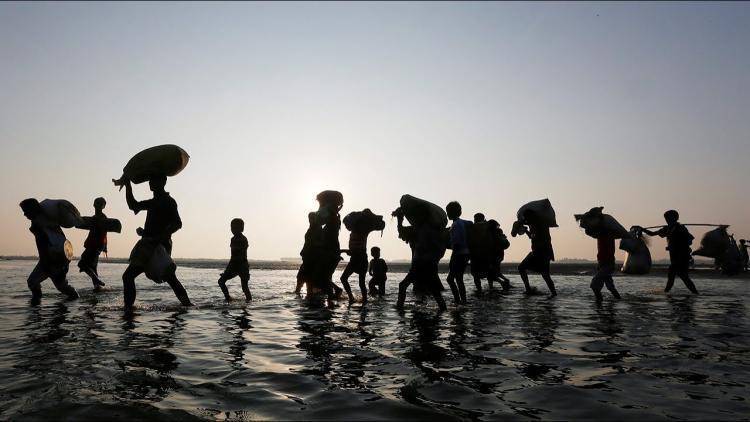
Further, climate-related disasters are becoming more frequent and intense. According to PRAC, from 1995 to 2005, Pakistan faced 48 major disaster events; between 2015 and 2024, that number jumped to 66. Floods more than doubled in frequency, displacing over 37 million people compared to 13.4 million in the previous decade. The 2022 super floods alone caused damages exceeding $30 billion, destroying 9.4 million acres of farmland, killing a million livestock, and affecting 33 million people. Even extreme temperature events have surged, affecting over 87,000 people compared to just 224 in the early 2000s.
At the heart of this crisis lies a breakdown of resilience across Pakistan’s key economic sectors. Agriculture, which employs a large share of the workforce and ensures national food security, is expected to suffer an 8–10% decline in output by 2040. Yet it is already under strain: water stress has intensified, with per capita availability dropping from 5,260 cubic metres in 1951 to under 1,000 cubic metres today. More than 95% of Pakistan’s water is consumed in agriculture, yet outdated irrigation practices waste 60% of it. We are squeezing a thirsty land dry while continuing to pour resources into inefficient systems. Worse still, the country’s water storage capacity covers only 30 days, far below the 1,000-day benchmark required for true resilience.
Pakistan should explore innovative financing like debt-for-nature swaps, modelled after countries like Barbados and Gabon, and scale up green sukuk at the provincial level for climate projects
The energy sector is similarly strained. Hydropower, a key source of electricity, is under threat from erratic rainfall and glacial retreat. Heatwaves drive up electricity demand, worsening power shortages. Yet instead of accelerating the clean energy transition, recent fiscal policies have imposed an 18% tax on solar panels—reportedly set to decrease to 10%—a puzzling move that disincentivises the very transition we desperately need.
Climate change is also disrupting trade and industrial competitiveness. Export-oriented sectors such as textiles, rice, and mangoes are under pressure to comply with the EU’s Green Deal and Carbon Border Adjustment Mechanism (CBAM). Without rapid decarbonisation and eco-design compliance, Pakistan risks losing critical market access. The same is true for the tourism industry, which contributes 5.9% to GDP and supports 4.2 million jobs. Extreme weather events and coastal erosion now threaten the country’s natural and cultural heritage sites, from Swat to Skardu.
The human toll of climate change cannot be overstated. In a country where 40% of the economy is informal and 73% of the labour force is in vulnerable sectors, heat stress is projected to reduce labour productivity by up to 10%. Climate-linked diseases like malaria and dengue are also on the rise, with projected increases of 12–27% and 31–47%, respectively. Ergo, the climate crisis is not coming for the future generation—it is already hitting the present one.
Despite this alarming reality, Pakistan’s climate response remains fragmented and underfunded. Policy tools such as the Green Pakistan Programme, the Carbon Market Policy, and the Ten Billion Tree Tsunami have seen limited success due to weak implementation and governance gaps. The 2021 NDC targets a 50% emissions reduction by 2030, but progress is lagging: renewable energy remains below 7%, and EV adoption is barely visible. Vision without execution is just a wish—and time is not on our side.
Pakistan’s total greenhouse gas emissions stand at 0.53 gigatonnes CO₂ equivalent, placing it 16th globally. While per capita emissions are still low, they are rising due to heavy reliance on fossil fuels. Agriculture accounts for 50.2% of national emissions, driven largely by methane from livestock and rice cultivation. Industry (10.2%), power (9.0%), transport (8.4%), and waste sectors round out the emissions profile—underlining the need for a cross-sectoral decarbonisation strategy.
There are promising signs. Pakistan has played a visible role in international climate negotiations, contributing to the establishment of the Loss and Damage Fund at COP27 and advocating for new climate finance goals at COP29. But international visibility must translate into domestic transformation. National ambitions must be backed by enforceable laws, time-bound milestones, and accountability frameworks that ensure implementation.
This means building real capacity across the board. Introducing university-level climate programmes and mass awareness campaigns can build a foundational understanding. Carbon markets must be governed by strong legal frameworks, and the private sector must be equipped to participate. Sectoral policies—particularly in energy, transport, and agriculture—must be aligned with NDC targets. Cutting the solar panel tax, fast-tracking the EV policy, and ensuring climate compliance in trade policy are critical next steps.
Mobilising climate finance is also essential. The $100 billion annual pledge by developed nations must be unlocked. Pakistan should explore innovative financing like debt-for-nature swaps, modelled after countries like Barbados and Gabon, and scale up green sukuk at the provincial level for climate projects. Partnerships with multilateral institutions, diaspora bonds for climate infrastructure, and public-private blended finance can also be leveraged.
Adaptation strategies, too, require urgency. Promoting drip irrigation, investing in climate-resilient agriculture R&D, and accelerating the National Water Policy can ensure future food and water security. Nature-based and tech solutions like satellite-monitored afforestation and algae-based air purification ("liquid trees") should be deployed at scale. Community-led adaptation—including flood-resilient housing and early warning systems in rural areas—should be made a national priority. Resilience must be rooted in people, not paperwork.
Pakistan’s climate crisis is no longer a distant threat; it is unfolding now. What’s missing is not evidence, but the political will to act. Without bold, cross-sectoral reforms, smarter policies, and sustained financing, the country faces a future marked by worsening food insecurity, economic distress, and escalating public health risks.
Still, with the right financial, institutional, and political investments, Pakistan can chart a resilient and sustainable path forward. All eyes are now on NDC Version 3, and on how the government chooses to act. The focus must move beyond technical targets to transformational change, anchored in inclusive governance, gender equity, climate-smart finance, and local empowerment. This is the moment to shift from promises to progress.
To be effective and equitable, the next iteration of Pakistan’s Nationally Determined Contributions must honour the principles of environmental justice by ensuring fair representation of vulnerable communities and actively engaging youth-led, interdisciplinary organisations—giving young people a meaningful voice in shaping the country’s climate future. After all, it is their future that is on the line.