

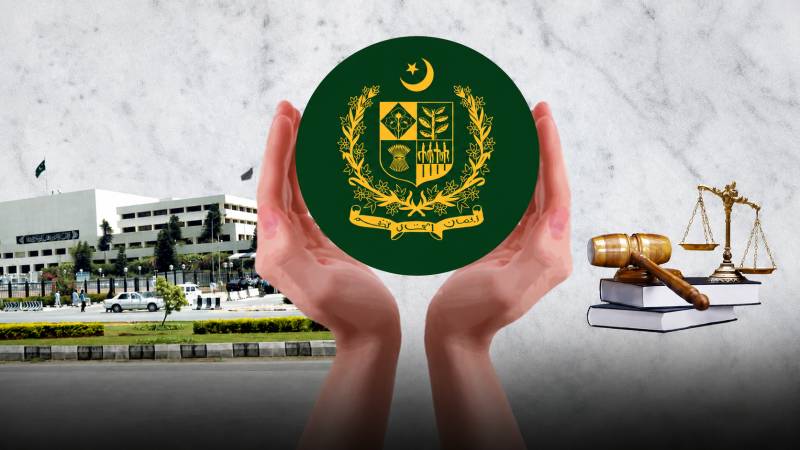
Pakistan is highly unusual among democratic systems in conducting general elections under unelected caretaker governments at both the federal and provincial levels. The system was introduced into the Constitution under General Zia-ul-Haq’s regime in 1985, born out of deep-seated distrust toward elected administrations. It was built on a simple premise: an outgoing government could not be trusted to hold a fair election, so an interim administration had to take charge to ensure state neutrality. But this arrangement creates a fundamental democratic contradiction: those exercising executive power during an election are neither elected by the people nor directly accountable to them. Nearly four decades later, the relevant question is no longer whether this idea sounds convincing in theory, but whether it has actually delivered in practice.
The evidence suggests it has not. Since 1990, Pakistan has witnessed repeated allegations and controversies over manipulation of electoral processes and results, despite the presence of caretaker governments intended precisely to ensure electoral neutrality. Therefore, we should abolish the constitutional requirement for caretaker governments and replace it with a system where elected federal and provincial governments remain in office during elections, operating under strict, legally enforceable restrictions overseen by an empowered Election Commission of Pakistan (ECP) and backed by parliamentary oversight through the Senate or its special committee. The objective should not be to choose between unelected caretakers and unrestrained incumbents, but to preserve democratic accountability while placing enforceable limits on the government’s use of state power during elections. The caretaker model did not originate in the original 1973 Constitution. It was introduced into the constitutional framework by General Zia-ul-Haq's regime through the Revival of Constitution of 1973 Order in 1985. The system was refined through subsequent constitutional amendments, including the 18th and 20th Amendments.
The Constitution bars caretakers and their immediate family members from taking part in the immediately following election. The Elections Act 2017 further codified this framework under Section 230, confining caretakers to routine matters and requiring them to remain impartial, assist the ECP and refrain from major policy decisions, appointments and transfers except within the limits prescribed by law. It also requires caretaker governments to restrict themselves to activities that are routine, non-controversial, urgent, in the public interest and reversible by the future elected government. In theory, this created an elaborate legal firewall around interim administrators. Yet the country’s history repeatedly undermines the assumption of political neutrality of the caretaker government.
A democratic system should not have to choose between electoral fairness and government by elected representatives. It should be capable of guaranteeing both.
From its inception, the system has relied on figures deeply entangled in political life. In 1990, Ghulam Mustafa Jatoi became caretaker prime minister while serving as leader of the opposition, and was also the president of the principal opposition alliance, the Islami Jamhoori Ittihad. In 1993, Mir Balakh Sher Mazari took charge alongside a cabinet filled with opposition politicians. When the system tried to bring in an outsider, such as former World Bank economist Moeenuddin Qureshi in 1993, it highlighted how arbitrary the selection process could be. In later years, appointments like Muhammad Mian Soomro in 2007 and Anwaar-ul-Haq Kakar in 2023 showed that caretaker prime ministers could themselves have significant political connections. Soomro was chairman of the Senate and associated with the Musharraf-era political order, while Kakar was a serving senator, a founding member of the Balochistan Awami Party and a former spokesperson for the Balochistan government before becoming caretaker prime minister. Merely changing the nameplate on the Prime Minister’s or the Chief Minister’s Office does not magically make the state machinery politically impartial.
This model creates an even deeper institutional dilemma when caretakers finish their term. In recent years, several key interim figures moved directly into high-level political roles after supervising elections. Mohsin Naqvi transitioned from caretaker chief minister of Punjab to federal interior minister and senator. Sarfraz Bugti served as caretaker federal interior minister before entering electoral politics and subsequently becoming chief minister of Balochistan. Earlier instances, including Musadik Malik in 2013 and Salman Taseer in 2007, show a similar pattern. Malik served as a federal minister in the 2013 caretaker government and later returned to elected political office; Taseer served as a minister in the 2007–08 caretaker cabinet and was appointed governor of Punjab in 2008. When individuals tasked with neutrally administering an election can soon thereafter step into senior political office, questions about the credibility and durability of political impartiality inevitably arise.
More fundamentally, replacing an elected cabinet does not alter the underlying police, district administration, or bureaucracy through which state power is exercised. If these institutions are vulnerable to political pressure, changing ministers merely changes the political patrons. More importantly, replacing an elected government with an unelected one removes a basic democratic safeguard: accountability to the electorate. An elected government can ultimately be judged and removed by voters; a caretaker government cannot. Its authority derives from a constitutional arrangement rather than a direct electoral mandate. We must therefore separate two questions that have been conflated for decades: who should run the government, and who should supervise the election?
The answer to the first is the elected government; the answer to the second is the ECP. During a defined three-month election period, incumbent elected governments should remain in office but operate under strict legal prohibitions. They should be barred from launching major development schemes, making discretionary appointments, transferring key officials without ECP clearance, or using public funds for partisan promotion. Many of these restrictions already exist for caretakers under Section 230 of the Elections Act. The logical step, therefore, is not to invent an entirely new system but to adapt and enforce these restrictions on incumbent elected governments during an election period instead of suspending democratic rule. That would preserve the principle of electoral accountability while constraining the very powers that create the risk of electoral manipulation.
The ECP, backed by a bipartisan Senate oversight committee, would exercise real-time supervision over executive decisions to ensure compliance. Such a mechanism would need clear statutory criteria, transparent procedures and effective remedies against violations, rather than relying on political assurances. The objective is not to protect incumbents, but to ensure that state machinery and resources cannot be abused during elections.
A parliamentary democracy should not need to suspend itself every time citizens go to the polls. After nearly four decades, election controversies persist regardless of whether caretakers are politicians, technocrats, or retired judges. The existence of a caretaker government has not, by itself, resolved the deeper problem of electoral credibility. Indeed, the central democratic question should be whether an election requires the temporary suspension of electoral accountability itself. Electoral credibility does not come from unelected custodians; it comes from transparent rules, institutional independence, and enforceable limits on executive power.
The true test of democratic maturity is not whether an outgoing government can be trusted, but whether institutions are strong enough to prevent any government from misusing its authority during an election. Citizens should not have to surrender the principle of accountable government in order to secure a credible election. A democratic system should not have to choose between electoral fairness and government by elected representatives. It should be capable of guaranteeing both. It is time to end the caretaker experiment and reform the legal framework governing executive power during elections.