

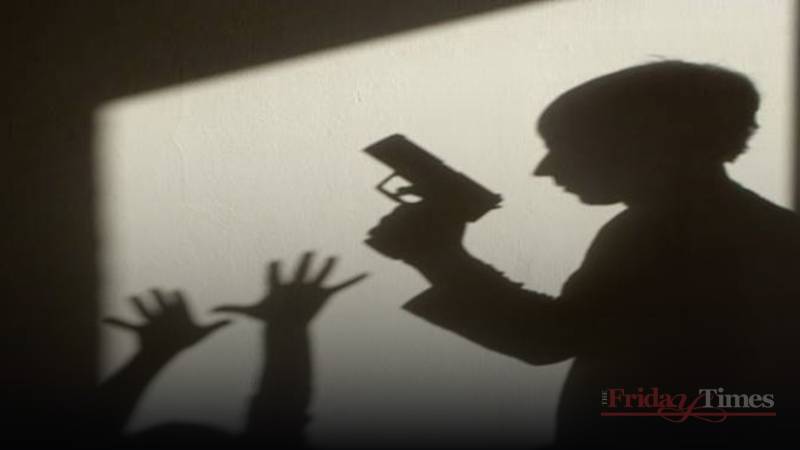
The murder of Bano Bibi and her husband Ehsan Ullah in cold blood in front of a spectator crowd in Quetta has once again stunned us. This honour killing, as horrifying as it is, has brought to the surface the ugly, dangerous, deranged truths that roam our cultural landscape.
The coverage of this brutal double homicide has, no doubt, an element of ‘otherness’ in the coverage I have read in English. Balochistan is tribal, feudal, and backward; therefore, far from the ‘rest of Pakistan or Pakistan proper as Rafiullah Kakar calls them’, which provides a mental reprieve and separates these heinous acts from the rest of Pakistan. The Chief Minister of Balochistan hasn’t helped with his comments on whether Bano Bibi was married or not, furthering this perspective in the eyes of many.
In a recent programme, Hina Jilani rectified this bigoted perception by sharing the statistics of honour killings in Punjab and Sindh. Bottom line: this mental health illness has spread like a cancer across the four parts of Pakistan, and its behavioural tentacles have grown deep because it has never been checked. Violence has been normalised and justifications have been found to explain it. Whether women are murdered in public, or lawyers’ offices, or stripped naked, or buried alive, or shot by parents, jirgas — there is always an ‘explanation’ and it is forgotten. Never checked or mitigated against. Never.
Yesterday was also the fourth anniversary of the murder of Noor Muqaddam. This horrific murder by Zahir Jaffar was in an upscale Islamabad neighbourhood. Another instance of a brutal murder against a woman where unchecked privilege was not checked in time, and a mentally unstable person took the life of a precious soul.
I’ve been thinking about these two murders and what each reveals of our society. One murder was in Balochistan, a tribal, traditional society, where the right to choose your life partner can and has proven to be fatal. While in the case of Noor’s murder, a privileged, entitled young man out of his mind thought he could get away with killing someone who rejected him. Sadly, neither is uncommon in Pakistan, but these two cases have captured the public’s imagination.
If we cannot get gender-safe justice in our courts, where can we in Pakistan?
What is troubling is that few believe any justice will be served nor lessons learned. Let’s begin from the conversations we hear publicly. Was Bano Bibi married to Ehsan Ullah, suggesting Zina justifies murder? These are not random, callous observations but a mentality which one hears at all levels of society in Pakistan. Only recently I heard friends and family discuss what their staff thought of Zahir murdering Noor. ‘They’ thought she had it coming — going over to his house and having a relationship outside of marriage. ‘They’ do not see ‘violence’ as ‘violence’ but a ‘punishment’ for ‘unacceptable social transgressions’. Listening to these observations, which are quite accurate, what struck me most is how ‘we’ ‘hear’ these horrifying ideas without correcting them.
These ‘beliefs’ are not opinions; they endanger lives and society. We cannot ignore them; we cannot scoff them off as ideas of lesser Pakistani folks because of the lack of education, exposure, or violence all around. For far too long, we have allowed multiple behaviours in one society to co-exist without being checked — based on convenience, social standing, and power. The bipolar or multipolar mentality has co-existed in Pakistan for eight decades and frankly created sociopaths or psychopaths of us all. Immune to violence, death, pain, and grief when it is conveniently not ‘ours’. Justifying.
In the realm of ‘us’, upper-middle-class privileged, we continue to allow unacceptable behaviour unchecked. Perhaps it’s fear of the mob, or the consequences of behavioural change training, which we would have to undertake Whatever the reasons, it is exacerbated by the dangerous laws in place — from the blasphemy laws, Qisas and Diyat provisions, and the many which normalise violence and distinguish between men, women, and non-Muslims into categories of human beings — further enabling violence and destroying the social fabric of Pakistan, irrespective of class, location, and exposure.
Reading the judgements against Zahir Jaffar for the murder of Noor Muqaddam has strengthened these assertions. The justices observed that the death sentence against Zahir was not necessary (commuted) on the charges of kidnapping and rape, because ‘Noor had relationships with him and came willing to the home where she was brutally murdered’; in spite of video evidence which clearly showed her attempts to escape the premises (jumping from the balcony and hiding in the guard box), the judges thought otherwise.
Their deep-seated misogyny and patriarchal mindsets are a consequence of entrenched norms — ideas so ingrained in our society that seemingly better-educated and exposed men believe ‘she asked for it.’ If we cannot get gender-safe justice in our courts, where can we in Pakistan?