

George Santayana is famous for his historic observation on the collective memory of a people regarding their own history: “Those who cannot remember the past are condemned to repeat it.” We can easily see this kind of amnesia playing out among our intelligentsia.
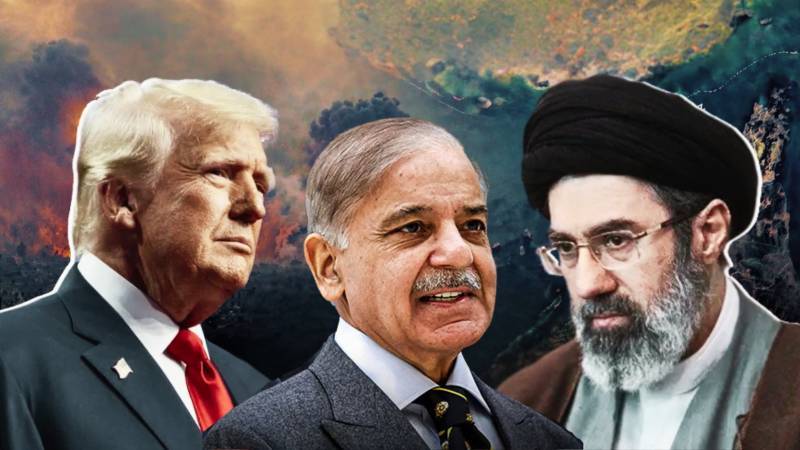
In the wake of the ongoing conflict involving the US, Israel, and Iran, Pakistan has acquired the role of peacemaker, with the go-ahead from the US and Gulf Arab countries, a role that is largely unprecedented in its diplomatic history. This has caused Pakistani intellectuals, academics, and journalists to become euphoric in their social media posts and op-ed pieces.
It is being portrayed as a matter of immense pride for the Pakistani nation, with claims that Pakistan has earned a significant amount of respect and credibility in the world by virtue of its efforts to bring warring parties to the negotiating table.
However, the question remains: has Pakistan ever been truly credible as a peacemaker in international conflicts? The answer is clear when viewed through the lens of historical facts.
Pakistan joined SEATO (South East Asian Treaty Organization) and CENTO (Central Treaty Organization, also known as the Baghdad Pact before Iraq’s withdrawal) in 1954 and 1955, respectively. Both pacts were initiated by the US to contain Soviet and Chinese communism. Pakistan, motivated by the desire to receive military and economic aid from the Western bloc, participated in these treaties, which were essentially designed to counter the Soviet Union and China.
In 1970, Pakistan, under General Yahya Khan, facilitated the rapprochement between China and the USA. Communist China had involved itself first in the Korean War and then in the Vietnam War against US forces. The ideological gulf between the Soviet Union and China had widened as both sought to lead nationalist and anti-imperialist movements in Asian, African and Latin American countries in the wake of the collapse of the colonial order.
The diplomacy pursued by Pakistan to bring the two powers together was rather in line with its pro-American interests than with a desire to establish peace in the world. The first test of Pakistan’s non-alignment came during the 1956 Suez Crisis, when Pakistan abandoned Egypt under nationalist leader Gamal Abdel Nasser to curry favour with the Western bloc, supporting the attack by Britain, France, and Israel. Pakistan continued to adhere to its pro-US foreign policy until Zulfiqar Ali Bhutto came to power. This was a brief interlude when Pakistan tried to assert its independence from the US-led Western bloc.
When the Americans withdrew from Afghanistan, the Pakistani economy, which was not built on a sustainable basis, reverted to its struggling state, once again reliant on loans
Then came two seismic events: the Soviet military intervention in Afghanistan and the Islamic Revolution in Iran. During this time, military dictator General Zia-ul-Haq threw the country into the “Afghan Jihad”, fought on the side of the Americans. Pakistan’s involvement in this war had far-reaching ramifications that tore apart the social and political fabric of Pakistani society, damage from which the country has still not recovered.
The Islamic Revolution in Iran, which overthrew the monarchy, sent shockwaves across the Gulf Arab states ruled by family dictatorships. Arab rulers joined hands to prevent the revolution from destabilising their kingdoms and encouraged Saddam Hussein to invade Iran while it was undergoing the internecine civil war, natural to a revolution.
General Zia encouraged the creation of Sipah-e-Sahaba, an anti-Shia fanatical outfit funded and aided by Arab hereditary rulers. The purpose of this organisation was to neutralise the influence of the Iranian Revolution. Consequently, Pakistan fell under the spectre of bloody sectarianism that continued to haunt it for decades, claiming thousands of victims from both sects.
Before 9/11, Pakistan was accused by India, Iran, and Russia of fomenting trouble and sowing chaos in their lands. Even an all-weather friend like China spoke to General Musharraf about reining in Uyghur Muslim militants linked to the East Turkestan Islamic Movement (ETIM), who were allegedly being trained in camps near the Pak-Afghan border. Moscow also blamed Pakistan for links with Chechen Muslim separatists.
In the aftermath of the so-called War on Terror, the Pakistani military establishment, which dreamed of “strategic depth” in Afghanistan and Central Asia, found its space squeezed as global priorities shifted. Under tremendous pressure, the establishment had to abandon its vision for Central Asia and became limited to supporting Kashmiri militants. Even this support has significantly diminished as the “sword” of the Financial Action Task Force hangs over the country, restricting Pakistan’s access to international financial institutions like the IMF and World Bank if found to be abetting terrorism.
The withdrawal of Soviet forces after the Geneva Accords dealt a severe blow to the economic and military aid Pakistan received from the West. The Afghan jihadi factions, which fought unitedly against the Soviets, turned on one another in a bloody power struggle. Under these conditions, Pakistan facilitated the creation of the Taliban with Saudi and UAE funds.
Once the Soviets left, Pakistan lost its strategic importance to the US and was stripped of aid until the epoch-making event of 9/11. At that time, Pakistan was under the rule of General Musharraf and desperately needed hard cash to sustain itself. The event proved to be a windfall; Pakistan became a willing partner in the US-led “War on Terror”. The economy flourished as military and economic aid flowed in as a reward for participation.
However, when the Americans withdrew from Afghanistan, the Pakistani economy, which was not built on a sustainable basis, reverted to its struggling state, once again reliant on loans.
Another shift occurred recently when regional tensions escalated, including strikes affecting Qatar and leadership interests. This created a sense of insecurity in Saudi Arabia, which possesses sophisticated weaponry but lacks sufficient trained forces for certain contingencies.
The Pakistani military establishment, always on the lookout for such crises to prop up its moribund economy, seized the opportunity. It reinforced defence pacts with Saudi Arabia in hopes of securing foreign exchange. In a display of diplomatic manoeuvring, the establishment has sought to build ties with the current US administration, even engaging with firms connected to the business interests of the Trump family, such as World Liberty Financial.
While Pakistan is a nuclear state and a regional power, its deplorable economic condition dictates its diplomacy. With the UAE requesting the return of $3.5 billion in deposits and Saudi Arabia providing a $3 billion lifeline, Pakistan’s “peacemaker” role is inextricably linked to its financial survival. By sending pilots and ground forces to Saudi Arabia, Pakistan has sent a subtle message to Iran: it will fulfil its obligations to the Saudi defence agreement if attacks escalate.
It is within this context of economic necessity and military obligation, rather than pure diplomatic altruism, that Pakistan has assumed the role of peacemaker. It remains to be seen whether Pakistan makes a break from its past as a client state that pursues the agenda of its patrons or displays genuine neutrality and upholds international law in the cause of peace.