

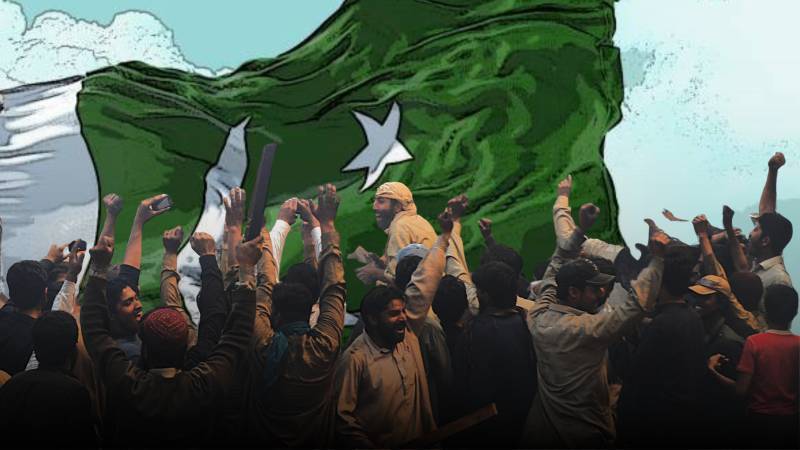
I have always been fascinated by how nations shape their place in the world, and over the years, one pattern has stood out to me clearly: Pakistan has quietly but consistently worked for diplomacy since the day it was born in 1947, upholding a legacy of peace.
It started very early on. While Algeria was struggling for its independence from French colonial domination in the 1950s, I found out that Pakistan had been one of the earliest countries to acknowledge the Provisional Government of the Algerian Republic in 1958. This was more than mere words, as Pakistan granted passports to Algerian political figures to enable them to travel around the world and present their cause in international fora such as the United Nations.
At about the same time, I noticed how Pakistan’s position with regard to Palestine became particularly interesting. Right from the start, it did not accept the United Nations’ Partition Plan in 1947 and rejected recognition of Israel as a state. Its pilots even fought in both the 1967 and 1973 wars alongside Arab pilots. It was among the first nations to recognise the State of Palestine in 1988, and to this day, it remains a firm supporter of an independent Palestine with pre-1967 borders, including East Jerusalem as its capital.
In all the recent cases of the Gaza crisis, it has supported peace initiatives in the United Nations and Organisation of Islamic Cooperation framework by demanding a ceasefire, humanitarian access into Gaza and a just political solution. It is quite remarkable how Pakistan’s position has remained consistent over the years: that peace must be grounded in justice.
Afterwards came one of the most extraordinary episodes I have come across. In 1971–72, during the tenure of President Yahya Khan, Pakistan played its role as the secret conduit that facilitated the clandestine journey of United States National Security Advisor Henry Kissinger to China and President Nixon’s historic visit to China. Pakistan provided a passage between two antagonistic states that would not even communicate.
Once the conflict between Iran and Iraq erupted in 1980, I saw Pakistan rise up yet again, seeking to become a mediator between the two Islamic countries in an attempt to end the violence. Despite how prolonged the war was, the willingness to get involved illustrated that any intra-Islamic conflict, no matter how difficult, required diplomacy.
In this chaotic world filled with tension and distrust, the Pakistani quest for peace has remained an unwavering commitment from Algiers to Beijing, Lahore to Gaza to Tehran and Islamabad
Pakistan served as a key player in the peace negotiations that eventually resulted in the signing of the 1988 Geneva Accords. Being the frontline state which took in millions of Afghan refugees, it joined the United Nations and others in ensuring the Soviet withdrawal from Afghanistan, something quite unusual in the field of international diplomacy.
Pakistan maintained this low-key approach throughout the 1990s. The 1997 Organisation of Islamic Cooperation Summit held in Islamabad provided Pakistan with an opportunity to organise a crucial meeting between Saudi Arabia and Iran, smoothing out differences between two influential countries. It was repeatedly noted that Pakistan was willing to act as a mediator between Saudi Arabia and Iran due to its trusted ties with both nations.
In the protracted peace negotiations in Afghanistan, Pakistan served as a venue for the key players involved and facilitated communication among them. I would like to emphasise that these initiatives significantly influenced the 2020 Doha Agreement between the United States and the Taliban, leading to the termination of America’s longest-running war.
Recently, Pakistan played this vital role for peace in 2026, when the United States–Iran war seemed to be going out of control, and the country came to the rescue once again by playing the role of an important mediator in the whole process. It helped in organising talks between top officials from both countries, and is soon going to arrange a second round of talks.
All these cases put into perspective—from Algeria and Palestine at the beginning, the United States–China diplomacy, the Geneva Accords, Saudi Arabia and Iran initiatives, the Afghan negotiations, to the United States–Iran talks in 2026 have led me to a firm conviction.
Pakistan has not been interested in publicity or recognition for its contribution. It has opted for the more difficult route of negotiation rather than isolation. It has always taken up the mantle of mediation despite its own difficulties, enabling dialogue among hostile nations, assisting liberation struggles, and promoting peace founded on justice.
In this chaotic world filled with tension and distrust, the Pakistani quest for peace has remained an unwavering commitment from Algiers to Beijing, Lahore to Gaza to Tehran and Islamabad. Though perhaps not always headline news, the track record is one that speaks for itself. The truth of the matter is that Pakistan has always been, and remains to this day, a country that understands that dialogue and respect will open doors where others only see walls.