

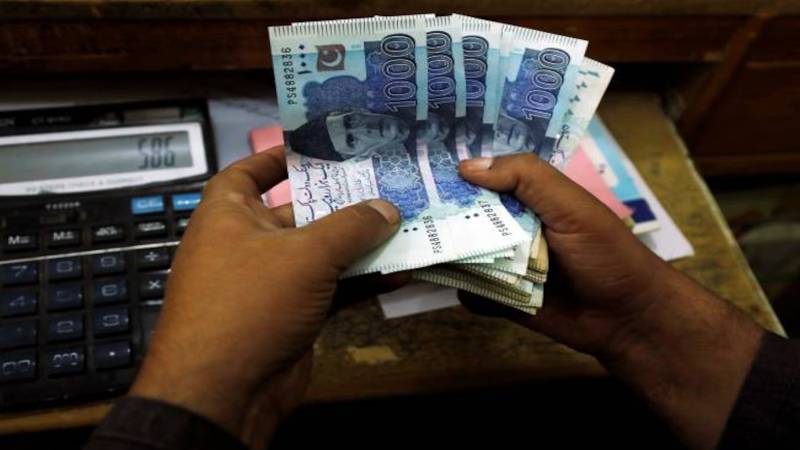
A sound development strategy seeks to reduce the size of the informal economy and bring into the open the resources that lie in the form of black money. Apart from such mechanisms as foreign exchange and tax amnesties and exercises such as demonetisation, taxation has been used as a tool to tap the resources inherent in these areas. Large-scale tax evasion and the existence of a large black economy in Pakistan, while resulting in loss of revenue to the state, is bound to reduce the built-in elasticity of a fiscal system and, to the extent that the tax-evaded income is spent on goods and services, help to generate inflationary pressures and raise the prices of real property.
Taxation, black money and the informal economy
That there is a considerable informal economy and black money in Pakistan is undeniable, but few in-depth studies have been undertaken to quantify its magnitude and extent. Dr. Aqdas Ali Kazmi, former Joint Chief Economist, Planning Commission, stated in his research paper Tax Policy and Resource Mobilisation in Pakistan that 70 per cent part of the economy consists of 36 per cent 'pure' black economy, 18 per cent exempted economy, 9 per cent illegal economy, 4.5 per cent unrecorded economy and 2.5 per cent informal economy (unreported economy).
The study concludes that the problem in low resource mobilisation is the rigid system of taxation, and the emphasis of the government to increase revenue, ignoring the details of the long-term policy measures. The Laffer Curve indicates the effect of tax rates on government tax revenue. Briefly, the proposition of the Laffer Curve takes as its starting point the simple notion that tax revenue is zero if the tax rate is either zero or 100 per cent, with a smooth relationship between tax rates and tax revenues connecting these two polar points.
The existence of such a relationship suggests that if tax rates are sufficiently high, “the prohibitive range”, then a reduction in tax rates could lead to an increase in tax revenues. This is the case now in Pakistan.
The Laffer Curve analysis leads to the following conclusions:
- High rates of taxation act as a disincentive to work and thus reduce output and employment;
- An increase in tax rates does not always necessarily lead to increased revenue. There is a crucial point beyond which an increase in tax rates leads to decreasing revenues and national income;
- There are always two tax rates available (A and B), which can produce the same total tax revenue, one at a higher rate and another at a lower rate. Governments, therefore, need not necessarily choose a higher rate to achieve the required quantum of revenue.
Studies of selected countries also seemed to indicate that those that imposed a lower effective average tax burden achieved substantially higher rates of growth in real gross domestic product than did their more highly taxed counterparts.
No amount of development planning would have the intended effect if the required stability and level of administrative resources were not invested in its implementation
The Laffer Curve, however, has had its critics like Paul W. McCracken, Paula Krugman, Robert Lekachman and John Kenneth Galbraith. They have questioned the assumptions and theory behind the Laffer Curve and proved that it is not as scientific as it appears. The supply-side cuts of the early 1980s do not appear to have raised work effort or saving, and they unquestionably increased the deficit.
Empirical studies carried out in two countries (Jamaica and India) where tax changes relevant to the Laffer Curve had been implemented have also concluded that the assertion that tax reductions would lead to revenue increases should at best be treated with caution. (Ebrill, 1987).
While there is no doubt that excessive rates of taxation act as a disincentive to savings and capital formation and retard investment and growth, there is no real evidence that mere reduction in tax rates by themselves would increase investment and growth. The level of taxation is only one factor in the complex process of development, which is influenced by many variables, both endogenous and exogenous. Hen,ce it is doubtful that tax cuts could ever serve as a “quick fix” for a sick economy.
Further, this approach to development has its social ill effects. The “trickle-down” theory of development on which it is based has, in practice, been found to be not as effective as anticipated. The benefits have not trickled down to the lower segments of society, and the supply-side vision, as David Stockman said, was simply a cover for the reduction of taxes of the upper-income tax brackets.
The Reagan and Thatcher experiments in supply-side economics, with the resultant tax cuts and reduction of government expenditure, led to mismanagement and became discredited. An analysis of the patterns of income distribution in countries like Pakistan has shown that the upper deciles have benefited more, and the lower deciles have reduced their incomes through these policies. This has also been confirmed by the Gini ratio, which measures the degree of income concentration.
Role of tax administration in development
Finally, development policy requires the existence and functioning of a sound and effective tax administrative machinery. No amount of development planning would have the intended effect if the required stability and level of administrative resources were not invested in its implementation.
The purpose of tax administration is to fully implement the government’s tax programmes and proposals effectively and efficiently. In the short run, this means optimising the revenue collectable with the resources which the government makes available to the administration. In the long run, it means collecting all the legislated taxes with the minimum of cost. All this requires an efficient and sound administrative machinery and effective coordination between the fiscal policy-making body and the administrative mechanism.
The economy will never stabilise on a long-term basis through harsh and illogical tax measures. We need to develop a national consensus on tax policy
Taxation affects the amount of capital available by encouraging or discouraging savings and foreign investment. It may also divert investment and labour from one sector to another. It affects the level and productivity of employment by influencing individual choices between work and leisure, the intensity of effort on the job, and employers’ decisions on technology. Taxes affect a firm’s ability to diversify and expand through their import or input costs and managerial behaviour.
They may also have a bearing on less tangible factors such as entrepreneurship and technical progress. Some empirical evidence also suggests causal relationships between the level and types of taxes and key growth determinants in the areas of investments, exports, employment, productivity and innovation (Marsden, 1986).
Finally, another important reason why taxation is essential in getting macroeconomic policies right is that alternative ways of financing government expenditure money creation, mandating larger required reserves, domestic borrowing and foreign loans, can have very harmful effects on the economy. It is painful to note that successive governments in Pakistan have resorted to presumptive/minimum taxation, which has complicated the poverty problem of Pakistan.
According to a study of the Asian Development Bank (ADB), the tax system of Pakistan, which was progressive until 1990, was converted into a regressive regime in 1991 with the introduction of provisions like section 80B, 80C, 80CC and 80D in the Income Tax Ordinance, 1979—these were retained as such in the existing Income Tax Ordinance, 2001 and, since 2019, made minimum tax further, adding insult to injury.
The result is that during the period 1991–2025, the tax burden on the poorest households is estimated to have increased by 65 per cent, while it declined by 55 per cent for the richest households. The studies of ADB and PRIME Institute are eye-openers for target-oriented policymakers who, in the frenzy of showing higher figures to lenders/donors, have put intolerable extra burdens of taxes on the corporate sector, the salaried class and the poor of Pakistan.
Like civilisations, tax systems evolve over centuries. Harley Hinrichs, in his book General Theory of Tax Structure Change During Economic Development, has mentioned five stages through which tax structure has changed historically as economies have developed. These are:
- First Stage. A traditional society relies primarily on traditional direct taxes like taxes on land, livestock, water rights, etc.
- Second Stage. Society breaks away from old ways, and indirect taxes become more important, especially external indirect taxes (i.e. taxes on foreign trade).
- Third Stage. Traditional direct taxes decline relative to national income and governmental revenues.
- Fourth Stage. Domestic commodity production increases, and internal indirect taxes (excise duties and sales taxes) grow rapidly to replace customs duties.
- Fifth Stage. The economy gains maturity, and modern direct taxes like personal income and corporate profit taxes become dominant.
Pakistan is still far behind the Fourth Stage, what to talk of coming closer to the last stage. It is high time that our economic managers re-evaluate the entire tax administrative structure and policy and take immediate steps to use tax measures as a tool for economic development rather than fixing irrational targets and creating problems for local industrialists and businessmen.
The economy will never stabilise on a long-term basis through harsh and illogical tax measures. We need to develop a national consensus on tax policy. The potential of Pakistan is much higher than presently fixed by fiscal managers. We can easily generate tax revenue of between Rs. 34 trillion, provided taxation is made through representation, by a democratic process, and after soliciting national consensus.