


The Indus Delta, once a prosperous support system of biodiversity and coastal livelihoods, is now on the edge of collapse. The 2025 floods, which displaced over 1.5 million people and exposed the fragility of Pakistan’s water infrastructure, have ignited arguments over the doom of this dynamic ecosystem. At the heart of the crisis lies a chronic sediment deficit, an issue long overshadowed by upstream flow control and irrigation priorities.
Historically, the Indus River delivered 260 to 300 million tons of sediment annually, replenishing mudflats, stabilising tidal channels, defending coastlines and sustaining mangroves. Today, that lifeline is severed. In many years, less than 10-million-acre feet (MAF) of water reaches the delta, depriving it of essential silt and freshwater. With upstream regulation through Tarbela, Mangla, and Chashma reservoirs collectively storing over 17 MAF, sediment flows have been drastically curtailed downstream of Kotri Barrage. The result is a paradox: while floods cause havoc upstream, the delta downstream is drying, eroding, and sinking.
According to various studies, the Indus Delta is suffering ecological collapse, and mangrove cover has declined by over 40% since the 1970s. Saltwater intrusion extends up to 75 km inland, contaminating groundwater and ruining over 550 square kilometres of farmland. Coastal area Kharochan, previously home to thousands of people, has seen its population decline due to migration, rising sea levels and land loss. The delta supports millions of people and contributes major capital annually through fisheries and agriculture. Yet, it remains politically invisible.
The renewed concentration on sediment management is timely, but is it driven by ecological urgency or reactive crisis management? Why has it taken a humanitarian disaster to spotlight a decades-old issue? And will current policy responses address root causes, or merely offer cosmetic fixes? These questions demand scrutiny, especially as the delta’s collapse threatens not only biodiversity but national food security and coastal resilience.
However, owing to major irrigation works and dams built on the river, as well as low rainfall, the amount of silt discharged into the sea has reduced, affecting the mangroves and local communities significantly. A huge proportion of the delta has been lost, and the survival of delta freshwater species, including the Indus blind dolphin, is at risk.
Worldwide, deltas like the Mississippi and Mekong have faced similar sediment starvation due to upstream damming. In both cases, governments have invested in sediment diversion projects and adaptive coastal planning to restore deltaic health. Bangladesh’s Ganges-Brahmaputra Delta, for instance, has seen success through integrated sediment management and mangrove reforestation. Pakistan must draw lessons from these models, adapting them to the Indus system’s unique hydrology and socio-political context.
According to the National Institute of Oceanography, nearly 80% of the delta could be submerged by 2050 if current trends persist
The barriers are challenging. Economically, sediment dredging is prohibitively expensive and unsustainable without sediment flushing flows. Technically, bypass systems require retrofitting ageing infrastructure. Ecologically, the loss of mangroves, once spanning 600,000 hectares, has left the coast exposed to storm surges.
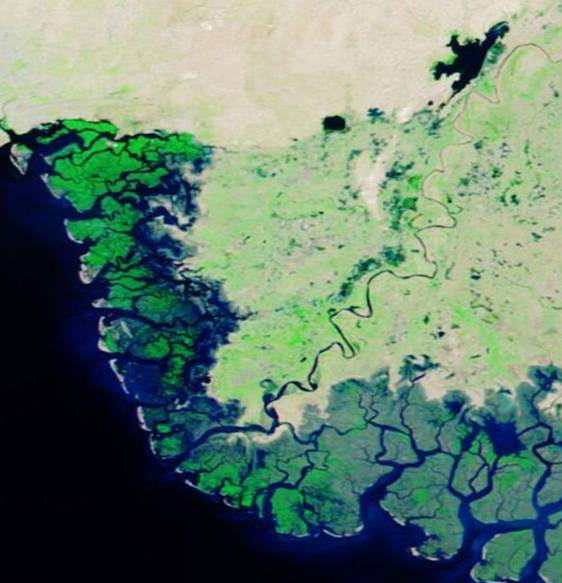
Socially, communities in Thatta, Sujawal and Badin are losing productive land to salinity and sea intrusion, triggering displacement. According to the National Institute of Oceanography, nearly 80% of the delta could be submerged by 2050 if current trends persist. NASA and United States Geological Survey imagery confirm the shifting of the shoreline and the delta’s sediment-starved territory, while the United Nations Children’s Fund and the National Disaster Management Authority report rising malnutrition and mass evacuations in flood-prone areas. The delta’s degradation is no longer just an environmental concern; it is a humanitarian emergency.
Pakistan must urgently adopt a multi-layered approach. First, guaranteed ecological flows below Kotri Barrage. Second, implement sediment flushing operations and explore bypass systems at key reservoirs. Third, invest in large-scale mangrove restoration and coastal afforestation. Fourth, implement the National Water Policy 2018, which calls for watershed management, soil conservation, and maintaining environmental flows to sustain river ecology and delta/coastal systems. These measures must be backed by institutional reforms and regional cooperation under the Indus Waters Treaty to safeguard predictable transboundary flows.
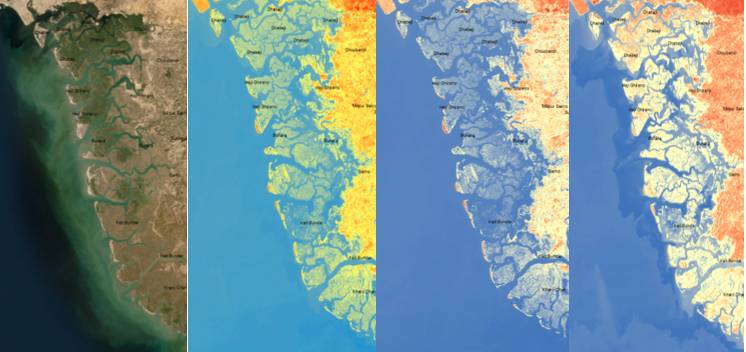
Landsat 9 OLI-TIRS dated 03 May 2026 (Source: United States Geological Survey Earth Explorer) showing natural and false-colour images of wetlands (Ramsar site), massive mangrove forests, and a disjointed coast at the Indus River Delta located at the mouth of the Indus River where it meets the Arabian Sea. It depends on a continuous supply of sediment flow to counteract seawater intrusion. Adequate sediment deposition is essential for maintaining a resilient and sustainable ecosystem in the delta.
The Indus Delta’s crisis is not unexpected, yet continued inaction may turn it into an irreversible disaster. Pakistan must move beyond reactive flood control and adopt a climate-resilient approach to river and delta management. The delta’s survival is not just an ecological obligation; it is a test of national will.