

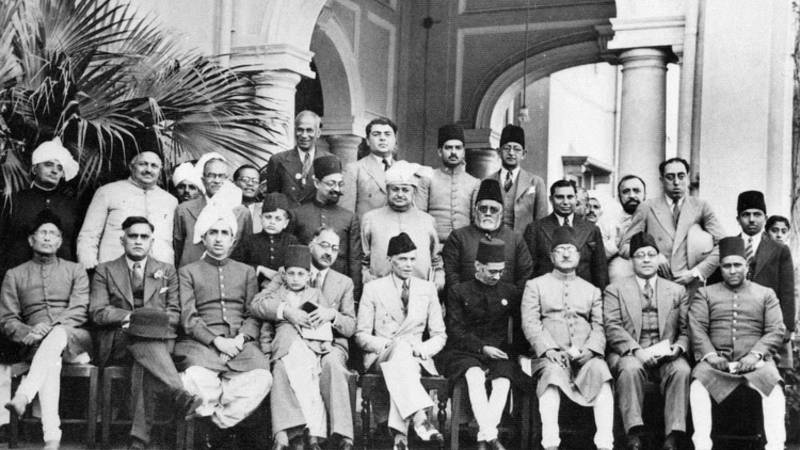
In the grand narrative of South Asian history, March 1940 is almost exclusively remembered for the Lahore Resolution, a defining political moment that would later be seen as the foundation of Pakistan.
Yet, just days before this landmark event, Lahore witnessed another occurrence of deep historical consequence, one that unfolded not in the formal setting of political deliberation but in the charged streets of the old city.
The Khaksar massacre of 19 March 1940, though largely eclipsed in later memory, was, for contemporaries, an event of urgency and emotional gravity.
As Markus Daechsel has shown, many observers at the time regarded the Khaksars and their dramatic confrontation with colonial authority as more immediately compelling than the constitutional developments that followed.
This contrast between what was remembered and what was forgotten invites a more careful reconstruction.
To situate the tragedy, it is essential to briefly understand the Khaksar movement and its founder, Allama Inayatullah Khan Mashriqi.
Founded in 1931, the Khaksar Tehrik represented a distinctive strand of anti-colonial politics, rooted less in negotiation and more in disciplined action.
Scholars characterise it as a movement that prioritised self-transformation through regimented practice, where uniformity, physical training, and sacrifice formed the basis of political engagement.
The Khaksars’ khaki uniforms and their spades were not merely symbolic but embodied a philosophy that rejected passivity and sought to cultivate a morally and physically renewed community.
Mashriqi’s vision stood apart from mainstream political currents, offering an alternative that was at once radical and deeply rooted in notions of historical continuity and moral discipline.
By early 1940, tensions between the Khaksars and the colonial administration had reached a critical point.
The Punjab government, increasingly wary of the movement’s ability to mobilise large numbers and its quasi-military discipline, imposed restrictions on its activities.
Confrontation was intrinsic to the Khaksar method.
Their actions were often designed to provoke decisive moments, even at the risk of repression, to demonstrate resolve and to inscribe their struggle within a narrative of sacrifice.
It was within this ideological and political context that the events of 19 March unfolded.
Contemporary accounts provide a vivid and unsettling picture of that day.
K. L. Gauba records that approximately 313 Khaksars, consciously invoking the number associated with the Battle of Badr, marched in formation through Bhati Gate shortly before noon.
Dressed in their uniforms and carrying their belchas, they advanced in disciplined ranks until they encountered the police near Tibbi Police Station.
What followed was a violent clash that quickly escalated into a deadly confrontation.
Alongside the Lahore Resolution, the League adopted a separate resolution expressing a “deep sense of sorrow” at the events of 19 March 1940, acknowledging the loss of life and extending sympathy to the victims and their families
Gauba, who visited the scene soon after, described it as resembling “a deliberate massacre”, noting that the area had been cordoned off and that casualties among the Khaksars were substantial.
Official figures later reported 26 dead and around 70 injured, including policemen, but eyewitnesses suggested a much higher toll, with some estimating the number of fatalities to exceed 200.
The injured and the dead were transported to Mayo Hospital, where the scale of the tragedy became increasingly apparent as more victims succumbed to their wounds.
The symbolic dimension of the event was immediately apparent to contemporaries.
The number 313 and the manner of the Khaksars’ advance lent themselves to comparisons with early Islamic battles, particularly Badr, while the scale of the casualties evoked memories of Karbala.
These associations were not incidental but formed part of a broader process through which the massacre was interpreted as an act of martyrdom, embedding it within a moral and historical framework that transcended the immediate political context.
The aftermath of the massacre further underscores its significance.
The police conducted extensive searches in the surrounding neighbourhoods, detaining individuals and attempting to restore order.
Sir Sikandar Hayat Khan, the Premier of Punjab, visited the injured policemen, signalling the administration’s concern with maintaining authority.
At the same time, the incident reverberated through political circles.
Gauba himself moved an adjournment motion in the Punjab Assembly on 26 March 1940, bringing the issue into the legislative arena.
The debate attracted considerable attention, with packed galleries and the presence of prominent figures such as Fatima Jinnah.
Although the motion was ultimately defeated, the intensity of the discussion reflected the depth of public concern.
It is at this juncture that the connection with the Lahore Resolution becomes particularly significant.
The massacre occurred just three days before the All-India Muslim League convened its historic session at Minto Park, a site less than a mile from where the violence had taken place.
This proximity in time and space created a moment of overlapping political narratives.
While the League was preparing to articulate a constitutional demand for Muslim autonomy, the streets of Lahore had already witnessed a dramatic and violent confrontation that embodied a very different mode of political engagement.
Importantly, the Khaksar tragedy did not pass unnoticed at the League’s session.
Alongside the Lahore Resolution, the League adopted a separate resolution expressing a “deep sense of sorrow” at the events of 19 March 1940, acknowledging the loss of life and extending sympathy to the victims and their families.
It called for an independent and impartial inquiry into the incident and urged that the ban on the Khaksar organisation be lifted at the earliest opportunity.
The resolution further authorised the Working Committee to take appropriate action following the publication of the inquiry report.
In explaining this, Muhammad Ali Jinnah emphasised that the resolution had been unanimously adopted after careful deliberation and cautioned against speeches that might inflame passions or prejudice the inquiry.
He maintained that it would be inappropriate to seek an investigation while simultaneously pronouncing judgment, yet assured supporters that the League would pursue the matter until full justice was achieved.
This careful balancing of restraint and commitment reflects Jinnah’s broader political approach, one that prioritised strategic calculation and institutional process over emotional mobilisation.
The contrast between Jinnah’s method and that of the Khaksars is striking, yet it would be misleading to view them as entirely disconnected.
As Daechsel points out, movements like the Khaksars contributed to a wider transformation of political culture, introducing forms of discipline and mobilisation that would later influence other organisations, including those associated with the Muslim League.
In this sense, the Khaksar challenge, though ultimately marginalised, played a role in shaping the contours of mainstream politics.
Despite this, the memory of the Khaksar massacre gradually receded from public consciousness.
The Lahore Resolution, with its far-reaching implications, came to dominate historical narratives, while the tragedy of 19 March was relegated to the margins.
This process of forgetting was not merely accidental but reflected the consolidation of a particular political narrative, one that privileged constitutional achievement over alternative forms of struggle.
Yet, as the events of March 1940 reveal, the path to independence was neither singular nor uncontested.
In recent years, there have been occasional reminders of the enduring human dimension of this history.
One particularly poignant example is a message sent by a descendant of Superintendent D. Gainsford, one of the officers involved in the firing, to a descendant of Mashriqi, expressing sorrow and a sense of inherited responsibility.
Such gestures, though brief, underline the lasting emotional and moral resonance of the event across generations.
To revisit the Khaksar massacre today is therefore to confront a layered and complex past.
It compels us to recognise that the history of March 1940 in Lahore was not defined solely by resolutions and declarations but also by bloodshed and sacrifice.
It invites us to recover a narrative that once stood alongside the Lahore Resolution but was gradually overshadowed by it.
In doing so, it enriches our understanding of a pivotal moment, reminding us that the making of history is as much about what is remembered as it is about what is forgotten.