

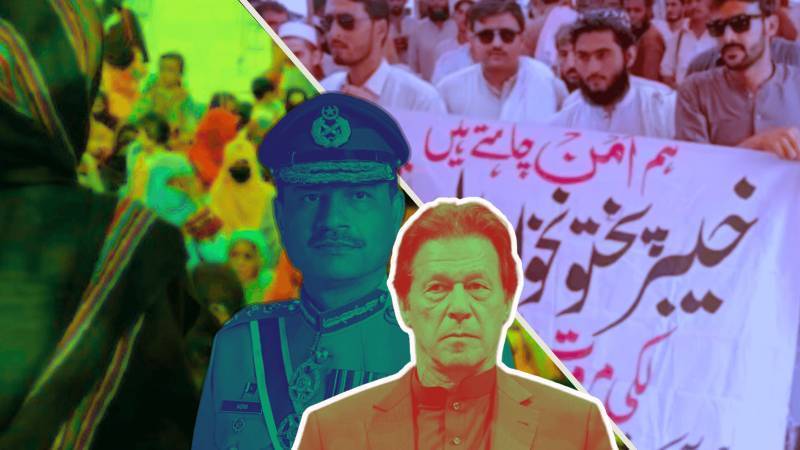
Pakistan is celebrating after delivering a resounding response to India’s military jingoism, and with the world acknowledging the country’s formidable strike capability, this historic moment must now be transformed into sustainable political stability. Otherwise, whatever positives this situation has provided us will be squandered.
The state’s approach should be pragmatic here, as we have had examples of countries that emerged from crises and thrived to become entirely different nations. Thus, the momentum Pakistan needs to convert this moment of unity and celebration—where every section of society came together (forgetting their internal grievances) against Indian aggression—is very much present.
But for this unity to be meaningful and lasting, we must confront the national fault lines, which currently are political polarisation and religious extremism that continue to fracture our social fabric.
Few things are clear: the onus of political stability lies on multiple stakeholders, one of whom is the imprisoned former Prime Minister, Imran Khan, convicted in the Al-Qadir Trust case, a significant corruption scandal involving the misappropriation of £190 million.
Ever since Khan, who was elected Prime Minister in 2018, was constitutionally ousted in 2022, he has been adept at playing the victim, attracting empathy, and converting it into popularity. He was able to propagate the narrative that he was fighting for civilian supremacy and against the military’s interference in politics, ironically.
The establishment must realise that we cannot shame India for its Hindutva and RSS ideology unless we eliminate the same menace from within our ranks
A large chunk of the Pakistani nation believes that he has taken on a fight for civilian supremacy and to minimise military interference in politics, but some hold the contrary opinion, believing that Imran Khan himself was nurtured in the establishment’s nursery and his fight is only until the establishment pacifies him and again recognises him as their own child, like a few years ago.
Before his ouster, Khan’s popularity had hit an all-time low due to poor governance. Some opposition parties even considered waiting until the next election. However, the PDM alliance was compelled to act, as high-ranking military officers were uncomfortable with Khan’s intentions to appoint a politically compromised former DG ISI and his confidante General Faiz Hameed as Chief of Army Staff. This was a likely scenario had Khan completed his term. Imagine General Faiz, a man known for political vendettas, as COAS during the recent India crisis that was ultimately managed with poise.
Regardless, this entire victimhood and resistance strategy ends here, with the Pakistan Army once again proving to the masses that it can swiftly recalibrate public focus from internal dissent to external unity, through battlefield success.
Now, if Pakistan is to move toward stability, it should begin with Imran Khan apologising and expressing regret for the vandalism of military installations and the desecration of martyrs’ memorials by his party members on May 9th, 2023.
As of now, some level of dialogue has occurred between him and the ‘powers that be’ at Adiala Jail in Rawalpindi. But the most he can hope for is face-saving, and that’s all. And no, according to sources, he was not given a Prime Minister-style briefing in jail during the Pakistan-India standoff. That sounded like a political fetish for consumers of Imran Khan-centric content, but such claims, amplified by TV analysts and X.com influencers, are failed tactics aimed at preserving his relevance when public focus has clearly shifted to the Pakistan military.
At the moment, Imran Khan is short on cards. Perhaps he is out of them entirely, except the flexibility card, since all the propaganda spread by his social media warriors, YouTubers, and aligned journalists, even during a national crisis, could not diminish the newfound popularity of the military establishment. It’s at an all-time high.
Pakistan’s response to India’s first missile strike on May 7th was massive. It shocked the world, as we shot down six Indian fighter jets—three of which were 4.5-generation aircraft, including the celebrated French-built Rafale, according to the Pakistani government’s official claim. The numbers vary, but independent news organisations have confirmed the downing of jets.
With such a decisive performance by Pakistan’s military, even overseas Pakistanis may now hesitate to lobby US congressmen or UK parliamentarians to table resolutions condemning Imran Khan’s imprisonment or calling for sanctions against the Pakistan Army and its Chief. Just a month ago, a bill was tabled in the US Congress demanding sanctions on the Pakistan Army and General Asim Munir. What a dramatic change in just a few weeks.
That said, Pakistan now requires an end to societal polarisation, which remains one of the biggest obstacles to political stability. Unfortunately, political polarisation in Pakistan, driven largely by populist theatrics and personalised vendettas, has become a parasite. It feeds on public anxiety and erodes the space for consensus at a time when we most need stability and forward-looking governance.
If this country is to move forward, all stakeholders must realise that, at critical junctures, we must not fall prey to our martyr complex.
A refreshing example of this selflessness was seen when Prime Minister Shehbaz Sharif appointed a high-level delegation led by former FM Bilawal Bhutto, along with other key parliamentarians, to visit global capitals and present Pakistan’s case against India. PM Shehbaz could have easily nominated one of his party members to lead the delegation, but he chose not to, as Bilawal doesn’t belong to his party. That’s political maturity.
In the coming months, Pakistan may witness significant developments on the diplomatic and economic fronts. The recent standoff led to visible diplomatic isolation for India, while several nations, including our all-weather friend China, expressed open support for Pakistan. Relations with China had suffered due to attacks on Chinese nationals in Pakistan, but that damage now appears repaired. China was equally jubilant about Pakistan using Chinese-built J-10C jets to shoot down Indian aircraft.
But whether this momentum lasts depends on what we do next. Are we marching ahead with the same fault lines, or are we willing to address them?
This may sound pessimistic, but how can a society progress with violent religious intolerance injected into its bloodstream like poison? Amid all the celebrations, an Ahmadi Pakistani doctor was gunned down in Sargodha solely for his faith.
According to the National Commission for Human Rights, between 1984 and September 2023, a span of 39 years, 280 Ahmadis were killed for their faith, 51 Ahmadi places of worship were demolished, and 39 Ahmadi bodies were exhumed after burial. These are just a few of the grave human rights violations being put on record. The surge in such crimes in recent years is alarming. Imagine how these figures might multiply over the next 40 years. This reflects a chilling truth: in our society, belief has become a license to kill. What remains is a death cult masquerading as faith.
To conclude, the establishment must realise that we cannot shame India for its Hindutva and RSS ideology unless we eliminate the same menace from within our ranks. If the current establishment fails to dismantle these groups, once openly nurtured by previous regimes for political gain, then oppression at the hands of religiously motivated mobs can only be considered state-sanctioned apartheid.